
Wisdom teeth removal is a common dental procedure, yet for many people, the thought of undergoing it brings worry and hesitation. Whether it’s the swelling, recovery, or wisdom teeth extraction cost, patients often want to know exactly what happens during the process before they visit a dental clinic. Many also wonder if the surgery will affect their daily routine, how long they’ll need to rest, and what kind of care is required afterward. By understanding the process clearly, patients can feel more at ease and make informed choices.
This blog will guide you through the reasons why wisdom teeth can sometimes cause problems, step-by-step descriptions of the removal procedure, and how to prepare for a smooth recovery with confidence and peace of mind.
At SmyleXL Dental Clinic, we understand that dental surgeries can feel intimidating. That’s why we aim to make every patient’s experience stress-free, comfortable, and backed by the latest dental technology.
Table of Contents
ToggleWhy Wisdom Teeth Become Troublemakers
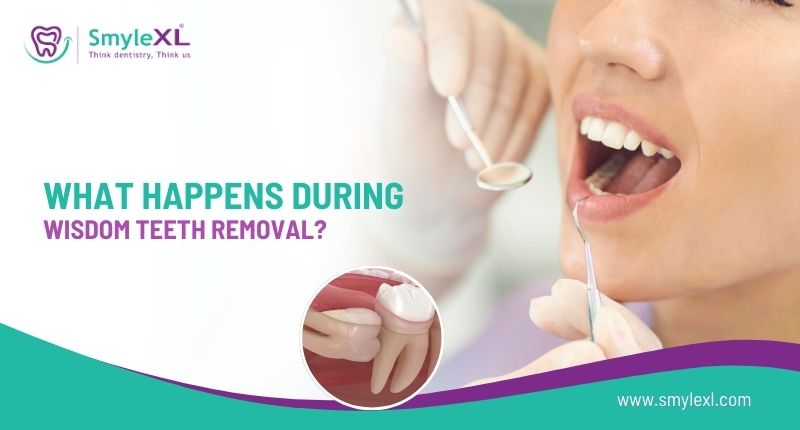
Wisdom teeth are the third set of molars that usually erupt in your late teens or early twenties. While some people have no issues with them, many experience discomfort when these teeth grow at odd angles or get stuck under the gumline (known as impaction).
Common problems caused by wisdom teeth include:
- Persistent pain in the back of the mouth.
- Swelling or redness in the gums.
- Jaw stiffness and difficulty opening the mouth fully.
- Infections or recurring gum issues around the erupting tooth.
- Overcrowding can cause the alignment of other teeth to shift.
Left untreated, these problems may worsen, leading to cysts, damage to neighboring teeth, or chronic infections. This is why dentists often recommend wisdom teeth removal before complications become severe.
The Step-by-Step Procedure
So, what exactly happens when you go in for wisdom teeth removal? Knowing the steps can take away much of the fear.
1. Initial Consultation and X-Rays
The journey starts with a consultation. Your dentist will take digital X-rays to check the position of the wisdom teeth and how they relate to the nerves, jawbone, and other teeth. This helps in planning the extraction.
At SmyleXL Dental Clinic, our dentists clearly explain the entire plan to patients, ensuring they feel prepared and confident before the procedure.
2. Anesthesia Options
Before the extraction, anesthesia is administered. Depending on your case and level of anxiety, you may be given:
- Local anesthesia: Numbs the surgical site but keeps you awake.
- Sedation anesthesia: Keeps you relaxed and drowsy but still responsive.
The goal is to ensure you are comfortable and pain-free during the procedure.
3. The Surgical Process
Once the anesthesia takes effect, the dentist begins the procedure:
- A small incision is made in the gum tissue if the tooth hasn’t erupted fully.
- The bone blocking the tooth’s root may be gently removed.
- In some cases, the tooth is divided into smaller sections for easier extraction.
- The tooth is carefully removed with minimal trauma to the surrounding tissue.
- The area is cleaned, and stitches may be placed if needed.
This process can take anywhere from 20 minutes to an hour, depending on the number of teeth being removed and their position.
4. Immediate Aftercare
After the extraction, gauze is placed to help stop bleeding and form a blood clot. You’ll rest for a short while before heading home with aftercare instructions.
Recovery and Costs
Healing after wisdom tooth removal typically takes about one to two weeks, but most patients experience significant improvement after just a few days. Here’s how to manage recovery:
Post-Operative Care Tips
- Apply ice packs to reduce swelling.
- Stick to soft foods, such as yogurt, smoothies, and soups.
- Avoid smoking, alcohol, or using straws as they may dislodge the clot.
- Take prescribed medications to ease discomfort.
- Keep the mouth clean, but avoid brushing directly over the surgery site for the first few days.
Following these steps ensures a smooth and quicker recovery.
How Much Does Wisdom Teeth Removal Cost?
When patients hear about the procedure, their next concern is often the cost of wisdom teeth extraction. The price depends on factors like:
- The complexity of the extraction (simple vs. surgical).
- The number of teeth being removed.
- The type of anesthesia used.
On average, the cost of wisdom tooth removal can vary significantly, but investing in a trusted clinic ensures both safety and comfort.
At SmyleXL Dental Clinic, we offer transparent pricing and tailored care so you know exactly what to expect. Our goal is not just affordable treatment but long-lasting oral health. Your smile deserves expert hands. Choose SmyleXL for safe and comfortable wisdom tooth extractions.
Wrapping Up
Wisdom teeth may sound harmless, but when they cause pain, swelling, or misalignment, removal becomes necessary for your overall dental health. Understanding what happens during the procedure—from consultation and anesthesia to recovery—makes the process far less intimidating.
If you’re dealing with discomfort or have been advised to get them removed, don’t delay. Knowing the wisdom teeth extraction cost and preparing ahead of time helps you feel more confident about the decision.
SmyleXL Dental Clinic is here to guide you every step of the way with compassionate care, modern technology, and experienced specialists. Book your consultation today and let us make your wisdom tooth removal as smooth as possible.
FAQs
- Is wisdom tooth removal painful?
Most patients are relieved to know that wisdom tooth removal itself is not painful. Thanks to local anesthesia or sedation, you won’t feel any discomfort during the surgery. After the numbness wears off, it’s normal to experience some soreness or swelling, but this is temporary. With prescribed painkillers, ice packs, and gentle care, recovery is usually smooth and manageable.
- How long does it take to heal after wisdom tooth extraction?
The initial healing period is relatively brief, with many people experiencing significant improvement within 3 to 5 days. However, the gum tissue and jawbone continue to recover for about two weeks. Following your dentist’s aftercare advice—such as eating soft foods, avoiding straws, and keeping your mouth clean—can make a significant difference in how quickly and comfortably you heal.
- Do all wisdom teeth need to be removed?
Not always. Wisdom teeth are only removed if they’re causing pain, infection, crowding, or other dental problems. If they grow in properly, are healthy, and don’t disturb neighboring teeth, they can often stay in place. Your dentist will evaluate their position with X-rays and regular check-ups to decide whether removal is necessary.
- Why does the cost of wisdom tooth extraction vary so much?
The wisdom teeth extraction cost isn’t the same for everyone because several factors affect it. Simple extractions are generally less expensive, while impacted or surgical removals cost more due to the complexity. The number of teeth being removed and the type of anesthesia used also play a role. That’s why choosing a trusted clinic like SmyleXL Dental Clinic is important; they provide a clear breakdown of costs and ensure you receive expert, safe care.