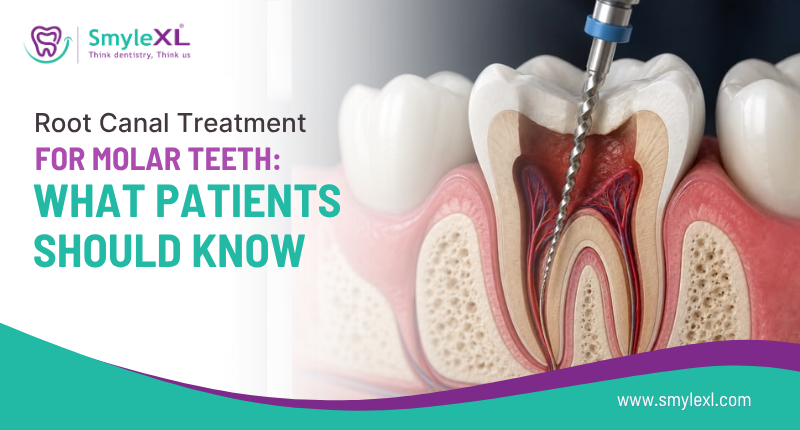

Molars are the unsung heroes that do most of the heavy lifting. They do most of the grinding and chewing. But because of their location and complex molar anatomy, they are more susceptible to infection. Hence, root canal treatment for molar teeth can resolve these cases.
We notice the anxiety arising when we talk about root canal treatment. But awareness is half the battle. In this blog, we discuss root canal treatment for molar teeth and the complexities involved. We will also cover what you should know and expect during treatment.
Table of Contents
ToggleWhy Do Molar Teeth Need Root Canal Treatment?
First, let’s understand why molar teeth need root canal treatment. Because of their complex anatomy, molars often have multiple canals that must be identified, cleaned, and sealed properly. Food also gets trapped easily and is often hard to clean. As a result, if the pulp becomes inflamed or infected, your dentist might recommend root canal treatment to remove the affected tissue and preserve the natural tooth.
Research on lower jaw first molars also found that about 61% of teeth have three canals and about 36% have four, highlighting why locating and treating every canal matters.
Some of the reasons why molar teeth need RCT are:
- Deep decay reaching the pulp of the teeth
- Bacterial infection caused in the molar teeth
- Cracks or fractures as they become brittle
- Persistent pain caused by tooth sensitivity
- Previous dental treatment affecting the pulp
What Makes Root Canal Treatment for Molar Teeth Different?
Root canal treatment for molar teeth can be more complex because molars usually have multiple roots and canals. Molars are different and should be treated differently because they have:
- Complex molar anatomy: Canals may be narrow, curved, or difficult to locate.
- Multiple canals: Each canal needs proper cleaning and sealing.
- Greater chewing pressure: Molars may need a strong tooth restoration after treatment.
How Do You Know a Molar Needs a Root Canal?
Now you know the signs you may need a molar RCT. Diagnosis relies on symptoms, clinical pulp tests, a dental exam, and dental imaging, not pain alone.
Common Warning Signs
- Lingering tooth sensitivity to hot and cold: Pain that is triggered by hot or cold and continues after the stimulus is removed may indicate significant pulpal inflammation.
- Pain on biting: Pain may be experienced when chewing or releasing a bite when the inflammation extends to the tissues around the root.
- Spontaneous pain: Pain not provoked by stimulation, especially at night, can be a sign of advanced pulpal inflammation.
- Swelling or tenderness: Swelling around the tooth may indicate that the molar tooth infection has spread to the surrounding tissues.
- Deep decay or fracture: Caries or a crack that exposes or threatens the pulp can compromise its health.
While there are several reasons to get root canal treatment for molar teeth, some reasons can be misleading. For instance, severe molar tooth infection can cause the nerve tissue inside the tooth to lose vitality. In this case, the dentist may use thermal or electrical pulp testing, dental X-rays, or other tests to detect the infection. A diagnosis should therefore be based on the combined clinical findings rather than a single symptom.
Root Canal Treatment for Molar Teeth
Once you understand why you need a molar RCT, you should know what to expect. The root canal treatment procedure involves:
Numbing and Isolating the Tooth
The dentist uses local anesthesia to numb the infected area, then isolates the tooth to keep it clean and dry throughout the procedure.
Accessing the Pulp and Locating the Canals
The dentist makes an opening in the tooth to reach the pulp chamber and identifies the canals, which can be more numerous and complex in molars.
Cleaning and Shaping the Canals
The dentist removes the infected or inflamed pulp, then mechanically shapes and chemically disinfects the canals to eliminate bacteria and debris.
Filling and Sealing the Canals
The dentist fills the cleaned canals with a biocompatible material and seals them to prevent bacteria from re-entering.
Tooth Restoration
The dentist restores the tooth to restore function and to protect it from fracture. Dentists often recommend crowns for molars because these teeth are under a lot of pressure from chewing.
What Is Root Canal Recovery Like for a Molar?
Root canal recovery is usually gradual. The exact root canal recovery period varies depending on the molar tooth infection, complexity of surgery, and the restoration required.
First Few Days
Mild soreness or tenderness around the treated tooth may occur for a few days, especially when you bite. Follow your dentist’s post-treatment care instructions, and avoid putting excessive pressure on the tooth until it is fully restored.
Returning to Normal Eating
You can generally resume eating as comfort allows, but it is sensible to avoid very hard or sticky foods on the treated tooth until the permanent restoration is placed. This helps reduce stress on the tooth during the initial recovery period.
Completing the Final Restoration
A root-canaled molar may require a crown placement to protect the remaining tooth structure from fracture. Completing the recommended restoration is an important part of finishing treatment and returning the tooth to normal function.
How Much Does Root Canal Treatment Cost for Molar Teeth?
The root canal treatment cost for a molar depends on the number and complexity of its canals, the severity of the infection, the number of appointments, and whether a crown or additional restoration is required.
We can provide an exact estimate only after we examine the tooth and determine the required treatment.
Visit SmyleXL Dental Clinic in Kalyan for a dental evaluation so we can provide an exact cost estimate.
How to Protect a Root-Canal-Treated Molar
Even after treatment, you can do a few things to reap the long-term benefits.
Complete the final restoration: Follow the recommended timeline for crown placement to protect the treated molar from fracture.
Maintain oral hygiene: Brush twice daily and clean between the teeth to reduce plaque buildup around the restored tooth.
Avoid excessive pressure: Until the permanent restoration is placed, avoid chewing hard or sticky foods on the treated molar.
Attend follow-up appointments: Regular checks help assess the restoration, surrounding tissues, and overall tooth condition.
Address changes promptly: Evaluate pain, swelling, a loose crown, or discomfort when biting; don’t ignore them.
When Should You See a Root Canal Specialist?
If your tooth has a persistent infection, severe pain, or requires retreatment after a previous root canal, you might want to consult a root canal specialist. A specialist assessment will help decide if the tooth can be treated and saved.
If you have ongoing molar pain or recurring symptoms, Dr. Deepali Tambatkar at SmyleXL Dental Clinic in Kalyan, can assess the tooth and discuss the right treatment approach. Schedule a consultation if your symptoms persist or return.
FAQs
Is root canal treatment more difficult for molars?
It can be more complex because molars generally have multiple roots and canals with varying shapes and positions. This can make locating, cleaning, and sealing the canals more demanding than in many front teeth.
Can a molar need a root canal without causing pain?
Yes. A severely infected or non-vital pulp may sometimes cause little or no pain. Dental examination and appropriate testing are therefore important when infection is suspected.
How soon should I get a crown after a molar root canal?
A permanent crown is generally recommended after the root canal is completed, particularly for molars that face substantial chewing forces. The timing depends on the tooth’s condition and the dentist’s treatment plan.
Can a molar root canal fail and need retreatment?
Yes, a treated molar can sometimes develop persistent or recurring infection and may require root canal retreatment. Causes include missed or untreated canals, reinfection, leakage, or new damage to the tooth.
Can I chew normally after molar root canal treatment?
Avoid heavy chewing on the treated molar until its permanent restoration is placed. Once the tooth is properly restored and the dentist confirms it is ready, you can usually resume normal chewing.

Dr. Deepali Tambatkar
Principal Dentist & Dental Care Expert
Dr. Deepali Chopde Tambatkar is an experienced dentist with 20+ years of clinical experience, serving patients at SmyleXL Dental Clinic in Kalyan West. She completed her dental education at Nair Hospital Dental College in 2001 and has treated 20,000+ patients. Her expertise includes root canal treatments, gum care, crowns and bridges, veneers, orthodontics, dental implants and surgical dental procedures.
Professional Profile: Dr.Deepali Tambatkar
Facebook: SmyleXL Facebook
Instagram: SmyleXL Instagram
YouTube: SmyleXL YouTube