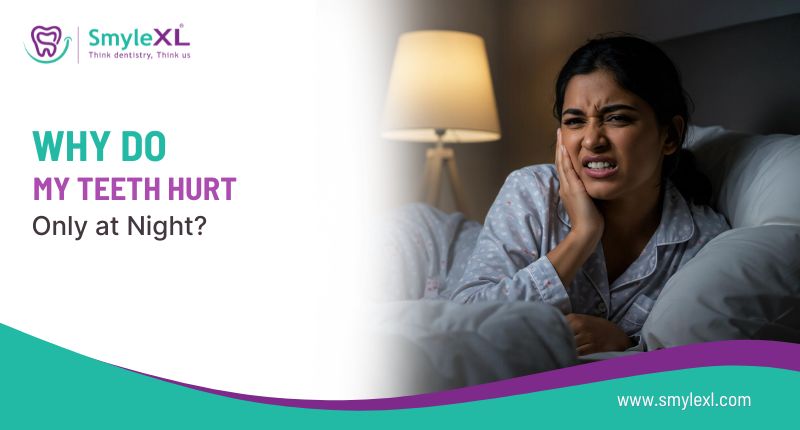

Have you ever noticed how a minor noise feels louder in a quiet room? The ticking of a clock that goes unnoticed during the day can feel deafening at midnight. Tooth pain behaves in a similar way. During the day, work, conversations, meals, and distractions keep discomfort in the background. But when night falls, and everything slows down, dental pain seems to step into the spotlight.
Patients visiting SmyleXL Dental Clinic, a trusted dental clinic in Dwaraka Nagar, often describe this exact pattern: “My tooth is fine all day, but the moment I lie down, it starts throbbing.” This isn’t a coincidence, nor is it something to ignore. Night-time tooth pain is usually your body’s way of signaling an underlying dental issue that needs attention.
In this blog, we’ll explore why toothaches worsen at night, the common dental conditions behind them, how lifestyle habits contribute, and when it’s time to seek professional care. Understanding the cause is the first step toward lasting relief.
Table of Contents
ToggleWhy Dental Pain Feels Worse at Night?
Tooth pain at night isn’t always more severe; it just feels stronger. Several physiological and environmental factors contribute to this phenomenon.
1. Fewer Distractions, More Awareness
During the day, your brain is busy processing multiple stimuli. At night, in a quiet and dark environment, your brain focuses more on internal sensations. Even mild inflammation or sensitivity becomes more noticeable.
2. Increased Blood Flow When Lying Down
When you lie flat, blood flow to the head increases. This added pressure can intensify pain in an already inflamed tooth or surrounding gum tissue. Conditions like pulpitis or dental abscesses are particularly sensitive to this change.
3. Reduced Saliva Production
Saliva acts as a natural cleanser, neutralizing acids and washing away bacteria. At night, saliva flow decreases, allowing bacteria to become more active, especially if oral hygiene is compromised.
4. Night-Time Teeth Grinding (Bruxism)
Many people clench or grind their teeth unconsciously while sleeping. This puts excessive pressure on teeth, dental restorations, and jaw joints, often leading to soreness or sharp pain upon waking or during the night itself.
Common Dental Causes of Night-Time Tooth Pain
Understanding the root cause is essential. Below are the most frequent dental conditions that cause pain predominantly at night.
Tooth Decay Reaching the Nerve
When cavities progress deep enough to reach the pulp (the nerve center of the tooth), pain becomes persistent and often worsens at night. The nerve becomes inflamed, leading to sharp, throbbing, or pulsating pain.
This type of pain does not resolve on its own and usually requires root canal treatment or, in severe cases, extraction.
Gum Disease and Periodontal Infections
Inflamed or infected gums can cause dull, aching pain that becomes noticeable when you lie down. Advanced gum disease may also expose tooth roots, increasing sensitivity to temperature changes and pressure.
At SmyleXL Dental Clinic, early diagnosis of gum disease allows for non-surgical treatments that prevent further damage and tooth loss.
Dental Abscess
A dental abscess is a pocket of pus caused by bacterial infection. It often results in:
- Severe, throbbing pain
- Swelling of the face or gums
- Pain radiating to the ear or jaw
Night-time pain from an abscess is often intense and persistent and requires immediate dental attention.
Cracked or Fractured Teeth
Hairline cracks may not cause pain during the day but can flare up at night, especially when temperature changes occur or pressure is applied. These cracks allow bacteria to enter the inner layers of the tooth, leading to inflammation.
Sinus-Related Tooth Pain
Upper back teeth share close proximity with the sinus cavities. Sinus congestion or infection can create pressure that mimics tooth pain, which often worsens when lying down.
A proper dental examination helps distinguish sinus pain from true dental pathology.
How Lifestyle Habits Can Trigger Night-Time Tooth Pain?
Sometimes, it’s not just the tooth; it’s what you do throughout the day that affects how your teeth feel at night.
Late-Night Snacking
Sugary or acidic foods before bed feed bacteria overnight, increasing acid production and irritation. Without brushing, this creates the perfect environment for decay and sensitivity.
Skipping Night-Time Oral Care
Missing brushing or flossing at night allows plaque to sit undisturbed for hours. This significantly increases the risk of inflammation and discomfort.
Stress and Jaw Clenching
Stress often shows up physically. Jaw tension and clenching during sleep can lead to muscle fatigue, tooth pain, and even cracked enamel over time.
Know When Night-Time Tooth Pain Is a Warning Sign
Occasional sensitivity may not be alarming, but persistent nighttime pain should never be ignored.
Seek dental care immediately if you experience:
- Pain lasting more than 2–3 nights
- Swelling in the gums or face
- Fever or foul taste in the mouth
- Pain that radiates to the ear, head, or neck
Delaying treatment often leads to more complex procedures and higher costs later.
How SmyleXL Dental Clinic in Dwaraka Nagar Can Help?
Accurate diagnosis is key. At SmyleXL Dental Clinic, every patient undergoes a thorough evaluation that may include digital X-rays, bite analysis, and gum assessment to identify the exact cause of pain.
Treatment Options May Include:
- Fillings for early decay
- Root canal treatment for nerve infections
- Gum therapy for periodontal disease
- Night guards for bruxism
- Tooth crowns or restorations for cracked teeth
Personalized treatment plans ensure that pain relief is not temporary but long-lasting.
Home Care Tips to Manage Tooth Pain at Night (Temporary Relief)?
While professional treatment is essential, these measures may help reduce discomfort until your dental appointment:
- Sleep with your head slightly elevated
- Rinse with warm salt water
- Avoid very hot or cold foods before bed
- Use a soft-bristle toothbrush
- Do not place painkillers directly on the tooth
These are short-term measures, not substitutes for dental care.
Frequently Asked Questions
Why does tooth pain disappear in the morning?
Night-time pain often eases when you stand up because blood pressure in the head decreases and distractions increase. However, the underlying dental issue remains and may worsen over time if untreated.
Can tooth pain at night go away on its own?
Temporary sensitivity may subside, but pain caused by decay, infection, or nerve inflammation rarely resolves without treatment. Waiting can allow the problem to progress silently.
Is nighttime tooth pain always serious?
Not always, but it should never be ignored. While mild sensitivity may be manageable, recurring or intense pain is usually a sign of infection, decay, or structural damage that needs professional evaluation.
Wrapping Up
Tooth pain that appears only at night is not random; it’s the result of physiological changes, reduced distractions, and often an underlying dental condition demanding attention. Whether the cause is decay, gum disease, grinding, or infection, ignoring nighttime pain can lead to more complex dental problems.
Seeking timely care at a reliable dental clinic in Dwaraka Nagar, such as SmyleXL Dental Clinic, ensures accurate diagnosis, effective treatment, and lasting relief. Night-time tooth pain is your body’s signal; listening to it early can make all the difference in preserving your oral health.