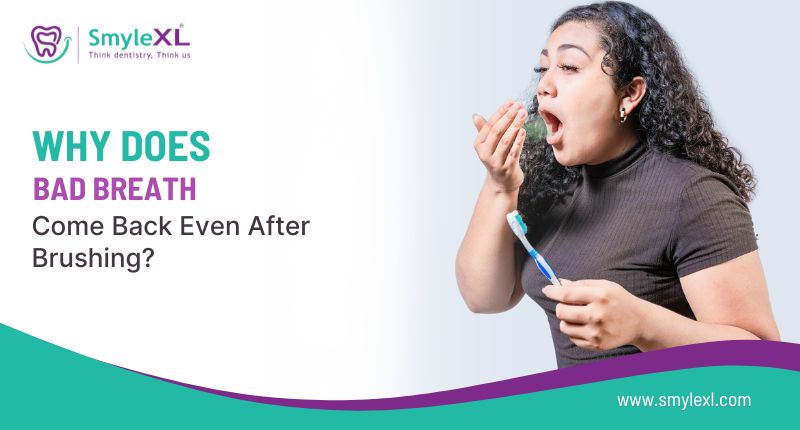

When Your Mouth Hits “Refresh”… but the Smell Doesn’t
You brush carefully.
You rinse.
You even do that dramatic tongue-cleaning move in front of the mirror.
And yet, two hours later, your breath is back with an uninvited encore.
If this sounds familiar, you’re not doing anything wrong. You’re just fighting the symptom, not the source. Bad breath has a way of behaving like a stubborn houseguest: quick to return if the real issue hasn’t been addressed.
For many people around New BEL Road, Bengaluru, balancing busy workdays, coffee breaks, traffic, and long screen hours, this is a surprisingly common concern. Understanding why bad breath keeps coming back is the first step toward effective, lasting bad breath treatment.
Table of Contents
ToggleFirst Things First: What Causes Bad Breath Anyway?
Bad breath (clinically called halitosis) isn’t just about food or skipped brushing. In most cases, it’s caused by bacteria, specifically, bacteria that break down food particles and release sulfur compounds (yes, those are the culprits behind the smell).
These bacteria thrive in places your toothbrush often misses, such as:
- The back of the tongue
- Gum pockets
- Between teeth
- Around dental restorations
Brushing helps, but it doesn’t always reach the real problem areas.
The “Temporary Fix” Problem with Brushing
Brushing is essential, but it works more like a surface clean.
Think of it like spraying air freshener in a room with a hidden leak. The smell disappears briefly, but once the spray fades, the problem announces itself again.
Brushing:
- Reduces surface bacteria
- Freshens breath temporarily
- Removes obvious food debris
What it doesn’t do is treat underlying causes like gum disease, dry mouth, or digestive issues. That’s why brushing alone often isn’t enough, and targeted bad breath treatment becomes important.
Common Reasons Bad Breath Keeps Returning
If bad breath feels like a guest that overstays its welcome, there’s usually a reason behind it. And no, it’s not because you’re doing something wrong; it’s often about what’s being missed.
- Hidden plaque and food particles: Even with regular brushing, tiny bits of food can get stuck between teeth or below the gumline. Bacteria feast on these leftovers and release sulphur-like gases, which are a major cause of bad breath.
- Tongue buildup: The tongue has a textured surface that traps bacteria easily. If it’s not cleaned regularly, it becomes a quiet but powerful source of odour.
- Gum problems: Bleeding gums, swelling, or early gum disease can cause persistent bad breath. This isn’t something mouthwash can fix; professional bad breath treatment is often needed to address the root issue.
- Dry mouth: Saliva helps wash away bacteria. When your mouth is dry, due to stress, dehydration, mouth breathing, or certain medications, bacteria multiply faster and smells linger longer.
- Dental issues you can’t see: Cavities, old fillings, or infected teeth can trap bacteria deep inside, making bad breath return no matter how often you brush.
The key thing to remember? Recurring bad breath is usually a signal, not a failure. Once the cause is identified and treated properly, freshness stops being temporary and starts feeling normal again.
Why Professional Evaluation Matters
If bad breath keeps returning despite good oral hygiene, it’s a sign to stop guessing and start investigating.
At SmyleXL Dental Clinic, dentists don’t just mask the smell; they identify the root cause. Effective bad breath treatment always starts with understanding why it’s happening, not just where.
A professional evaluation may include:
- Gum health assessment
- Tongue and oral tissue examination
- Checking for plaque buildup or decay
- Discussing medical or digestive symptoms
This step alone often reveals what home care cannot.
What Actually Works for Long-Term Bad Breath Treatment?
There’s no standard solution, but effective treatment often includes a combination of:
- Professional dental cleaning to remove plaque and tartar
- Gum care if inflammation or infection is present
- Tongue-cleaning techniques are customized to your needs.
- Lifestyle guidance related to hydration and diet
- Referral or advice if the cause is medical rather than dental
When done right, bad breath treatment focuses on prevention, not constant cover-ups.
Why Mouthwashes Don’t Always Help (Sorry)
Many mouthwashes work like perfume. They overpower odor briefly but don’t eliminate bacteria long-term. Some even worsen dryness, causing bad breath to return more quickly.
A dentist may recommend specific rinses, but only as part of a broader treatment plan, not as a standalone fix.
FAQs
Q1. What is the best treatment for bad breath that keeps coming back?
The best treatment depends entirely on the cause of the bad breath. For many patients, professional dental cleaning and gum care significantly reduce odour by removing plaque and bacteria that brushing cannot reach. In other cases, tongue cleaning techniques, managing dry mouth, or addressing dental decay may be required. A proper dental examination ensures that the bad breath treatment targets the root cause rather than offering temporary relief.
Q2. How much does it cost to cure bad breath permanently?
The cost of treating bad breath depends on the cause. Simple cases may only require a professional cleaning, which is relatively affordable. If gum disease, cavities, or additional dental procedures are involved, the cost may be higher. Early diagnosis usually keeps treatment simpler, shorter, and more cost-effective in the long run.
Q3. What stomach or digestive issues can cause bad breath?
Digestive problems such as acid reflux, gastritis, and certain stomach infections can contribute to persistent bad breath. In these cases, odour originates from gases moving upward from the digestive tract rather than the mouth itself. Dental professionals often work alongside medical guidance to ensure both oral and digestive factors are addressed together for effective results.
Q4. Can bad breath be a sign of gum disease even if there’s no pain?
Yes, bad breath is often one of the earliest signs of gum disease, even before pain or swelling occurs. Bacteria trapped in gum pockets release strong-smelling compounds that brushing and mouthwash cannot eliminate. Treating gum issues early not only improves breath but also prevents long-term damage to teeth and supporting tissues.
Q5. How long does bad breath treatment take to show noticeable improvement?
Many patients notice fresher breath shortly after professional cleaning or initial treatment. However, long-term improvement depends on maintaining good oral hygiene and following recommended care routines. If the cause is medical or lifestyle-related, results may take longer but are still achievable with consistent management and guidance.
Fresh Breath Shouldn’t Be a Daily Gamble
If bad breath keeps returning despite your best efforts, it’s not a reflection of poor hygiene; it’s a sign that something deeper needs attention. Brushing and rinsing are important, but they’re only part of the solution.
With the right diagnosis and a targeted bad breath treatment plan, fresh breath becomes predictable instead of temporary. And once that happens, you stop worrying about close conversations, long meetings, or second-guessing mid-sentence.
For those around New BEL Road, Bengaluru, a professional evaluation at SmyleXL Dental Clinic can help uncover the cause and guide you toward lasting confidence, no emergency mints required.