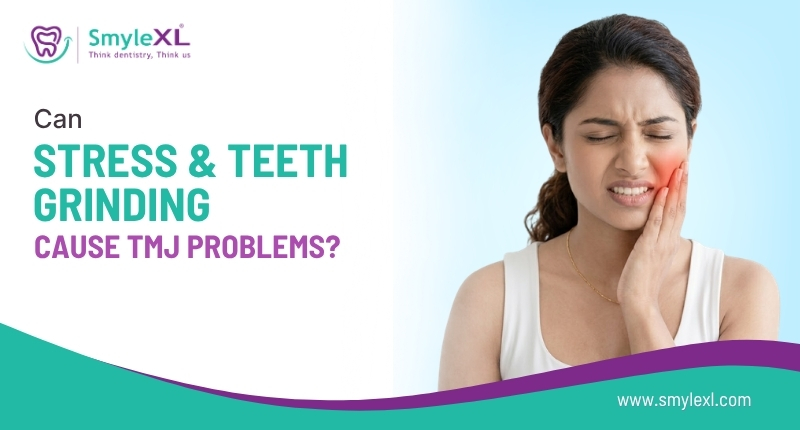

You know those days when you’re stressed about work, family, deadlines, finances, or life in general?
Your mind is tired.
Your shoulders feel tight.
And somehow, your jaw feels like it has been attending the same stressful meeting.
Many people don’t realize this, but stress often shows up physically in surprising ways. One of the most common examples is unconscious teeth clenching and grinding.
Over time, this habit may contribute to jaw discomfort, headaches, clicking sounds, and even problems involving the jaw joint itself.
At SmyleXL Dental Clinic, Kolhapur, Dr. Pankaj Anuse frequently meets patients who initially believe they have a simple tooth problem, only to discover that the real issue may involve the jaw joint and surrounding muscles.
This is where understanding the connection between stress, teeth grinding, and TMJ disorder treatment becomes extremely important.
Table of Contents
ToggleWhat Exactly Is the TMJ?
TMJ stands for the temporomandibular joint. This joint connects:
- the lower jaw
- the skull
- surrounding muscles and ligaments
It allows you to:
- chew
- talk
- yawn
- laugh
- move your jaw comfortably
When this joint or its supporting muscles stop functioning properly, it may lead to a condition known as temporomandibular joint disorder.
So, Can Stress Really Affect Your Jaw?
Absolutely.
When people experience stress, the body often reacts by creating muscle tension. Some people tighten their shoulders. Others develop neck stiffness.
Many unknowingly develop:
- stress-induced teeth grinding
- jaw clenching
- facial tension
Over time, this may contribute to:
- stress-related jaw pain
- muscle fatigue
- joint strain
- headaches
The jaw is often one of the first places where chronic tension begins to show.
What Is Teeth Grinding?
Teeth grinding is commonly known as bruxism. It may happen:
- during sleep
- during work
- while concentrating
- during stressful situations
Many patients are completely unaware that they grind their teeth until symptoms begin appearing.
Persistent grinding may eventually require:
- bruxism treatment
- teeth clenching treatment
- Professional dental evaluation
to prevent long-term complications.
The Stress-Grinding-TMJ Cycle
Here is how the cycle often works:
Step 1:
Stress increases.
Step 2:
Jaw muscles tighten.
Step 3:
Teeth clenching begins.
Step 4:
Grinding continues repeatedly.
Step 5:
The jaw joint becomes overloaded.
Step 6:
Pain and dysfunction develop.
This combination of teeth grinding and jaw pain can slowly create significant pressure on the jaw structures.
Common Signs of TMJ Problems
Many patients are surprised to learn that TMJ problems are not limited to jaw pain alone. Common symptoms may include:
- jaw clicking and popping sounds
- headaches
- ear discomfort
- jaw tightness
- facial pain
- chewing difficulty
Some people notice symptoms only occasionally. Others experience them daily.
Why Does the Jaw Start Clicking?
A clicking sound often occurs when structures inside the joint stop moving smoothly.
Patients may notice:
- popping sounds
- clicking during chewing
- noises while opening the mouth
These jaw clicking and popping sounds may indicate developing joint dysfunction and should not always be ignored.
In some cases, professional jaw clicking treatment may be recommended.
What Does Stress-Related Jaw Pain Feel Like?
Patients commonly describe:
- soreness near the ears
- facial pressure
- jaw fatigue
- aching muscles
Unlike a toothache, jaw pain due to stress often feels more muscular and widespread.
Many patients wake up feeling:
- tired jaw muscles
- facial tightness
- morning headaches
without realizing that nighttime grinding may be contributing.
What Is Sleep Bruxism?
Sleep bruxism refers to grinding or clenching that occurs during sleep. Because when we are asleep, we often don’t realize it is happening.
Common clues include:
- morning jaw pain
- worn teeth
- headaches
- facial muscle soreness
Family members sometimes notice grinding noises before the patient does.
How Does Teeth Grinding Affect The Joint?
Constant grinding creates repeated pressure on:
- teeth
- muscles
- ligaments
- jaw joints
Over time, this pressure may contribute to:
- jaw joint strain
- inflammation
- muscle fatigue
- restricted movement
This is why early TMJ disorder treatment becomes important.
The Link Between Headaches and TMJ
Many people treat headaches without considering the jaw.
However, TMJ problems may contribute to:
- headaches linked to jaw pain
- facial pressure
- temple soreness
Some patients experience recurring headaches for months before discovering that the jaw joint may be involved.
Why Does Chewing Become Painful?
As the joint becomes irritated, chewing may place additional stress on already-inflamed structures.
Patients may experience:
- pain while chewing
- soreness after meals
- fatigue while eating
In these situations, TMJ pain relief often involves addressing the underlying cause rather than simply managing symptoms.
Facial Muscles Can Become Overworked Too
TMJ issues are not always purely joint-related.
The surrounding muscles often become overactive as well.
This may create:
- facial muscle tension
- cheek soreness
- temple pain
- neck tightness
In many cases, jaw muscle pain treatment focuses heavily on reducing muscular strain.
What Happens If TMJ Problems Are Ignored?
Ignoring symptoms may allow:
- muscle tension
- joint strain
- grinding habits
to continue worsening.
Over time, untreated issues may contribute to:
- worsening pain
- limited jaw movement
- increased tooth wear
- chronic discomfort
That is why chronic jaw pain management becomes important before symptoms become severe.
Can Teeth Grinding Damage Teeth?
Yes.
One of the biggest warning signs is:
- worn-down teeth from grinding
Patients may also develop:
- cracked teeth
- enamel wear
- sensitivity
- bite changes
Addressing the grinding habit becomes an important part of treatment.
What Is Restricted Jaw Movement?
Some patients notice difficulty:
- opening wide
- yawning comfortably
- chewing larger foods
This is a restricted jaw movement, and it may occur when muscles or joints become inflamed.
Professional temporomandibular joint treatment may help identify the cause.
Why Does Jaw Stiffness Happen?
Inflammation and muscle overuse often contribute to:
- tightness
- soreness
- stiffness
Common jaw stiffness symptoms include:
- difficulty opening the mouth
- morning tightness
- discomfort after long conversations
Some patients eventually require treatment for jaw stiffness to improve mobility and comfort.
Can TMJ Cause Ear Pain?
Surprisingly, yes.
The jaw joint sits very close to the ear.
This is why some patients experience:
- fullness near the ear
- aching sensations
- ear pain related to TMJ
without having an actual ear infection.
What Does TMJ Treatment Usually Focus On?
Treatment depends on the underlying cause. Management may involve:
- reducing grinding habits
- muscle relaxation
- bite evaluation
- joint protection
Many treatment plans focus on:
- TMJ pain relief
- jaw joint dysfunction treatment
- reducing inflammation
- restoring comfort
Muscle Relaxation Matters
Since muscle tension plays such a major role, muscle relaxation for TMJ often becomes an important treatment goal.
Reducing excessive tension may help:
- improve comfort
- reduce headaches
- decrease jaw fatigue
The Role of Inflammation
Repeated grinding and clenching may contribute to:
- inflammation of jaw joint
- irritation
- soreness
Reducing inflammation often helps improve both movement and comfort.
Why Early Consultation Helps?
Many patients wait until symptoms become severe.
However, early TMJ specialist consultation may help identify:
- grinding habits
- joint dysfunction
- muscle strain
before long-term complications develop.
Relieving Facial and Jaw Discomfort
One of the primary goals of treatment is relieving facial and jaw discomfort while improving daily function.
The ideal outcome includes:
- less pain
- easier chewing
- reduced tension
- healthier jaw movement
Can Stress Management Help Too?
Absolutely.
Since many cases involve stress-related jaw pain, managing stress itself often becomes part of the solution.
Improving:
- sleep quality
- relaxation habits
- stress management
may help reduce unconscious clenching and grinding behaviors.
The Bigger Picture
TMJ problems are rarely caused by a single factor.
Instead, they often involve a combination of:
- stress
- grinding
- clenching
- muscle tension
- joint strain
Understanding these connections helps patients seek appropriate jaw pain treatment before symptoms become more disruptive.
FAQs
Can stress alone cause jaw pain?
Yes. Stress may contribute to jaw muscle tension, clenching, and grinding, all of which can lead to jaw discomfort.
Is teeth grinding always noticeable?
No. Many people grind their teeth during sleep and remain unaware until symptoms appear.
Can TMJ problems go away on their own?
Mild symptoms sometimes improve, but persistent pain, clicking, or restricted movement should be evaluated professionally.
Why does my jaw click when I open my mouth?
Clicking may occur when structures inside the jaw joint are not moving smoothly and may indicate joint dysfunction.
Can TMJ problems cause headaches?
Yes. Many patients experience headaches, facial pressure, and temple soreness related to TMJ issues.
Early Diagnosis For Timely Treatment!
Stress, clenching, and teeth grinding may seem like separate issues, but they often work together to place significant strain on the jaw system.
Over time, this can contribute to:
- stress-related jaw pain
- TMJ disorder treatment needs
- headaches
- muscle tension
Recognizing symptoms early and seeking appropriate care can help prevent long-term complications.
At SmyleXL Dental Clinic, Kolhapur, Dr. Pankaj Anuse and our team focus on identifying the underlying causes of jaw discomfort and creating personalized jaw pain treatment plans aimed at improving comfort, function, and long-term jaw health.