
There’s a strange confidence people have when it comes to their teeth.
Miss a haircut for three months? You’ll notice.
Skip servicing your bike for a year? You’ll notice.
But go six months without paying attention to teeth cleaning?
Most people assume everything is fine.
The reason is simple: plaque is one of the quietest problems in dentistry.
It simply starts collecting.
A little near the gumline.
A little behind the lower front teeth.
A little between teeth where the toothbrush rarely reaches properly.
And because nothing hurts initially, people assume nothing is happening.
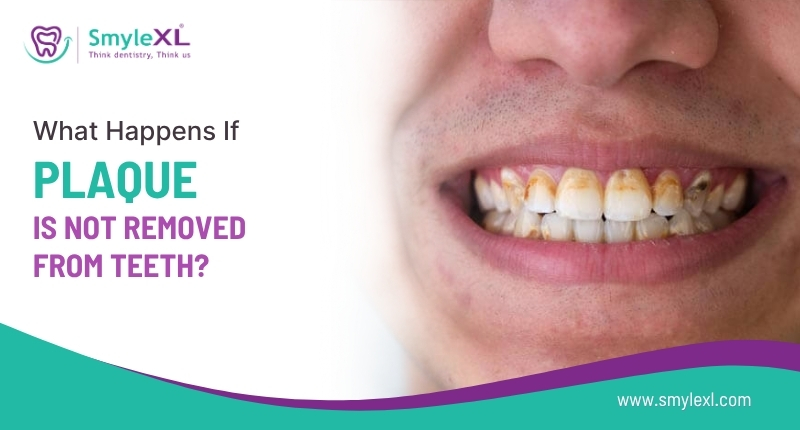
At SmyleXL Dental Clinic, we often see patients surprised by how much plaque buildup on teeth has accumulated before they notice a problem. What begins as a thin, invisible layer can gradually lead to bad breath, bleeding gums, gum infection, cavities, and even tooth loss if left untreated.
Which raises an important question:
What actually happens if plaque is never removed?
Table of Contents
ToggleLet’s Understand What Plaque Really Is
Plaque is a sticky layer of bacteria that constantly forms inside the mouth.
Every time you eat, drink, or even go about your day, bacteria interact with food particles and saliva to create what dentists call a bacterial biofilm.
Think of it as a living layer that attaches itself to tooth surfaces.
When brushing and flossing are done properly, most of this layer is removed daily.
But when oral hygiene becomes inconsistent, oral bacteria accumulation increases, and plaque starts staying on the teeth for longer periods.
This is where the trouble begins.
The First Stage: Your Teeth May Still Look Fine
One reason plaque is often ignored is that it doesn’t immediately change how your teeth look.
You may still smile normally.
You may still chew comfortably.
You may not feel any pain at all.
But beneath the surface, plaque buildup on teeth is becoming thicker.
The bacteria begin producing acids and toxins that irritate the surrounding gum tissue.
At this stage, patients usually don’t think they need teeth cleaning because everything appears normal.
The mouth, however, has already begun to react.
The Gums You Usually Notice First
Long before the teeth show damage, the gums often respond to plaque.
This response is called gum inflammation.
Healthy gums are firm, pale pink, and generally don’t bleed during brushing.
When plaque remains near the gumline, the gums become irritated.
You may begin noticing:
- redness
- slight swelling
- tenderness
- bleeding while brushing
- bleeding while flossing
At SmyleXL Dental Clinic, bleeding gums are often one of the earliest signs that routine teeth cleaning has been delayed for too long.
Many people mistakenly assume:
“My gums bleed because I’m brushing too hard.”
In reality, healthy gums usually don’t bleed easily. Inflammation is often the real culprit.
Then Comes the Problem Everyone Notices: Bad Breath
Bad breath is one of the most common consequences of untreated plaque.
Interestingly, friends and family usually notice it before the patient does.
That’s because the bacteria trapped within plaque release unpleasant-smelling compounds.
As oral bacteria accumulation increases, so does the odor.
Mouthwash may temporarily mask the smell.
Chewing gum may temporarily cover it.
But neither removes the underlying bacterial biofilm causing the issue.
This is why professional dental cleaning often improves breath more effectively than repeatedly changing toothpaste or mouthwash brands.
Plaque Doesn’t Stay Soft Forever
If plaque isn’t removed through proper teeth cleaning, it gradually hardens. Once hardened, it becomes tartar. Unlike plaque, tartar cannot be removed with normal brushing at home.
At this point, patients often require tartar removal treatment to eliminate the deposits safely. Tartar creates rough surfaces that attract even more plaque. Which means the problem begins accelerating. The longer tartar remains, the harder it becomes to control inflammation and bacterial growth.
Your Gums May Start Pulling Away From the Teeth
As plaque and tartar continue irritating the gums, the inflammation may progress further.
The gums begin losing their healthy attachment to the teeth.
Small spaces can develop between the gums and tooth surfaces.
These spaces become ideal hiding spots for bacteria.
At SmyleXL Dental Clinic, patients seeking oral hygiene treatment are often surprised to learn that gum disease frequently starts with something as simple as untreated plaque.
Once deeper pockets develop, bacteria become harder to remove through daily brushing alone.
This increases the risk of gum infection and more advanced periodontal problems.
Cavities Start Becoming More Likely
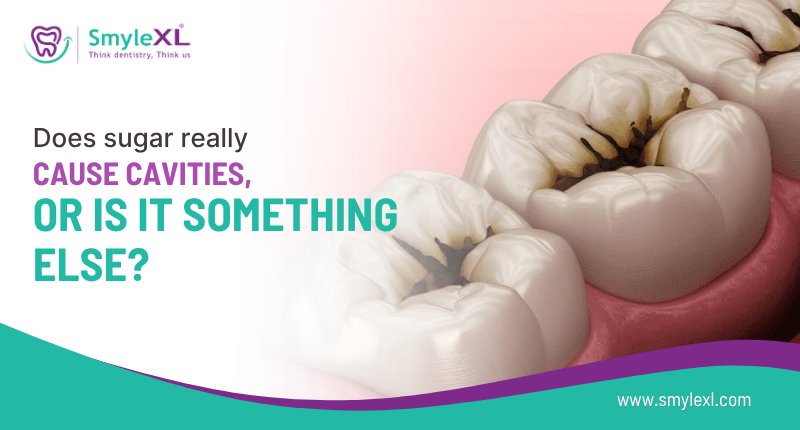
Many people associate plaque only with gum disease. But plaque is also heavily involved in cavity formation. The bacteria inside plaque feed on sugars from food and drinks. As they do, acids are released.
- These acids slowly weaken tooth enamel.
- Over time, enamel erosion occurs.
- The protective outer layer of the tooth begins losing minerals and strength.
- Eventually, weak spots become cavities.
This is why preventive teeth cleaning isn’t only about keeping gums healthy. It’s also about protecting teeth from decay before damage becomes irreversible.
The Silent Damage: Enamel Erosion
Unlike a broken tooth, enamel erosion doesn’t happen overnight.
It’s gradual.
Patients rarely notice it at first.
As bacterial acids continue attacking the enamel, teeth may become:
- more sensitive
- more prone to cavities
- weaker structurally
Once enamel is lost, the body cannot naturally regenerate it. That’s why dental plaque removal plays such an important role in long-term oral health. Protecting enamel is often far easier than repairing damage later.
The Mouth Is Connected to Everything
People often think of plaque as a “tooth problem.”
In reality, the gums and teeth are living tissues connected to the rest of the body.
Chronic gum inflammation creates a continuous inflammatory burden inside the mouth.
While the effects vary from person to person, maintaining healthy gums remains an important part of overall wellness.
This is another reason routine teeth cleaning should never be viewed as purely cosmetic.
Healthy gums support healthy teeth, comfortable chewing, and long-term oral function.
Why Home Brushing Isn’t Always Enough?
A common question we hear at SmyleXL Dental Clinic is:
“If I brush every day, why would I still need professional cleaning?”
The answer lies in location.
Certain areas of the mouth are difficult to clean thoroughly.
Examples include:
- behind the lower front teeth
- between crowded teeth
- below the gumline
- around dental restorations
Even people with excellent oral care habits may develop tartar in these areas.
This is why professional dental cleaning complements home care rather than replacing it.
The two work together.
Prevention Is Usually Easier Than Treatment
One of the most interesting things about plaque is that most of its consequences are preventable.
Cavities, gum disease, bad-breath, and gum infection often begin with the same early problem:
The plaque was left in place too long.
That is why preventive teeth cleaning remains one of the simplest investments patients can make in their oral health.
A short appointment today often prevents the need for much larger procedures later.
The Problem With Plaque Is That It Doesn’t Ask for Attention
That’s what makes plaque different from many dental problems.
A toothache demands attention. A broken tooth demands attention. Plaque doesn’t.
It quietly collects.
It quietly irritates.
It quietly creates conditions for bigger problems.
And by the time symptoms become obvious, the damage is often more extensive than it needed to be.
At SmyleXL Dental Clinic, we believe teeth cleaning should not be viewed as a reaction to problems. It should be viewed as prevention.
FAQs
What Happens During a Professional Teeth Cleaning?
A dental cleaning procedure is usually straightforward. The dentist removes plaque and tartar deposits from the teeth and gumline using specialized instruments. At SmyleXL Dental Clinic, every dental cleaning procedure is customized based on the patient’s oral condition and plaque levels.
How does modern dentistry make cleaning more comfortable?
Modern dentistry has changed significantly. Advanced instruments and improved techniques have made oral hygiene treatment much more comfortable than many patients expect. At SmyleXL Dental Clinic, we focus not only on removing buildup but also on making the experience positive and stress-free.
Can I skip polishing at the dentist?
Polishing is often recommended after dental plaque removal because it helps smooth the tooth surface and makes it harder for plaque to accumulate quickly again. While skipping polishing may not always affect the cleaning itself, it can reduce some of the preventive benefits. Your dentist can advise whether polishing is necessary based on your oral condition.
Do gums grow back after scaling?
Scaling and tartar removal treatment help reduce inflammation and allow the gums to heal, but gums that have significantly receded usually do not grow back on their own. In many cases, the gums become healthier, firmer, and less swollen after treatment. Early intervention gives the best chance of preserving gum health.
What foods should I avoid after teeth cleaning?
For the first few hours after a dental plaque removal, it’s best to avoid very hot foods, highly acidic drinks, and strongly colored beverages like coffee or cola. If your gums feel sensitive, avoid hard or crunchy foods temporarily. Soft foods and plenty of water can help keep you comfortable while your mouth settles.