
Teeth are a bit like the screen on your phone. You don’t think about the protective layer until it’s scratched, cracked, or gone, and by then, everything underneath feels a lot more vulnerable than it used to. Tooth enamel works exactly the same way. It’s the outermost shield, the first line of defense, and the reason your teeth can handle hot coffee, cold ice cream, and that one friend who insists on ordering extra-sour candy.
When enamel is thin, whether from enamel erosion, genetics, or years of dietary habits, your dentist would have strong opinions about, things start to feel different. And look different. And sometimes hurt in ways that are hard to ignore.
Here’s how to recognize the symptoms, what’s actually happening beneath the surface, and what can be done, from early intervention all the way to full mouth restoration when the damage has become significant.
Table of Contents
ToggleWhat Is Tooth Enamel, Exactly?
Enamel is the hardest substance in the human body, a mineralized outer layer covering the crown of each tooth, protecting the softer dentin underneath from temperature, pressure, acid, and bacteria.
Here’s the catch: unlike bone, enamel cannot regenerate. Enamel remineralization can strengthen and partially repair early surface damage, but it cannot rebuild enamel that has been significantly lost. This is precisely why thin enamel needs to be identified and addressed early.
What Causes Thin Tooth Enamel?
Enamel erosion causes fall into two broad categories:
Intrinsic causes include acid reflux and GERD, frequent vomiting, dry mouth, which removes the natural protection that supports enamel remineralization, and enamel hypoplasia, a developmental condition where enamel forms incompletely.
Extrinsic causes include acid erosion on teeth from citrus fruits, fizzy drinks, and sports drinks; teeth grinding (bruxism); and abrasive brushing habits.
The Symptoms: What Thin Enamel Actually Feels and Looks Like
1. Tooth Sensitivity
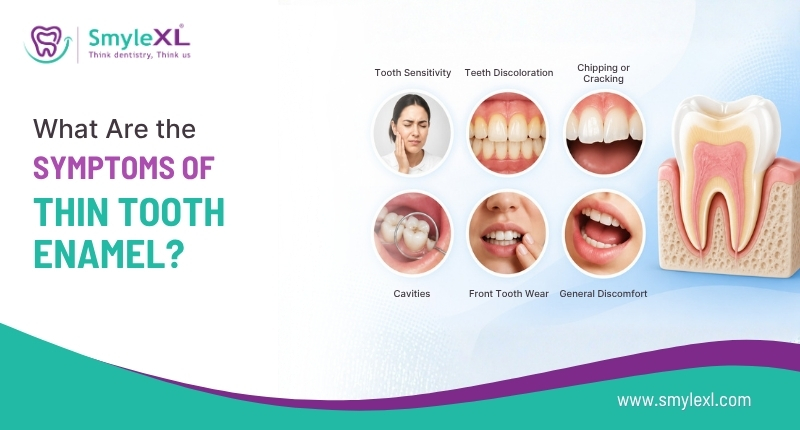
Dental sensitivity symptoms from thin enamel are triggered by cold drinks, sweet foods, and acidic items. As enamel thins, dentin tubules become less insulated, connecting directly to the tooth nerve. The key distinction: sensitivity from thin enamel tends to be widespread across multiple teeth, not localized like a cavity.
2. Transparent or See-Through Edges
Transparent teeth edges are one of the most visually distinctive signs, particularly on front teeth. The biting edges appear translucent or glassy because the enamel has worn thin enough that light passes through differently.
3. Tooth Discoloration
As enamel thins, the more yellow dentin beneath becomes increasingly visible. Treatment for tooth discoloration in these cases isn’t whitening, as the discoloration is structural. Whitening treats surface pigment; it doesn’t address dentine showing through worn enamel.
4. Increased Chipping and Cracking
Thin enamel is brittle enamel. Teeth that chip more easily than before are signaling enamel thinning. Tooth enamel loss treatment at this stage is about protecting what’s left before chipping becomes structural.
5. Rough or Irregular Surfaces
As acid erosion on teeth progresses, the surface develops a slightly rough, dull, or pitted texture, visible on close inspection and sometimes felt with the tongue.
6. Fillings That Appear to Have Risen
If older fillings appear to sit higher than the surrounding tooth, it’s not the filling that’s risen; it’s the enamel around it that’s worn down. Filling material resists acid erosion better than natural enamel.
How Is Thin Enamel Diagnosed?
A dentist diagnoses enamel thinning through clinical examination, patient-reported dental sensitivity symptoms, and X-rays showing dentine exposure. The pattern of wear, consistent with grinding, acid exposure, or enamel hypoplasia, guides both diagnosis and treatment planning.
Treatment Options: From Early Intervention to Full Mouth Restoration
Early Stage: Remineralization and Prevention
Enamel remineralization through prescription fluoride toothpaste, in-clinic fluoride applications, and addressing underlying causes, such as treating reflux, managing dry mouth, fitting a nightguard, can slow or pause early-stage erosion.
Moderate Stage: Bonding and Monitoring
When dental sensitivity symptoms are significant but structural integrity is still reasonable, composite bonding covers exposed dentine, restores tooth contour, and provides protection, often in a single appointment.
Advanced Stage: Crowns and Veneers
When tooth enamel loss treatment moves beyond what bonding can address, crowns and veneers become necessary. Crowns protect the remaining structure and restore full function. Veneers restore front surfaces, particularly effective when transparent teeth edges and treatment for tooth discoloration are both present.
Severe Stage: Full Mouth Restoration
When thin enamel has caused significant damage across multiple teeth, affecting the bite and making step-by-step repairs impractical, full mouth restoration (FMR) is the appropriate solution.
Complete smile reconstruction combines crowns, veneers, implants, and bite correction into a coordinated plan. Full dental restoration addresses how the entire bite functions, because severe enamel loss has almost always affected the bite as well. Comprehensive oral rehabilitation is carefully sequenced: gum health first, bite correction before cosmetic work, implants before bridges. Restorative dental work at this scale is the most thorough and lasting solution when the damage warrants it.
Can Thin Enamel Be Prevented?
Yes, particularly at early stages:
- Reduce the frequency of acidic food and drink consumption
- Rinse with water after acidic foods rather than brushing immediately
- Use a straw for acidic drinks
- Treat acid reflux properly; a gastroenterologist is part of the solution
- Wear a nightguard if grinding is a contributing factor
- Use fluoride toothpaste consistently to support enamel remineralization
- Attend regular check-ups; caught early, extensive dental repair is far less involved than treating advanced damage
What Does Full Mouth Restoration Cost in Surat?
At SmyleXL Dental Clinic in Lal Darwaja, Surat, the cost of full mouth restoration reflects the scope of each individual case:
| Treatment | Approximate Cost |
| FMR (overall) | ₹1,50,000 – ₹10,00,000+ |
| Full mouth implants (All-on-4/All-on-6) per arch | ₹1,50,000 – ₹5,00,000 |
| Implant-supported dentures (both arches) | ₹5,50,000 – ₹13,00,000 |
| Traditional full dentures (removable) | ₹20,000 – ₹80,000 |
| Crowns & bridges (per tooth) | ₹6,000 – ₹20,000 |
| Root canal treatment & fillings (per tooth) | ₹4,100 – ₹10,000 |
Smile rehabilitation treatment can be phased across time, spreading the investment while following a coordinated plan. The cost of full mouth restoration is always presented as a complete, itemized breakdown before treatment begins, no surprises.
The Earlier You Catch It, The Simpler the Fix
Thin enamel rewards early attention disproportionately. The difference between treating it at the remineralization stage versus the whole mouth dental treatment stage is significant, in cost, complexity, and how much natural tooth structure can be preserved.
At SmyleXL Dental Clinic in Surat, advanced tooth restoration starts with a thorough assessment, from early enamel remineralization support all the way through to full mouth restoration for cases that need it.
Book your consultation at SmyleXL Dental Clinic today. Your enamel can’t wait forever, but the good news is, neither do we.
Frequently Asked Questions
What does full mouth restoration mean?
FMR is a comprehensive treatment plan addressing all teeth across both jaws, restoring function, health, and appearance together. It combines restorative dental work like crowns, implants, and bridges with gum treatment and bite correction. Comprehensive oral rehabilitation is recommended when enamel loss has affected enough teeth that individual repairs are no longer practical.
What is the best option for full mouth restoration?
The best option depends on how many teeth are affected, the extent of tooth enamel loss treatment needed, and overall oral health. Complete smile reconstruction using implants offers the most permanent result for significant tooth loss. Crowns and bridges suit cases where natural roots are still viable. Full dental restoration combining implants, crowns, and veneers is often most appropriate for complex, widespread enamel damage.
How long does a full mouth restoration last?
Whole mouth dental treatment results are built for long-term durability, crowns last 10–15 years, and implants can last a lifetime. Smile rehabilitation treatment longevity depends on oral hygiene, regular check-ups, and whether underlying enamel erosion causes have been properly addressed. Treating the cause alongside the damage is what makes advanced tooth restoration genuinely last.
Who needs full mouth rehabilitation?
FMR is appropriate when thin enamel has compromised bite function, caused structural failure, or made individual repairs impractical. Extensive dental repair at this scale delivers better outcomes than treating each tooth separately, particularly when enamel hypoplasia or severe acid erosion on teeth has caused widespread damage.
Is full mouth restoration painful?
FMR procedures are performed under local anesthesia, and discomfort is well-managed throughout. Because comprehensive oral rehabilitation is staged across multiple appointments, recovery is spread out rather than concentrated. Most patients find it far more manageable than expected, particularly when patient comfort is prioritized throughout restorative dental work.