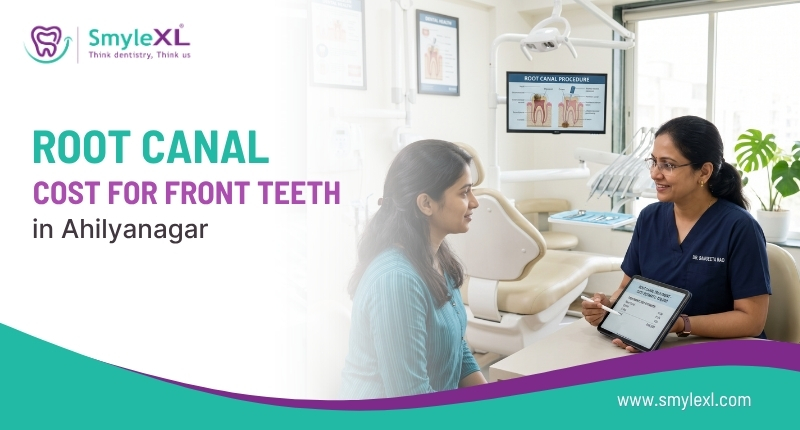

Every time somebody visits SmyleXL Dental Clinic to inquire about preventive procedures, one of the most common questions patients ask is, “What is the root canal cost for front teeth in Ahilyanagar?”
The answer depends on several factors, including the condition of the tooth, the treatment approach, and whether additional restoration is required.
That small discomfort you ignored can slowly turn into sharp pain, especially when it affects a front tooth. Soon, even simple things like biting your favorite food can become uncomfortable.
While front teeth are important for your smile, they also contain nerves and tissues that keep them healthy. When infection or damage reaches the inner part of the tooth, a root canal may become necessary.
At SmyleXL Dental Clinic, patients are guided through every step of the process so they understand their options before starting treatment.
Table of Contents
ToggleWhy Do Front Teeth Need a Root Canal?
Your front teeth can develop problems due to several reasons.
The most common causes include:
- deep tooth decay
- injury or trauma
- cracks in the tooth
- repeated dental procedures
- untreated cavities
When bacteria reach the inner portion of the tooth, they can affect the dental pulp and the tooth nerve.
This may lead to:
- tooth pain
- sensitivity to hot or cold
- swelling near the gums
- discomfort while biting
- darkening of the tooth
In such situations, a root canal helps remove the infected tissue while preserving the natural tooth.
What Is the Root Canal Cost for Front Teeth in Ahilyanagar?
The root canal cost for front teeth in Ahilyanagar usually depends on the complexity of the case and the type of treatment required.
Generally, the cost may vary based on:
- severity of infection
- number of appointments required
- technology used
- type of crown after treatment
| Treatment Type | Approximate Cost Range |
| Front Tooth Root Canal Treatment | ₹2,000 – ₹6,000 |
| Dental Crown After Root Canal | ₹1,500 – ₹12,000 |
| Root Canal With Crown | ₹3,500 – ₹18,000 |
Front teeth usually have a simpler root structure compared to back teeth, which can make the root canal procedure more straightforward in many cases.
However, every tooth is different.
A tooth with minor damage may require a simple treatment, while an infected tooth with deeper infection may need additional care.
What Factors Affect Root Canal Treatment Cost?
Many patients search online for root canal treatment cost, but the final amount depends on multiple factors.
1. Condition of the Tooth
A tooth with early infection may require less complex treatment.
However, if the infection has progressed and affected the surrounding tissues, additional procedures may be needed.
The level of tooth decay and damage determines the treatment approach.
2. Type of Root Canal Procedure
Traditional techniques and advanced approaches may have different pricing.
Some patients may require standard treatment, while others may benefit from advanced options like laser root canal treatment.
Modern techniques can help improve precision and comfort during treatment.
3. Need for a Crown
Many patients assume the treatment ends after removing the infection.
But the treated tooth needs additional protection in the form of a dental crown.
A crown helps strengthen the tooth and restore its function.
This is why patients require root canal with crown treatment when the tooth structure has weakened.
Is Root Canal Treatment Painful?
The biggest fear patients have is pain.
But with advancements in modern dentistry, RCT today is much more comfortable than people imagine.
A painless root canal treatment focuses on:
- proper diagnosis
- effective anesthesia
- gentle techniques
- patient comfort
During the procedure, most patients feel pressure rather than pain.
The goal is not only to remove the tooth infection but also to make the experience as comfortable as possible.
What Happens During a Root Canal Procedure?
A typical root canal procedure involves several steps.
Step 1: Examination
The dentist checks the tooth condition through clinical examination and imaging.
This helps identify:
- infection level
- damage extent
- condition of the tooth nerve
Step 2: Removing Infection
The infected tissue inside the tooth is carefully removed.
This eliminates bacteria affecting the dental pulp.
Step 3: Cleaning and Sealing
The inside of the tooth is cleaned and sealed to prevent future tooth infection.
This step protects the tooth and supports long-term oral health.
Step 4: Restoration
After treatment, the tooth is restored with a crown to improve strength and appearance.
What Is a Single Tooth Root Canal?
When only one tooth requires treatment, it is known as a single tooth root canal.
Front teeth commonly fall into this category because they are individual teeth with a single root in many cases.
The cost of a single tooth treatment depends on:
- infection severity
- procedure complexity
- restoration needs
Patients often choose this option because it helps save their natural tooth instead of removing it.
Why Choose Advanced Root Canal Techniques?
Modern treatment options have improved patient comfort significantly.
For suitable cases, laser root canal treatment may be recommended.
Benefits may include:
- improved cleaning
- better precision
- enhanced comfort
- reduced bacterial presence
However, the right technique depends on individual tooth conditions.
A dentist will recommend the best approach after evaluation.
Root Canal Charges: What Are You Actually Paying For?
Many patients compare root canal charges without understanding what is included.
The overall treatment cost may include:
- consultation
- diagnosis
- cleaning procedures
- filling materials
- restoration
- crown
A lower price does not always mean better treatment.
Quality materials, proper sterilization, and experienced care play an important role in successful results.
Can a Root Canal Save an Infected Tooth?
Yes.
A root canal is designed to preserve a damaged tooth.
Instead of removing the tooth completely, the infected portion is treated while keeping the natural structure.
This helps maintain:
- chewing ability
- smile appearance
- natural alignment
Saving your natural tooth is usually beneficial for long-term dental health.
When Should You Visit a Dentist?
Do not wait until the pain becomes unbearable.
You should consider a dental consultation if you notice:
- continuous tooth pain
- sensitivity that does not improve
- swelling
- pain while chewing
- changes in tooth colour
Early treatment often prevents the infection from becoming more complicated.
FAQs
How much does a root canal cost for front teeth in Ahilyanagar?
The root canal cost for front teeth in Ahilyanagar depends on infection severity, treatment method, and the type of crown chosen. Front teeth generally require simpler treatment compared to back teeth, but exact pricing can only be decided after examination.
Is a root canal better than removing a tooth?
In most cases, saving your natural tooth is preferred. Root canal therapy helps remove infection while keeping the original tooth structure intact.
How long does a root canal treatment take?
A root canal therapy appointment may vary depending on the condition of the tooth. Some cases can be completed in fewer visits, while complex infections may require additional appointments.
Do all root canal-treated teeth need crowns?
Not every tooth requires a crown. However, teeth with significant damage may need root canal with crown restoration for better protection and strength.
Can root canal treatment prevent tooth pain permanently?
A successful treatment can eliminate pain caused by infection. Maintaining good oral health and regular dental check-ups helps protect the treated tooth.
Restore Your Tooth Before the Infection Gets Worse
A damaged tooth does not always need to be removed.
With timely treatment, even a painful or infected tooth can often be saved and restored.
If you are searching for the root canal cost for front teeth in Ahilyanagar, getting an accurate evaluation is the first step toward understanding your treatment options. At SmyleXL Dental Clinic, patients receive personalized guidance for RCT, restoration, and long-term dental care.
Because the best treatment is not just about removing pain. It is about protecting your smile for years to come.