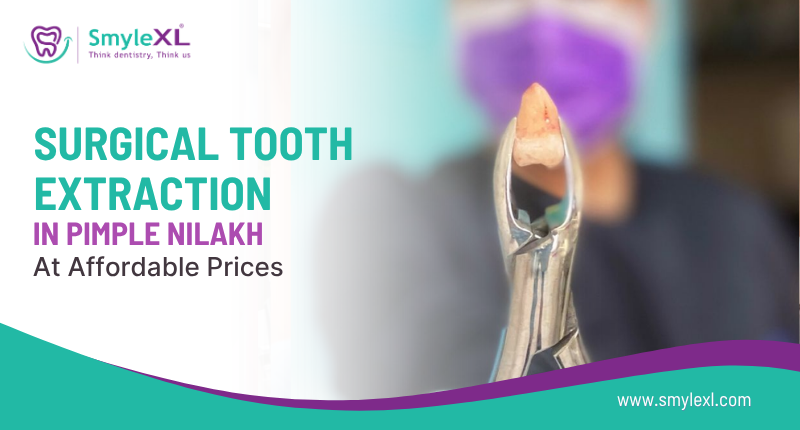

It starts innocently. Your dentist says surgical extraction, and you nod calmly. You get home. You open Google. Forty-five minutes later, you’ve read seventeen blogs, watched a video you absolutely should not have watched, and arrived at the firm conclusion that this is going to be the worst experience of your life.
Spoiler alert: It isn’t.
At SmyleXL Dental Clinic, we ensure that surgical tooth extraction in Pimple Nilakh is one of those procedures that exists in a very specific gap: genuinely routine for the dentist, genuinely more manageable than anticipated for the patient. The gap between the Google version and the actual version is enormous. Here’s the actual version.
Table of Contents
ToggleSimple vs Surgical: What’s Actually Different?
First, let’s address the word “surgical” because it’s doing a lot of unnecessary work by making people anxious.
Simple vs surgical extraction comes down to one thing: how cooperative is the tooth being about leaving?
Simple extraction: The tooth is visible, fully erupted, and comes out without creating too much drama. Quick, clean, done.
Surgical extraction: The tooth is impacted, broken at the gumline, has roots that curve dramatically, or is generally behaving like it has no intention of leaving quietly. A small incision gives the dentist access to remove it properly.
That’s it. The complex tooth removal procedure sounds dramatic. In practice, with proper local anesthesia technique, you feel pressure and movement. Not pain. The “surgical” part describes what the dentist is doing, not what you’re experiencing.
Who Actually Needs Surgical Extraction?
The Wisdom Tooth That Decided to Go Sideways
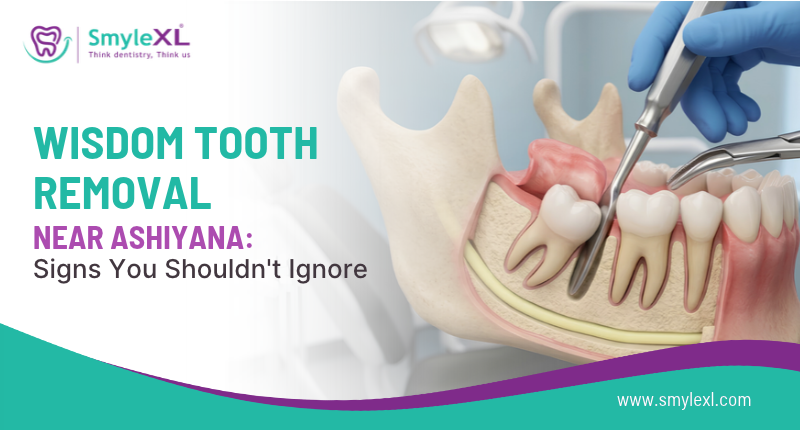
Wisdom tooth extraction is the poster child of impacted tooth surgery, and for good reason. A wisdom tooth growing horizontally into the adjacent tooth, or sitting entirely under the gumline with absolutely no plans to erupt properly, isn’t going anywhere without surgical help.
Leaving it there isn’t an option either; impacted wisdom teeth cause pain, infection, and damage to the perfectly innocent teeth next door. The tooth that seemed fine six months ago becomes the tooth that definitely isn’t fine now.
The Tooth That Lost a Fight
Severe decay, old trauma, a failed restoration; sometimes a tooth breaks at or below the gumline, and there’s simply nothing left to grab for a simple extraction. Oral surgery for damaged teeth creates access to what’s beneath the surface. No fragment left behind, no guesswork.
The Root Canal Tooth That’s Done Its Time
A tooth that’s been through root canal treatment, had a post placed, and is now beyond saving; that’s not a simple pull. The internal anatomy and root structure make dental extraction a surgical procedure.
The Molar With Roots Going in Three Different Directions
Some teeth, particularly upper molars, have roots that spread, curve, or diverge in ways that make simple removal genuinely risky. A complex tooth removal procedure means sectioning the tooth into manageable pieces. Less force, less trauma, faster healing.
What Actually Happens During the Procedure
Surgical tooth extraction in Pimple Nilakh at SmyleXL Dental Clinic follows a clear sequence. Here’s the play-by-play, which is considerably less eventful than whatever you imagined at 11 pm last night.
Step 1: The X-Ray That Plans Everything
A digital dental X-ray maps the tooth’s exact position, root anatomy, and proximity to nerves before anything begins. The extraction is planned around this, not improvised. This is the step that makes the difference between a smooth procedure and an unnecessarily complicated one.
Step 2: Getting The Area Completely Numb
Local anesthesia technique at SmyleXL Dental Clinic starts with topical numbing gel, so the injection itself is barely felt. The area is then numbed thoroughly. Nothing proceeds until you confirm you can’t feel anything. This is non-negotiable. “I can still feel something” is always addressed before continuing; no heroics required.
Step 3: The Actual Extraction
A small incision if needed. The tooth is loosened, sectioned if the roots require it, and removed. The whole thing happens in a sterile surgical environment, with instruments, protocols, and hygiene standards that make infection-free recovery significantly more likely. Most patients are surprised by how little they feel and how quickly it’s over.
Step 4: Closure and You’re Done
The site is cleaned, sutures placed if needed, and gauze positioned. The dentist gives you post-extraction care instructions while you’re still processing the fact that it’s already finished. Most procedures take 20–45 minutes. Patients consistently report that the anticipation was worse.
Affordable Tooth Removal: What That Actually Means
When it comes to surgical tooth extraction in Pimple Nilakh at SmyleXL, affordable tooth removal doesn’t mean cheaper anesthesia, faster shortcuts, or “we’ll just see how it goes.” It means transparent pricing, no unnecessary add-ons, and a painless tooth extraction experience delivered properly, without charging a premium for what should be standard.
Emergency dental extraction is available for situations that can’t wait, like severe pain, significant swelling, or spreading infection. Same standards, same care, addressed promptly. Because sometimes that tooth that was “fine” for eight months decides to become very much not fine on a Friday evening.
Recovery: The Chapter Everyone Skips to First
The First 24 Hours
The clot that forms in the socket is the most important thing happening in your mouth right now. Protect it like it’s your most prized possession.
- Bite gently on the gauze; it controls bleeding and helps clot formation
- Ice pack on the cheek (20 minutes on, 20 off) for reduced post-operative swelling
- No straws or spitting forcefully; the suction will dislodge the clot
- No smoking; nicotine constricts blood vessels and dramatically increases risk of dry socket
- Rest. The gym will still be there Thursday.
About Dry Socket: The Thing Everyone Googles
Risk of dry socket is real; it happens when the clot is lost or dissolves before the socket heals. The bone is exposed. It hurts. It’s not dangerous, but it’s unpleasant and requires a follow-up visit.
Following post-extraction care instructions properly reduces the risk significantly. The patients who get dry socket are almost always the ones who skipped a step, usually straws, smoking, or vigorous rinsing too soon.
Days 2–5: Faster Healing After Extraction
Faster healing after extraction comes from doing very little. Soft foods, adequate hydration, and no touching the socket with your tongue every five minutes to check on it. Let the biology do its job.
Food options: curd, khichdi, mashed dal, banana, cold milk, scrambled eggs. Ice cream for the first 24 hours is genuinely recommended, not just a nice perk. The cold reduces swelling, and the texture requires zero effort.
When to Call the Clinic
Some things are normal. Some things aren’t.
Normal: Soreness reducing day by day, mild swelling for 2–3 days, occasional minor bleeding in the first 24 hours, slight bruising.
Call SmyleXL Dental Clinic if:
- Pain is getting worse after day 3, not better
- Swelling is increasing after 48 hours
- Fever, persistent numbness, or a bad taste develops
- The socket looks empty, no dark clot visible; that’s risk of dry socket territory
The Version That’s Nothing Like What Google Showed You
Surgical tooth extraction in Pimple Nilakh at SmyleXL Dental Clinic: digital dental X-ray planning, a thorough local anesthesia technique, a sterile surgical environment, and clear post-extraction care instructions all work to make the experience as routine as the dentist knows it to be.
Affordable tooth removal done properly is always better than an expensive delay that turns a manageable problem into a complicated one. And whatever that tooth has been putting you through, it’s been putting you through it for long enough.
Book your consultation at SmyleXL Dental Clinic in Pimple Nilakh today. The Google version was wrong. Come find out what it’s actually like.
Frequently Asked Questions
How long does a surgical tooth extraction take?
Surgical tooth extraction in Pimple Nilakh at SmyleXL Dental Clinic takes 20–45 minutes depending on the tooth’s position and anatomy; impacted tooth surgery for a deeply embedded wisdom tooth takes longer than a broken tooth at the gumline. The full appointment, including anesthesia, the procedure, and post-extraction care instructions, runs about 60–75 minutes. A digital dental X-ray taken beforehand means the procedure is planned precisely, reducing surprises during extraction.
Is surgical extraction more painful than simple extraction?
No, painless tooth extraction applies to both. Local anesthesia technique ensures complete numbness regardless of complexity. Patients feel pressure and movement, not pain. Post-procedure soreness after a complex tooth removal procedure may be slightly more than after a simple extraction, but both are managed with prescribed medication and resolve within days. The word “surgical” does not mean more painful. It means more involved, which the anesthesia fully accounts for.
How long does it take to recover from a surgical tooth extraction?
Initial soreness and reduced post-operative swelling resolve within 5–7 days for most patients. Faster healing after extraction depends almost entirely on following post-extraction care instructions: no straws, no smoking, soft diet, clot undisturbed. The socket heals internally over several weeks, but most patients feel largely normal within a week. Impacted tooth surgery recovery may run slightly longer than simpler cases.
What should I eat after a surgical tooth extraction?
Soft, cool foods for the first 3–5 days: think curd, mashed dal, khichdi, banana, cold milk, scrambled eggs, ice cream. Avoid hot foods, hard or crunchy textures, spicy food, and anything requiring significant chewing on the extraction side. Infection-free recovery is supported by eating properly, just softer. Gradually reintroduce normal foods as comfort allows, always being mindful of the risk of dry socket until the site is fully healed.
How do I know if I need a surgical extraction or a simple one?
You don’t, and you don’t need to. A digital dental X-ray makes that determination clinically. The tooth’s position, root anatomy, and degree of eruption are all visible on imaging, and simple vs surgical extraction is decided based on that, not on how the tooth looks from the outside. Wisdom tooth extraction almost always requires surgical access when impacted. Broken teeth at the gumline and teeth with complex roots similarly require oral surgery for damaged teeth rather than a straightforward pull.