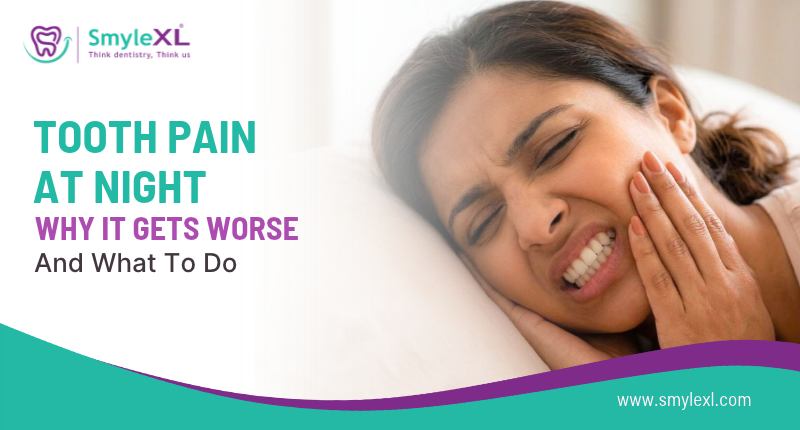

A tooth that starts hurting at night can quickly turn a normal evening into a sleepless one. Tooth pain at night often feels worse because lying down can increase pressure around an irritated tooth nerve, while fewer distractions make the discomfort more noticeable.
Persistent or throbbing pain may not be just a temporary problem. It can be linked to deeper decay, an infected tooth pulp, or a damaged tooth nerve that may require professional evaluation and dental treatment.
At SmyleXL Dental Clinic, we provide efficient and reliable root canal treatment in Ahilyanagar. Dr. Onkar Kulkarni evaluates the cause of tooth pain and recommends suitable care based on the condition of the tooth. Understanding why pain increases at night can help you know when it is time to seek dental attention.
Table of Contents
ToggleWhy Does Tooth Pain Get Worse at Night?
Many people notice that their tooth pain becomes stronger when they lie down to sleep. This happens because changes in body position can increase blood flow and pressure around inflamed areas of the tooth.
During the day, daily activities can distract you from mild discomfort. At night, when everything becomes quiet, even a small irritation can feel much more intense.
Common reasons behind severe toothache at night include:
- Increased pressure around an inflamed tooth
- Deep decay affecting the inner layers of the tooth
- Irritation of the tooth nerve
- Existing dental infection
- Inflammation around the gums or tooth roots
If pain repeatedly interrupts your sleep, it may indicate that the problem needs more than temporary night tooth pain relief.
Why Does My Tooth Hurt More When I Lie Down?
When you lie down, blood circulation around the head and jaw area can increase slightly. If the tissues around the tooth are already inflamed, this additional pressure may make the pain feel stronger.
This is especially common when there is irritation inside the tooth. The inner portion of the tooth contains nerves and blood vessels, and problems affecting this area can cause intense tooth nerve pain.
A tooth with a damaged tooth nerve may show symptoms such as:
- Sharp or throbbing pain
- Pain that appears without warning
- Discomfort while biting
- Increased sensitivity to hot or cold foods
These signs should not be ignored because they may indicate a deeper dental concern.
What Causes Sudden Tooth Pain at Night?
Sudden pain can happen for several reasons. Identifying the cause is important because the treatment depends on what is affecting the tooth.
Deep Tooth Decay
One of the common reasons for sudden tooth pain is decay progressing deeper into the tooth. When cavities extend beyond the outer enamel and reach the inner layers, they can irritate the nerve.
Deep cavity tooth pain may feel sharp, continuous, or worse while eating. If decay reaches the pulp, the tooth may require specialized treatment.
Tooth Infection
A dental infection occurs when bacteria reach areas inside or around the tooth. Common tooth infection symptoms include:
- Persistent pain
- Swelling around the gums
- Pain while chewing
- Sensitivity that does not settle
An untreated infection can affect the surrounding tissues and may require tooth infection treatment.
Infected Tooth Pulp
The pulp is the soft inner part of the tooth containing nerves and blood vessels. When bacteria reach this area, the pulp can become inflamed or infected.
An infected tooth pulp often causes lingering pain that does not disappear quickly. In such situations, endodontic treatment may be recommended to remove infection and preserve the natural tooth.
Dental Abscess
A dental abscess is a collection of infection around the tooth or gums. It may cause severe pain, swelling, and pressure around the affected area.
A dental abscess requires timely evaluation because the infection needs appropriate management rather than temporary relief alone.
Is Night Tooth Pain a Sign of Infection?
Night pain does not always mean you have an infection. Sometimes, sensitivity or irritation can also cause discomfort. However, certain symptoms may suggest a deeper problem.
You should consider a dental consultation if you experience:
- Persistent toothache
- Swollen gums
- Pain that worsens over time
- Sensitivity that continues after removing the trigger
- Facial swelling
- Pain while biting
When these symptoms appear together, they may indicate issues such as dental infection, deep decay, or damage inside the tooth.
Early evaluation helps determine whether you need simple care or advanced treatment such as root canal treatment.
How Can I Reduce Tooth Pain at Night?
While temporary steps may help you manage discomfort until your dental visit, they do not treat the underlying cause.
For temporary night tooth pain relief, you can:
- Keep your head slightly elevated while resting
- Avoid chewing on the painful side
- Maintain gentle oral hygiene
- Avoid extremely hot or cold foods
However, if the pain keeps returning, delaying treatment may allow the problem to progress. A dentist can identify whether you need fillings, infection management, or a root canal procedure.
When Is Root Canal Treatment Needed?
Many people associate root canals with pain, but the purpose of the treatment is actually to remove the source of pain caused by infection or damage inside the tooth.
Root canal treatment is generally considered when the inner pulp of the tooth becomes infected or damaged due to:
- Deep tooth decay
- Cracks or injuries
- Repeated dental procedures
- Bacterial infection
You may need a root canal if you experience:
- Persistent toothache
- Severe sensitivity
- Pain that wakes you at night
- Swelling near the affected tooth
- Signs of infection
A dentist examines the tooth condition and decides whether a root canal is the right option.
How Does Root Canal Treatment Relieve Tooth Pain?
The purpose of a root canal is to remove infected tissue, clean the inside of the tooth, and protect it from further damage.
During the procedure:
Examination and Diagnosis
The dentist evaluates your symptoms and checks the condition of the tooth. Imaging may be used to understand the extent of infection.
Removing the Infected Tissue
The infected or damaged pulp is carefully removed to eliminate the source of discomfort.
Cleaning and Sealing the Tooth
The root canals are cleaned and sealed to prevent bacteria from entering again.
Restoring the Tooth
After treatment, the tooth may require protection through tooth restoration after a root canal. A dental crown after RCT is necessary to strengthen the tooth and support long-term function.
How Long Can You Wait Before Getting a Root Canal?
Waiting depends on the severity of your symptoms. Occasional mild discomfort may not always require immediate treatment, but persistent pain should not be ignored.
If an infected tooth is left untreated, the infection may continue affecting the surrounding tissues. This can lead to worsening pain, swelling, or complications requiring more extensive care.
A timely dental evaluation helps determine whether root canal treatment is needed and prevents unnecessary delays.
What Happens If an Infected Tooth Is Left Untreated?
An untreated infected tooth may continue to deteriorate over time. Since the infection does not usually resolve on its own, ignoring symptoms can increase discomfort.
Possible concerns include:
- Increasing tooth pain
- Gum swelling
- Spread of infection
- Damage to surrounding structures
Getting timely toothache treatment options from a dentist can help protect your natural tooth and avoid more complex procedures.
Why Choose SmyleXL Dental Clinic for Root Canal Treatment in Ahilyanagar?
Tooth pain can have different causes, and the right treatment depends on accurate diagnosis. At SmyleXL Dental Clinic, Dr. Onkar Kulkarni focuses on identifying the source of discomfort and providing appropriate treatment planning.
Whether the concern is deep decay, infection, or nerve-related pain, professional evaluation helps determine whether you need root canal treatment, restoration, or another approach.
For patients experiencing persistent pain or searching for reliable dental care, consulting an experienced dental professional can help address the problem before it becomes more difficult to manage.
Frequently Asked Questions
Can a toothache go away without treatment?
A toothache may temporarily reduce, but the underlying cause may still remain. Problems like decay or infection usually require professional evaluation.
Is root canal treatment painful?
Modern dental techniques help make the procedure more comfortable. The aim of root canal treatment is to remove infection and relieve the pain caused by the affected tooth.
When Do You Need a Root Canal?
A root canal treatment is usually needed when the inner pulp of the tooth becomes infected or damaged due to deep decay, cracks, or injury. The procedure helps remove the infected tissue, clean the root canals, and preserve the natural tooth.
You may need a root canal if you experience:
- Persistent or severe tooth pain
- Tooth pain at night that interrupts sleep
- Sensitivity to hot or cold that continues
- Pain while biting or chewing
- Swelling around the gums
- Signs of dental infection
A dentist evaluates your tooth condition to determine whether a root canal is the right treatment option or if another approach can restore the tooth.
Is every night tooth pain caused by a cavity?
No. Night pain can occur due to cavities, infection, nerve irritation, cracks, or other dental issues. A dental examination helps identify the actual cause.
Do I always need a crown after a root canal?
Yes, every tooth requires the same restoration. A dental crown after RCT is needed to strengthen the tooth and its remaining structure.
When should I see a dentist for tooth pain?
You should seek dental care if pain is severe, persistent, affects sleep, or is accompanied by swelling or infection symptoms.
Do Not Ignore Persistent Night Tooth Pain
A toothache that keeps returning at night is your body’s way of indicating that something needs attention. While temporary measures may provide comfort, identifying the actual cause is important for long-term relief.
If you are experiencing symptoms that may require dental care, SmyleXL Dental Clinic can help evaluate your tooth condition and guide you toward the proper and effective root canal treatment in Ahilyanagar.

Dr Onkar Kulkarni
Principal Dentist & Dental Care Expert
Dr. Onkar Kulkarni is a BDS-qualified dentist with 22+ years of experience, serving patients at SmyleXL Dental Clinic in Ahmednagar. He completed his BDS from Bharati Vidyapeeth’s Dental College & Hospital, Pune, and is known for his caring, patient-focused approach to dental treatment. His expertise includes comprehensive dental care, restorative dentistry, preventive dentistry and personalised treatment planning.
Professional Profile: Dr. Onkar Kulkarni
Facebook: SmyleXL Facebook
Instagram: SmyleXL Instagram
YouTube: SmyleXL YouTube