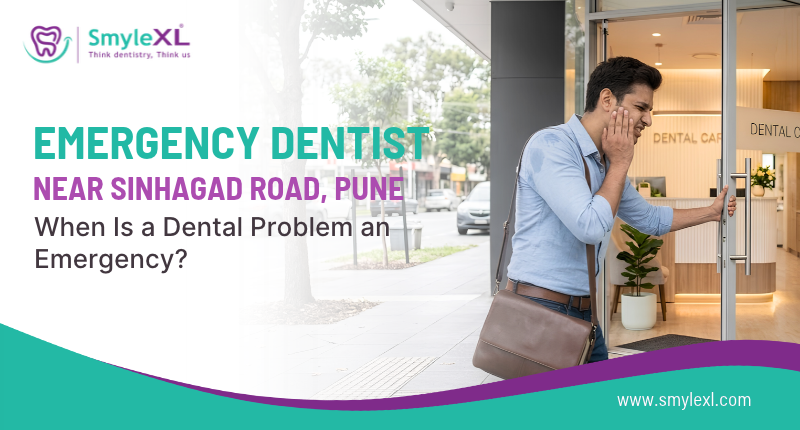

A dental problem becomes an emergency when it involves sudden severe pain, swelling, trauma, uncontrolled bleeding, or an infection that needs immediate attention.
Not every toothache needs an emergency visit, but some dental problems should never be ignored. Severe pain, facial swelling, a knocked-out tooth, or a broken tooth may require immediate attention.
Understanding what counts as a dental emergency can help you decide when to wait and when to seek professional care.
For urgent concerns, an Emergency Dentist Near Sinhagad Road, Dr. Ganesh Kulkarni at SmyleXL Dental Clinic can help identify the cause and guide you toward the right treatment for urgent dental care.
Table of Contents
ToggleNot Every Dental Problem Needs Emergency Care
A tooth problem does not always mean you need immediate treatment. For example, mild sensitivity that occurs occasionally may not require urgent attention, while severe pain or swelling may indicate a deeper concern.
Understanding the level of urgency can help you decide your next step.
Dental concerns that usually need quick attention include:
- Severe or continuous tooth pain
- A knocked-out tooth due to injury
- A broken or cracked tooth
- Facial swelling caused by infection
- Uncontrolled bleeding
- A tooth infection causing discomfort or swelling
- A lost filling or crown with pain
These situations may require dental emergency treatment because delaying care can sometimes allow the problem to progress.
When Should You Visit an Emergency Dentist?
You should consider visiting an emergency dentist when your symptoms interfere with daily activities or indicate a possible infection or injury.
Severe Tooth Pain That Does Not Go Away
A sudden or intense toothache is one of the most common reasons people seek emergency dental care. While temporary relief may make the pain manageable for some time, the underlying cause often needs professional attention.
A night toothache that wakes you up, throbbing pain, sensitivity that continues after eating, or pain while chewing may indicate problems such as deep decay or infection.
For temporary severe toothache relief, you can rinse with warm water and avoid putting pressure on the affected tooth. However, these steps only provide short-term comfort and do not treat the actual cause.
In some cases, an emergency root canal may be recommended to address infection inside the tooth and preserve it.
What Dental Problems Need Emergency Treatment?
Different situations require different levels of care. Here are some common dental emergencies and what you should know.
1. What Should You Do If Your Tooth Breaks Suddenly?
A broken tooth emergency can happen because of an accident, biting something hard, or weakening of the tooth due to decay. Even if the pain is mild initially, a broken tooth may expose inner layers and increase the risk of infection.
If you have a cracked tooth or a tooth that has broken:
- Avoid chewing on that side
- Visit a dentist for evaluation
Depending on the damage, treatment may include restoration, a crown, or other procedures to protect the tooth.
2. Is a Knocked-Out Tooth a Dental Emergency?
Yes, a knocked-out tooth requires immediate dental attention, especially when it involves a permanent tooth. The chances of saving the tooth are better when you seek emergency dental care.
If a tooth falls out:
- Hold it from the crown portion, not the root
- Avoid cleaning or scrubbing the root surface
- Keep it safely until you reach a dentist
A quick visit to an Emergency Dentist Near Sinhagad Road at SmyleXL Dental Clinic can help determine the next steps.
3. What Should You Do If Your Face Swells Up?
Sudden facial swelling due to a dental problem should not be ignored. It may be linked to a tooth infection that has affected surrounding tissues.
A swollen gum sudden appearance, along with pain, fever, or difficulty opening your mouth, requires faster evaluation. Treatment depends on the cause and may involve addressing the source of infection.
4. My Dental Crown Fell Off. What Should I Do?
A lost crown may not always require emergency care in the middle of the night, but it should not be ignored for several days.
If your tooth crown fell off:
- Keep the crown safely
- Avoid chewing on that side
- Schedule a dental visit
A dentist can check whether the crown can be restored or whether another solution is needed.
5. Is a Lost Filling a Dental Emergency or Can It Wait?
A lost filling may sometimes wait for a short period if there is no pain. However, leaving the tooth exposed for too long can allow bacteria and food particles to enter the area.
If you notice sensitivity, sharp pain, or discomfort while chewing, you may need urgent dental treatment.
Can a Dental Emergency Wait Until Tomorrow?
Not every dental issue requires immediate same-day care. However, waiting may not be the right choice if you have severe symptoms.
You should avoid delaying care when you experience:
- Severe tooth pain that does not improve
- Facial swelling
- Fever with dental pain
- Bleeding that does not stop
- A knocked-out tooth
- Signs of infection
A mild issue may allow time for a scheduled appointment, but a serious condition may require a sooner emergency appointment.
What Happens During an Emergency Dental Visit?
Many people delay visiting a dentist because they are unsure what will happen during an emergency visit.
A typical emergency evaluation includes:
Examination of the Problem
The dentist checks your symptoms, tooth condition, and the affected area to understand the cause.
Diagnosis
Depending on the concern, the dentist may recommend imaging or further evaluation to identify issues such as infection, cracks, or decay.
Immediate Relief and Treatment Planning
The goal of emergency care is to manage the immediate concern and plan the required treatment. This may include procedures for pain management, infection control, restoration, or tooth protection.
The exact treatment depends on whether the problem involves a damaged tooth, infection, or injury.
What are the Common Emergency Dental Treatments?
The treatment required depends on the type of dental emergency.
Emergency Root Canal
When infection reaches the inner part of the tooth, an emergency root canal may help remove the infection and protect the natural tooth.
Tooth Restoration
A damaged or broken tooth may require restoration to rebuild its structure and function.
Crown Replacement
If a crown comes off, the dentist evaluates whether it can be repaired or replaced.
Infection Management
A tooth infection may require immediate evaluation to prevent the condition from worsening.
How to Reduce the Risk of Dental Emergencies?
While not every emergency can be predicted, good oral care can reduce the chances of sudden problems.
Helpful habits include:
- Regular dental checkups
- Treating cavities early
- Avoiding habits that damage teeth
- Maintaining good brushing and flossing habits
- Wearing protection during contact activities
Preventive care helps identify problems before they turn into situations requiring same-day dental treatment.
Finding the Right Emergency Dentist Near Sinhagad Road
During a dental emergency, quick access matters, but choosing the right urgent dental care provider is equally important. Proper diagnosis helps ensure that the actual cause of the problem is addressed instead of only managing symptoms temporarily.
At SmyleXL Dental Clinic, we evaluate urgent dental concerns and guide patients toward suitable treatment options. Whether you are dealing with sudden pain, injury, swelling, or another dental concern, timely consultation can help you understand the next step.
If you’re searching for an Emergency Dentist Near Sinhagad Road, early professional advice from Dr. Ganesh Kulkarni at our clinic can help protect your oral health and prevent avoidable complications.
Frequently Asked Questions
- How much does an emergency dental visit usually cost?
The cost depends on the type of problem, examination required, and treatment needed. A consultation helps determine the exact care required for your situation.
- Can an emergency dentist fix a broken tooth on the same day?
In many cases, an emergency dentist can provide immediate evaluation and temporary or permanent solutions depending on the extent of damage.
- Is every toothache considered a dental emergency?
No. Mild and occasional discomfort may not require emergency care. However, severe, persistent, or worsening pain should be evaluated.
- How long can I wait after losing a filling?
A lost filling should not be ignored for a long time. Even without severe pain, scheduling a dental visit helps protect the exposed tooth.
- Can a tooth infection go away without treatment?
A tooth infection generally requires professional evaluation because the source of infection needs to be addressed properly.
- What should I do before visiting an emergency dentist?
Avoid chewing on the affected side, keep the area clean, note your symptoms, and seek dental advice as soon as possible.
Know When Your Tooth Needs Immediate Attention
Dental emergencies can happen unexpectedly, but knowing the warning signs helps your nearest emergency dentist respond better. Severe pain, swelling, injury, or infection should not be ignored.
If you need an Emergency Dentist Near Sinhagad Road, SmyleXL Dental Clinic can help evaluate your concern and guide you toward the appropriate treatment based on your dental needs.

Dr. Ganesh C. Kulkarni
Principal Dentist & Dental Care Expert
Dr. Ganesh C. Kulkarni is a BDS-qualified dentist with 22+ years of experience, serving patients at SmyleXL Dental Clinic on Sinhgad Road, Pune. He completed his BDS from Bharati Vidyapeeth, Pune, and has extensive experience providing comprehensive dental care. Known for his caring and patient-focused approach, Dr. Kulkarni is committed to providing personalised treatment and comfortable dental experiences.
Professional Profile: Dr. Ganesh C. Kulkarni
Facebook: SmyleXL Facebook
Instagram: SmyleXL Instagram
YouTube: SmyleXL YouTube