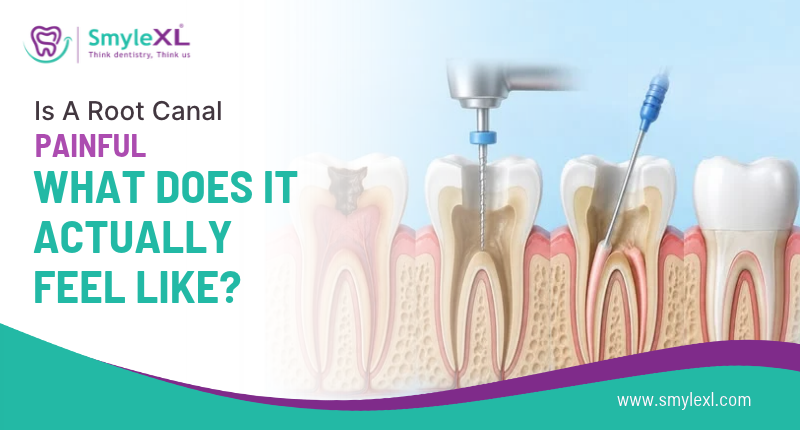

Will a root canal hurt? is often the first question people ask when a dentist recommends root canal treatment.
The fear is understandable. After all, the treatment involves working inside a tooth that is already painful or infected. But the reality is usually very different from the scary reputation root canals have.
With modern dental techniques and local anesthesia, you should not normally feel sharp pain during a root canal procedure. You may notice pressure, vibration, or some movement while the dentist works. Once the treatment is over, the tooth may feel tender for a few days, especially while biting.
At SmyleXL Dental Clinic, we focus on understanding what is causing your tooth pain first and then explaining the recommended treatment before proceeding. Our approach is centered around comfortable, clear, and patient-friendly dental care.
Table of Contents
ToggleWhat Does Root Canal Treatment Actually Feel Like?
Knowing what happens during each stage can make the experience much less intimidating.
Before Root Canal Treatment
A tooth that needs RCT may already be causing discomfort. You might experience:
- Persistent or throbbing toothache
- Sensitivity to hot or cold foods or beverages
- Pain while chewing or biting
- Tenderness around the tooth
- Swelling near the tooth
- Pain that comes and goes
- A dull ache that becomes worse at night
However, pain isn’t always present. Some infected teeth may have little or no obvious symptoms and may be identified during a dental examination or X-ray.
That’s why an evaluation is important before assuming that tooth pain automatically means you need a root canal.
Does a Root Canal Hurt During the Procedure?
This is usually the biggest concern.
Before starting the root canal procedure, the dentist uses local anesthesia to numb the tooth and surrounding area. You may feel a small pinch or pressure when the anesthetic is administered.
Once the area is numb, the dentist accesses the inside of the tooth and removes the infected or damaged pulp.
During the procedure, you may notice:
- Pressure
- Vibration from dental instruments
- Water or suction
- Movement around the tooth
- Sounds from the instruments
You should not normally experience sharp pain.
If you feel uncomfortable at any point, let your dentist know. Good communication during treatment allows the dentist to address your discomfort rather than expecting you to simply tolerate it.
Root Canal Treatment Steps: What Happens During Treatment?
Understanding the root canal treatment steps can help you know what to expect.
1. Examination and Diagnosis
Your dentist first examines the tooth and may recommend an X-ray or other diagnostic imaging.
This helps determine the source of the problem.
2. Local Anesthesia
The area around the affected tooth is numbed using local anesthesia.
This is the stage where you may feel a brief pinch or pressure.
3. Accessing the Tooth
A small opening is made in the tooth to reach the infected or inflamed pulp.
4. Cleaning the Root Canals
The damaged pulp is removed, and the root canals are cleaned and shaped.
This is an important part of the root canal procedure because bacteria and infected tissue need to be removed from the canal system.
5. Filling and Sealing
Once the canals have been cleaned and shaped, they are filled and sealed.
The aim is to prevent bacteria from entering the canals again.
6. Restoring the Tooth
The final step is restoring the tooth.
Depending on how much natural tooth structure remains and which tooth has been treated, your dentist may recommend a filling or dental crown.
Is the Pain From an Infected Tooth Worse Than a Root Canal?
It can be.
An infected tooth may cause intense, throbbing, or persistent pain. Some people also experience pain when chewing or sensitivity that continues even after the hot or cold stimulus is removed.
RCT is intended to address the source of this discomfort.
So, when people say root canal treatment is painful, it is worth separating the pain caused by the infected tooth from the sensations experienced during the treatment itself.
The procedure is performed with local anesthesia, while the infection or inflammation is the underlying cause of the toothache.
What Does Root Canal Treatment Feel Like After the Procedure?
Your tooth may not feel completely normal immediately after treatment.
Once the anesthesia wears off, you may experience mild tenderness, particularly when:
- Biting down
- Chewing
- Touching the area around the tooth
This can happen because the tissues surrounding the tooth may have been irritated by the original infection and the treatment.
For many people, this discomfort gradually settles during root canal treatment recovery.
Your dentist will provide specific aftercare instructions based on your case.
How Long Does It Take To Recover From A Root Canal?
There isn’t one recovery timeline that applies to everyone.
The amount and duration of discomfort can depend on:
- The severity of the infection
- The amount of inflammation
- The tooth being treated
- The complexity of its root canal system
- Whether there was an abscess
- Your individual healing response
Some people experience very little discomfort after treatment, while others may have tenderness for several days.
If your pain becomes severe, gets worse rather than better, or continues longer than expected, contact your dentist for an evaluation.
What Can Make Root Canal Therapy More Comfortable?
A comfortable dental experience involves more than simply using anesthesia.
At SmyleXL Dental Clinic, patient-friendly care includes explaining the treatment, understanding concerns, and using appropriate dental techniques and equipment for the case. SmyleXL also highlights patient comfort, experienced dentists, and diagnostic facilities as part of its approach to dental care.
Some factors that can make treatment easier include:
Effective Local Anesthesia
Properly numbing the area helps control discomfort during the procedure.
Accurate Diagnosis
Identifying the source of the problem before treatment helps the dentist plan the appropriate procedure.
Clear Communication
Tell your dentist if you feel uncomfortable. You don’t have to quietly sit through pain.
Appropriate Technology
Depending on the case, dental imaging, magnification, and specialized instruments can assist diagnosis and treatment planning.
Following Aftercare Instructions
Avoid putting unnecessary pressure on the treated tooth until your dentist confirms that it is ready for normal use.
Root Canal Procedure Before and After: What Can You Expect?
The goal of treatment is to remove infected or damaged pulp, clean the inside of the tooth, and restore its function.
| Before Treatment | After Treatment |
| Toothache or throbbing | The source of infection has been treated |
| Sensitivity may be present | Infection-related sensitivity can settle |
| Pain while chewing | Chewing comfort can improve |
| Inflamed or infected pulp | Damaged pulp has been removed |
| Risk of infection progressing | The canals have been cleaned and sealed |
Remember that recovery isn’t necessarily immediate. The tooth may remain tender for a short period, and the final restoration may also be needed to protect it.
FAQs
Is root canal treatment painful?
Modern RCT is performed under local anesthesia, so you should not normally feel sharp pain during the procedure. Some pressure and vibration may be noticeable.
Does a root canal hurt after the anesthesia wears off?
The tooth may feel tender after the anesthesia wears off, particularly when biting. This usually improves as the area recovers.
How painful is a root canal on a scale of 1–10?
Pain is subjective, so there isn’t one number that accurately represents everyone’s experience. The condition of the tooth, level of inflammation, and individual sensitivity can all affect how treatment feels.
How long does root canal therapy take?
The root canal treatment duration depends on the tooth and complexity of the case. Some treatments can be completed in one appointment, while others may require additional visits.
Can an infected tooth heal without root canal treatment?
If the dental pulp is irreversibly damaged or infected, it generally requires dental treatment rather than simply waiting for it to heal. Your dentist can determine the appropriate treatment after examination.
Can I eat normally after a root canal?
Your dentist may recommend avoiding chewing on the treated tooth until the permanent restoration is placed. Follow the instructions provided for your specific case.
Do I always need a crown after a root canal?
Not every tooth requires a dental crown. The recommendation depends on the amount of remaining tooth structure, the tooth’s location, and other clinical factors.
What happens if I delay root canal treatment?
An untreated dental infection can progress and may cause pain, swelling, or an abscess. Delaying an evaluation can also make treatment more complicated.
When should I see a root canal specialist?
If you have persistent tooth pain, sensitivity, pain while chewing, swelling, or other symptoms suggesting damage to the dental pulp, schedule a dental examination. A dentist can determine whether you need root canal therapy or another treatment.
So, Is a Root Canal Really Painful?
The short answer is: you shouldn’t fear root canal treatment because of pain.
The tooth is numbed before treatment, and most people experience pressure or vibration rather than sharp pain during the procedure. Some tenderness afterward is possible while the surrounding tissues recover.
If you’re experiencing persistent toothache, sensitivity, or pain while chewing, don’t let the fear of a root canal stop you from getting the tooth checked.
At SmyleXL Dental Clinic, we focus on understanding the cause of your dental problem, explaining your treatment options, and keeping the experience as comfortable and clear as possible.
Have a painful tooth? Book a dental consultation with our root canal specialist at SmyleXL Dental Clinic and find out what’s really causing the pain.

Dr Rohan Nakhole
Principal Dentist & Dental Care Expert
Dr. Rohan Nakhole is a BDS-qualified dentist with 14+ years of experience, serving patients at SmyleXL Dental Clinic in Kothrud, Pune. His areas of expertise include dental implants, cosmetic dentistry, restorative dentistry and comprehensive dental care. He is known for his patient-focused approach, ethical treatment planning and commitment to staying updated with modern dental advancements.
Professional Profile: Dr. Rohan Nakhole
Facebook: SmyleXL Facebook
Instagram: SmyleXL Instagram
YouTube: SmyleXL YouTube