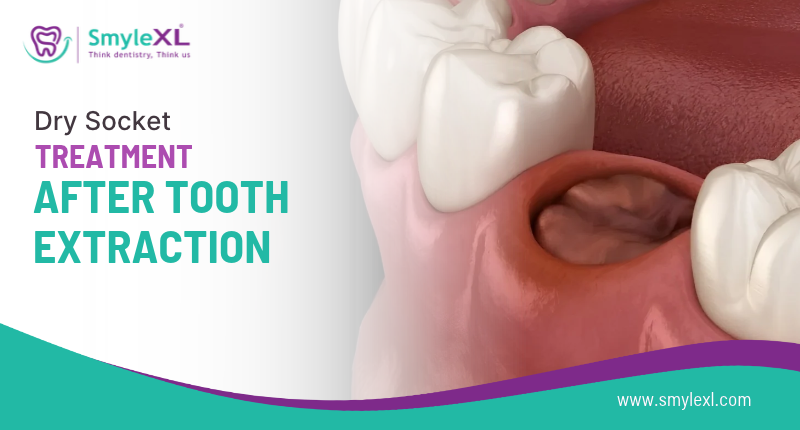

Dry socket is a painful complication that can develop when the blood clot at an extraction site is lost or breaks down before the area has healed. Instead of steadily improving after an extraction, the pain may become stronger a few days later and can sometimes spread toward the jaw or ear.
Not every painful extraction site has dry socket. Some discomfort is normal, but worsening pain or unusual symptoms after wisdom tooth extraction may need attention.
After getting wisdom tooth extraction in Pimple Nilakh at SmyleXL Dental Clinic, we always educate our patients that recovery can vary from person to person, so we evaluate symptoms such as increasing pain or unusual changes at the extraction site as part of post-extraction care.
Here’s a quick look at what this page covers:
- What dry socket is and why it develops
- How to recognize possible dry socket symptoms
- How dry socket is treated
- What can help reduce the risk after extraction
- When worsening pain needs dental attention
- How wisdom tooth removal can relate to dry socket
- What normal tooth extraction recovery may look like
Table of Contents
ToggleWhat Is Dry Socket After Tooth Extraction?
Dry socket occurs when the blood clot that protects the extraction socket is lost or breaks down too early. Without this protective clot, the underlying area can become exposed and painful while the socket continues to heal.
The blood clot forms naturally after a tooth is removed. It acts as part of the body’s healing process and protects the tissues underneath.
When that clot is disturbed, the area may become increasingly painful rather than gradually settling. This is why recognizing changes in tooth extraction pain can be important during recovery.
Why Does Dry Socket Develop After an Extraction?
Dry socket can develop when the blood clot is disturbed or fails to remain in place during the early healing period. Certain habits and extraction-related factors may increase the likelihood of this complication.
Possible contributing factors include:
- Smoking or tobacco use
- Vigorous rinsing or spitting soon after extraction
- Disturbing the extraction site
- Difficult or traumatic extraction
- Poor post-extraction care
- Certain individual healing factors
The risk can also vary depending on the type of extraction. A difficult wisdom tooth removal may require more attention during the recovery period.
What Are the Signs of Dry Socket?
The most noticeable sign is often severe or worsening pain that develops or increases a few days after extraction instead of gradually improving. The pain may feel deep or throbbing and can sometimes extend toward the ear, temple, or jaw.
Other possible dry socket symptoms include:
- Worsening tooth pain after initial improvement
- Throbbing pain
- Jaw pain
- Ear pain
- Bad taste in the mouth
- Bad breath
- An extraction socket that appears more exposed than expected
- Delayed healing
These symptoms do not confirm dry socket on their own. A dental examination can help determine what is causing the pain.
How Does Normal Healing Differ From Dry Socket?
| Normal Healing | Possible Dry Socket |
| Pain gradually becomes easier to manage | Pain becomes stronger after a few days |
| Mild tenderness may remain | Deep or throbbing pain may develop |
| Swelling generally settles | Pain may spread toward the ear or jaw |
| Socket gradually begins healing | Socket may appear exposed |
This comparison is only a general guide. If pain is getting worse rather than better, professional evaluation is appropriate.
How Is Dry Socket Treated After Tooth Extraction?
Dry socket treatment usually focuses on cleaning the extraction area, protecting it, and managing the associated pain while the socket heals. The exact treatment depends on the condition of the site.
A dentist may:
- Gently clean or irrigate the extraction socket
- Remove food particles or debris from the area
- Place a medicated dressing when appropriate
- Recommend suitable pain management
- Provide instructions for keeping the area clean
- Arrange a follow-up if symptoms continue
Treatment is aimed at making the area more comfortable while allowing the body’s healing process to continue.
Can Dry Socket Heal on Its Own?
Yes, a dry socket can eventually heal as the extraction site naturally repairs itself, but significant or worsening pain should not simply be ignored. Professional care can help manage the discomfort and keep the extraction site clean while it heals.
If you suspect dry socket, repeatedly touching the area, trying to clean the socket aggressively, or using unverified home remedies may interfere with healing.
A dental evaluation is particularly important when pain is severe, persistent, or accompanied by other concerning symptoms.
How Can You Reduce the Risk of Dry Socket?
Following post-extraction instructions carefully can help reduce the chance of disturbing the blood clot during early healing. The first few days are particularly important because the extraction site is still vulnerable.
Depending on your dentist’s instructions, you may be advised to:
- Avoid smoking and tobacco
- Avoid vigorous rinsing or spitting
- Avoid touching the extraction site unnecessarily
- Follow recommended food and drink instructions
- Maintain gentle oral hygiene after extraction
- Take prescribed or recommended medicines as directed
Good tooth extraction aftercare is not about doing more to the extraction site. It is about allowing the area to heal without unnecessary disturbance.
When Should You See a Dentist After Extraction?
You should have the extraction site checked when pain becomes significantly worse after initially improving, particularly if it is accompanied by bad taste, bad breath, swelling, or other unusual symptoms.
Seek professional attention if you notice:
- Increasing or severe pain
- Pain spreading toward the ear or jaw
- Persistent bad taste or bad breath
- Significant swelling
- Fever or feeling unwell
- Difficulty opening the mouth or swallowing
- Symptoms that are not following the expected recovery pattern
Not every post-extraction problem is dry socket. A dentist can assess whether the issue is related to normal healing, dry socket, infection, or another cause.
For patients recovering from wisdom tooth extraction in Pimple Nilakh, SmyleXL Dental Clinic can be a setting for evaluating persistent or worsening symptoms after extraction.
How Does Wisdom Tooth Extraction Affect Dry Socket Risk?
Dry socket can occur after any tooth extraction, but it is more commonly associated with certain difficult extractions, including some wisdom tooth removals. The location and complexity of the extraction can influence the healing process.
Wisdom teeth can be difficult to remove because of their position, root shape, impaction, or relationship with surrounding structures. After wisdom tooth extraction, following the recommended recovery instructions can help protect the extraction site during early healing.
However, even with careful aftercare, dry socket can sometimes occur. Worsening pain should therefore be evaluated rather than assumed to be part of normal recovery.
What Should You Know About Recovery After Wisdom Tooth Extraction?
Some pain, tenderness, and swelling can be expected after wisdom tooth removal, but these symptoms should generally become easier to manage as healing progresses. The exact recovery period varies depending on the complexity of the extraction and individual healing.
During wisdom tooth recovery, focus on protecting the extraction site and following the instructions provided after the procedure.
Your recovery plan may include:
- Eating foods appropriate for the healing stage
- Avoiding smoking and tobacco
- Maintaining gentle oral hygiene
- Avoiding unnecessary pressure on the extraction site
- Taking recommended medication as directed
- Attending follow-up care when advised
If the recovery pattern changes and pain suddenly becomes much stronger, it is worth getting the area checked.
During recovery after wisdom tooth extraction in Pimple Nilakh, SmyleXL Dental Clinic can support follow-up if symptoms change or recovery looks different from what was expected.
How Can You Care for the Extraction Site During Healing?
Gentle care is generally more helpful than trying to aggressively clean the extraction socket. The aim is to keep your mouth reasonably clean while avoiding unnecessary disturbance of the healing area.
Continue brushing the other teeth carefully and follow the specific instructions provided for the extraction site. Your dentist may also recommend when and how to begin gentle rinsing.
Avoid putting objects, fingers, or other materials into the socket. If food repeatedly collects in the area or the site becomes increasingly painful, professional advice is preferable to trying to remove material yourself.
Frequently Asked Questions
How Many Days After Extraction Can Dry Socket Develop?
Dry socket commonly becomes noticeable a few days after extraction, particularly when pain starts increasing after an initial period of improvement. The exact timing can vary, so changes in symptoms are more important than relying on a specific day.
Does Dry Socket Cause Bad Breath?
Yes, bad breath or an unpleasant taste can occur with dry socket. These symptoms may happen because the extraction site is not healing normally and debris can collect in the area.
Can I Brush My Teeth If I Have Dry Socket?
Yes, you generally still need to maintain oral hygiene, but the extraction area should be treated gently. Avoid directly disturbing the socket and follow the cleaning instructions provided by your dentist.
Is Dry Socket More Common After Wisdom Tooth Removal?Dry socket can be more common after certain wisdom tooth extractions, particularly when the extraction is difficult. However, it can also occur after other types of tooth removal.
Can Eating Hard Food Cause Dry Socket?
Hard or crunchy foods can potentially disturb a healing extraction site, particularly during the early recovery period. Following the dietary instructions provided after extraction can help protect the blood clot.
How Long Does Dry Socket Pain Usually Last?
The duration varies depending on the individual and whether the area receives treatment. With appropriate dry socket care, discomfort can become more manageable while the socket continues its natural gum healing process.
What Should You Remember About Wisdom Tooth Extraction?
Dry socket is mainly recognized by pain that becomes worse rather than gradually improving after an extraction. Protecting the blood clot, following tooth extraction aftercare, and avoiding unnecessary disturbance of the socket can help support normal gum healing.
At SmyleXL Dental Clinic, we provide wisdom tooth extraction in Pimple Nilakh and proper guidance to prevent dry socket. If you develop worsening pain, bad breath, an unpleasant taste, or other unusual symptoms after wisdom tooth extraction, an evaluation can help determine whether you have a post-extraction problem.

Dr. Dipti Jaju
Chief Dentist & Cosmetic Dental Surgeon
Dr. Dipti Jaju is the Chief Dentist at SmyleXL Dental Clinic, Pimple Nilakh, with expertise in smile designing, invisible aligners and root canal treatments. She completed her BDS from D. Y. Patil College, Pune, and has performed 1,000+ root canal treatments. She is committed to providing personalised, comfortable and patient-focused dental care.
Professional Profile: Dr Dipti Jaju
Facebook: SmyleXL Facebook
Instagram: SmyleXL Instagram
YouTube: SmyleXL YouTube