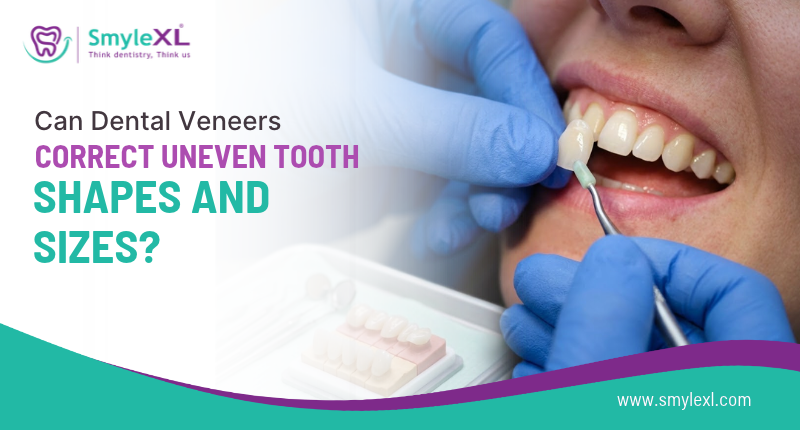

Yes, dental veneers can correct certain uneven tooth shapes and sizes by changing the visible shape, length, and proportions of teeth. They can be used for selected concerns such as short-looking teeth, minor chips, uneven edges, or teeth that appear smaller than their neighbors. However, veneers do not physically move teeth or correct every underlying alignment or bite concern.
The right approach depends on the condition of the teeth, available enamel, gum health, bite, and how much the tooth shape needs to change.
Understanding what veneers can and cannot address can help you decide whether Dental Veneers Treatment in Chitradurga is appropriate for your concern.
What Will You Find on This Page?
- How veneers can change uneven tooth shapes and sizes
- Why some teeth naturally look different in proportion
- Which shape and size concerns veneers may address
- When veneers may not be suitable
- How veneer shape and size are planned
- What the treatment process involves
- How much veneers may cost in Chitradurga
Table of Contents
ToggleCan Dental Veneers Correct Uneven Tooth Shapes and Sizes?
Yes, veneers can modify the visible shape and size of selected teeth to create more balanced proportions. A thin layer of restorative material is placed over the front surface of the tooth, allowing its visible contour, width, or length to be changed.
For example, veneers may be considered when one or more teeth look:
- Shorter than neighboring teeth
- Narrower than expected
- Uneven along the biting edge
- Slightly chipped or worn
- Different in proportion from surrounding teeth
This is different from orthodontic treatment. Veneers change the appearance and contour of the tooth, while orthodontic appliances move teeth into different positions.
What Causes Teeth to Look Uneven in Shape or Size?
Teeth can look uneven because of natural differences in tooth proportions, wear, chips, development, or changes that occur over time. Not every difference means the teeth are unhealthy.
Some common reasons include:
- Naturally different tooth dimensions
- Small or undersized teeth
- Chipped edges
- Tooth wear
- Previous dental restorations
- Differences in tooth position
- Changes caused by certain dental conditions
A dentist may look at the tooth proportions, surrounding teeth, gumline, and bite before deciding whether tooth reshaping is appropriate.
Which Tooth-Shape Problems Can Veneers Address?
Veneers can address several visible shape concerns when the underlying tooth is suitable for restoration. Their design can be planned around the existing tooth and neighboring teeth.
They may be considered for:
- Uneven tooth shapes
- Minor differences in tooth length
- Small-looking teeth
- Short-looking front teeth
- Minor chips
- Uneven tooth edges
- Selected differences in tooth width
The extent of correction depends on how much the tooth needs to be changed and how much healthy tooth structure is available.
What Can Veneers and Other Treatments Address?
| Concern | May Veneers Help? | Other Approach May Be Considered |
| Uneven tooth length | Yes, in selected cases | — |
| Small-looking teeth | Yes | — |
| Minor chipped edges | Yes | Bonding or restoration |
| Major tooth misalignment | Usually not | Orthodontic treatment |
| Significant bite concerns | Not by themselves | Orthodontic or restorative evaluation |
This distinction is important because a tooth can look uneven without actually being incorrectly positioned.
Can Veneers For Small Teeth Make My Smile Look More Proportionate?
Yes, veneers can make certain small or undersized teeth appear more proportionate by changing their visible width and length. The veneer can be shaped to create a more balanced relationship with the neighboring teeth.
The goal is not simply to make the tooth larger. Its dimensions need to work with the surrounding teeth, smile line, gum position, and overall facial proportions.
This is why the planning stage matters. Increasing the visible size too much could make the tooth look disproportionate rather than balanced.
Can Veneers Correct Uneven Front Teeth?
Yes, veneers can sometimes improve the visible symmetry of uneven front teeth by changing their contour, length, or surface appearance. Front teeth are particularly noticeable when smiling and speaking, so their proportions are often considered together rather than individually.
The dentist may assess:
- Tooth width
- Tooth length
- Tooth edges
- Spacing
- Gumline
- Neighboring teeth
- Overall smile proportions
Depending on the cause, front teeth veneers may be considered as part of a broader cosmetic dental treatment plan.
Do Veneers Move Teeth Into a New Position?
No, veneers do not move teeth into a new position. They cover the visible surface of a tooth and can change its shape, size, and appearance, but they do not provide orthodontic tooth movement.
If teeth are significantly rotated, crowded, or positioned incorrectly, bite alignment and tooth position may need to be assessed separately.
For example, someone may have a small gap because the teeth are positioned apart. Adding veneers may change the visible tooth shape, but it does not necessarily correct the underlying tooth position.
What Should Be Checked Before Getting Veneers?
The teeth, gums, bite, enamel, and existing dental work should be evaluated before veneers are planned. Veneers are not suitable for every tooth or every cosmetic concern.
The assessment may include:
- Condition of the enamel
- Existing fillings or restorations
- Tooth decay
- Gum health
- Tooth position
- Bite alignment
- Available tooth structure
- Tooth proportions
- The amount of tooth shape correction required
If active dental problems are present, those may need to be addressed before considering veneers.
What Happens During Dental Veneers Treatment?
Dental veneers treatment generally involves assessment, treatment planning, tooth preparation when required, creation of the veneer, and final placement. The exact sequence depends on the material and individual treatment plan.
The process may include:
1. Evaluation
The teeth, gums, bite, and desired changes are assessed.
2. Treatment Planning
The planned tooth length, width, contour, and color are considered in relation to neighboring teeth.
3. Tooth Preparation
Depending on the type of veneer and treatment approach, some preparation of the tooth may be required.
4. Dental Impression or Digital Scan
The dimensions of the teeth are recorded so the veneers can be made to fit the planned shape.
5. Veneer Fabrication
The final restoration is created using the selected material.
6. Veneer Placement
The veneer is fitted and bonded to the tooth after checking its appearance, fit, and relationship with the surrounding teeth.
The planning involved in dental veneers treatment in Chitradurga at SmyleXL Dental Clinic may vary based on the number of teeth being treated, their existing shape, and the amount of correction required.
How Much Do Dental Veneers Cost in Chitradurga?
Dental veneers in Chitradurga typically cost around ₹5,000 to ₹20,000 or more per tooth, depending mainly on the material and treatment requirements.
| Veneer Type | Approximate Cost Per Tooth |
| Composite veneers | ₹3,000–₹8,000 |
| Porcelain/Ceramic veneers | ₹10,000–₹20,000+ |
Composite veneers are generally made from a resin-based material and may be completed in a single appointment in suitable cases. Porcelain or ceramic veneers are custom-made and generally have a higher cost.
The total expense can also vary depending on the number of teeth being treated and their condition before treatment.
Disclaimer: The prices listed are approximate and may vary depending on your dental condition, treatment needs, and any additional procedures required. Consult a dentist for an examination and a personalized cost estimate.
When Veneers for Uneven Teeth May Not Be the Right Option?
Veneers may not be suitable when the main concern involves significant tooth misalignment, untreated dental disease, or substantial bite problems. In such cases, another treatment may need to be considered first.
Veneers may not be the first choice when there is:
- Active tooth decay
- Significant gum disease
- Major tooth misalignment
- Severe bite problems
- Insufficient tooth structure
- Heavy biting or grinding concerns that could affect the restoration
The purpose of an evaluation is to determine whether veneers address the actual concern or whether another form of dental restoration or orthodontic treatment would be more appropriate.
How Do You Choose the Right Veneer Shape and Size?
The right veneer shape and size are chosen by considering the tooth being treated, neighboring teeth, gumline, bite, and overall smile proportions. A veneer should not be designed independently of the rest of the smile.
Important considerations can include:
- Tooth length and width
- Tooth symmetry
- Neighboring tooth proportions
- Smile line
- Gum position
- Tooth color
- Bite alignment
- Facial and smile proportions
The aim is to create a restoration that fits the tooth and works with the surrounding structures rather than simply making an uneven tooth appear larger.
If you are considering Dental Veneers Treatment in Chitradurga, SmyleXL Dental Clinic can be part of the clinical setting where the suitability of veneers is evaluated based on the individual tooth and surrounding oral structures.
Frequently Asked Questions
Do Veneers Make Teeth Look Longer?
Yes, veneers can make certain teeth appear longer by extending the visible portion of the tooth. The amount of change depends on the existing tooth structure, gumline, and desired proportions.
Can Veneers Fix One Tooth That Looks Smaller Than the Others?
Yes, a veneer may be considered when one tooth appears smaller than its neighboring teeth and has enough healthy structure for restoration. The planned size should be compared with the surrounding teeth to maintain balanced proportions.
How Long Do Veneers Take to Place?
The timeline varies depending on the veneer material, number of teeth, preparation required, and laboratory process. Composite veneers may be completed more quickly in suitable cases, while porcelain veneers generally involve additional fabrication steps.
Can Veneers Chip If the Teeth Are Uneven?
Veneers can chip or fracture under certain conditions, particularly when exposed to excessive biting forces or habits such as biting hard objects. The underlying tooth condition and bite are therefore important considerations before treatment.
Do Veneers Require Tooth Reshaping?
Some veneer treatments require tooth preparation, while the amount varies depending on the material, tooth condition, and planned result. The extent of preparation should be discussed before treatment.
Can Veneers Be Placed on Teeth With Old Fillings?
Sometimes, but it depends on the size, position, condition, and stability of the existing filling and the remaining tooth structure. The tooth needs to be evaluated before deciding whether a veneer is appropriate.
What Should You Consider Before Choosing Veneers?
Veneers can be useful for selected concerns involving uneven tooth shape or size, but they should be planned according to the condition and position of the teeth. Changing the visible shape is not the same as correcting the underlying position or bite.
For those considering dental veneers treatment in Chitradurga, SmyleXL Dental Clinic can evaluate uneven tooth shapes, proportions, and the condition of the teeth before deciding on a treatment approach.

Dr Prasanna Kumar
MDS – Cosmetic & Root Canal Specialist
Dr. Prasanna Kumar J N is an MDS-qualified Endodontist and Cosmetic Dentist with 25+ years of clinical experience, serving patients at SmyleXL Dental Clinic in Chitradurga. He completed his BDS and MDS from Bapuji Dental College and Hospital, Davangere. His expertise includes advanced root canal treatments, complex endodontic cases, cosmetic dentistry and laser-assisted dental procedures, with a focus on preserving natural teeth.
Professional Profile: Dr Prasanna Kumar
Facebook: SmyleXL Facebook
Instagram: SmyleXL Instagram
YouTube: SmyleXL YouTube