
You know that one tooth that suddenly decides to ruin your day? It hurts when you bite into something, complains whenever you drink hot chai, and occasionally starts throbbing for absolutely no reason. You ignore it for a while, hoping it’ll settle down. But your tooth clearly has other plans.
If that sounds familiar, Root Canal Treatment (RCT) might be something your dentist recommends. Now, before the words make you nervous, here’s something worth knowing: the whole point of endodontic treatment is to remove the infection and help save your natural tooth.
So, what’s actually happening inside that troublesome tooth? How do you know if you need root canal therapy? And what should you expect afterward?
Let’s make sense of it without all the complicated dental terms.
Table of Contents
ToggleWhat Is Root Canal Treatment, Exactly?
Think of your tooth as having two parts: the hard outer structure you see and a softer interior containing nerves, blood vessels, and connective tissue.
That soft center is called the dental pulp.
When deep decay, cracks, or injuries allow bacteria to reach this area, a dental pulp infection can develop. That’s when your tooth may start sending some rather unpleasant signals.
Endodontic treatment, commonly called RCT, involves removing the inflamed or infected pulp, cleaning the canals, and sealing them to prevent further contamination.
Unlike extraction, root canal therapy aims to preserve the natural tooth.
The tooth remains in your mouth, but its damaged internal tissue is removed. The surrounding tissues continue supporting it.
What Are the Signs You Need a Root Canal?
Not every toothache means RCT. Sometimes, a filling or another dental procedure is enough.
However, certain symptoms suggest that the problem may have reached deeper inside your tooth.
1. Toothache That Refuses to Leave
Pain that keeps returning, especially while chewing or biting, can indicate inflammation or infection.
If the pain becomes persistent, your dentist may investigate whether tooth nerve treatment is necessary.
2. Sensitivity That Lingers
A brief reaction to ice cream isn’t automatically alarming.
But tooth sensitivity to hot and cold that continues even after you’ve finished eating or drinking deserves attention.
Persistent sensitivity can indicate irritation or damage inside the tooth.
3. Swelling Around a Tooth
A swollen gum around tooth may indicate an underlying dental problem.
Sometimes, an infection can produce a tooth abscess, which is a collection of pus associated with bacterial infection.
Swelling accompanied by fever, facial swelling, or difficulty swallowing requires urgent dental or medical attention.
4. Changes in Tooth Color
A tooth that gradually becomes darker after an injury may have damaged internal tissue.
However, discoloration alone doesn’t confirm the need for infected tooth treatment.
5. A Deep Cavity or Cracked Tooth
Deep cavities and cracks can expose the pulp to bacteria.
When infection reaches this area, treatment of tooth root infection may be required to preserve the tooth.
Here’s a quick overview:
| Symptom | What it could indicate |
| Persistent toothache | Pulp inflammation or infection |
| Lingering temperature sensitivity | Irritated or damaged pulp |
| Gum swelling | Infection around the tooth |
| Tooth discoloration | Possible internal tissue damage |
| Pain while biting | Infection, cracks, or other dental problems |
Remember, some infected teeth cause very little pain. A dental examination is necessary to identify the actual problem.
When Does Root Canal Treatment Become Necessary?
RCT is generally recommended when the pulp becomes irreversibly inflamed, infected, or damaged.
Your dentist evaluates the symptoms, examines the tooth, and may take a dental X-ray to assess the roots and surrounding bone.
Sometimes, dental pulp therapy can address certain pulp problems before complete canal treatment becomes necessary. The appropriate approach depends on the diagnosis.
If the pulp cannot recover, endodontic treatment may be recommended.
It’s also worth understanding the root canal vs tooth extraction decision.
Extraction removes the affected tooth entirely. RCT attempts to preserve it, provided enough healthy tooth structure remains for restoration.
The choice depends on whether the tooth can be predictably repaired and maintained.
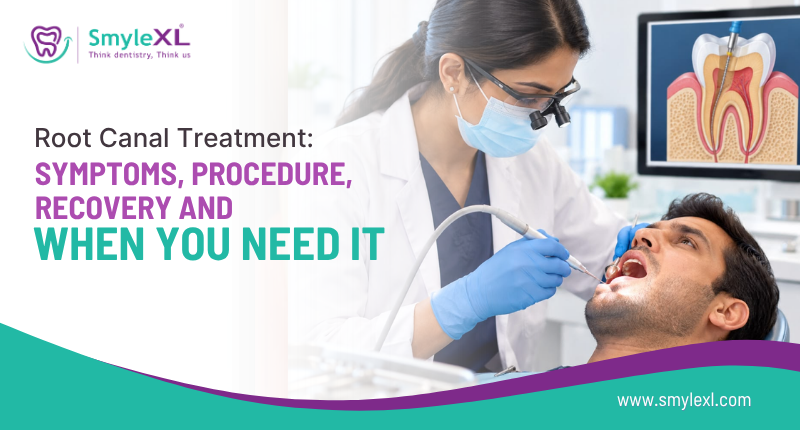
How Is the Root Canal Treatment Procedure Performed?
Here’s where things become much less mysterious.
The root canal procedure involves several carefully planned steps. And no, it doesn’t involve removing the entire tooth!
Step 1: Examining and Numbing the Tooth
Your dentist examines the affected tooth and reviews the dental X-ray.
Local anesthesia is then administered to numb the area and help keep you comfortable.
Step 2: Accessing the Infected Pulp
A small opening is created in the tooth to reach the pulp chamber.
Through this opening, the dentist removes the damaged tissue as part of the tooth nerve treatment.
Step 3: Cleaning the Root Canals
Specialized instruments clean and shape the narrow canals inside the roots.
This stage of root canal therapy removes infected tissue and prepares the canals for sealing.
Step 4: Filling and Sealing
After cleaning, the canals are filled with a suitable dental material and sealed.
A temporary or permanent filling protects the opening, depending on the treatment plan.
Step 5: Restoring the Tooth
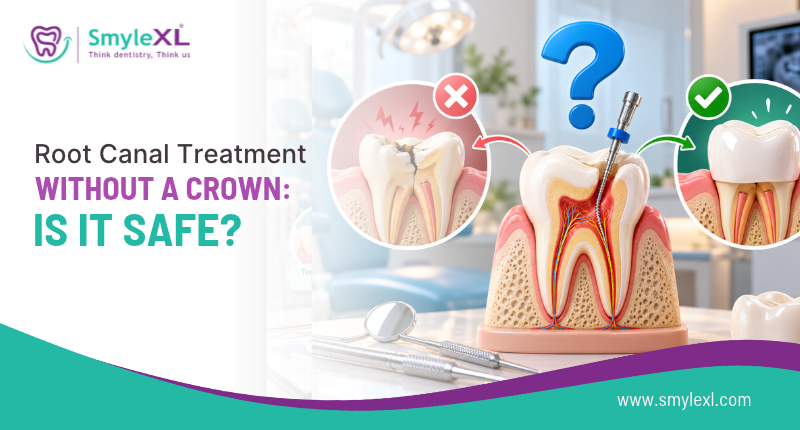
A dental crown after root canal helps protect a weakened tooth and restore its chewing function.
Your dentist assesses the remaining tooth structure and plans an appropriate final restoration.
The goal isn’t simply to remove infection. It’s also to help your tooth function comfortably afterward.
What Happens During Recovery After Root Canal Treatment?
Good news: recovery is generally manageable, although everyone’s experience is slightly different.
The recovery time for root canal procedures depends on the severity of the original infection, tooth condition, and individual healing response.
You might notice mild tenderness when biting or some soreness around the treated area for a few days.
That’s because the surrounding tissues need time to settle.
A Few Simple Recovery Tips
Proper root canal aftercare helps protect the tooth during healing.
- Avoid chewing hard or sticky foods on the treated tooth until your dentist confirms it’s fully restored.
- Continue brushing and flossing carefully.
- Attend follow-up appointments.
- Avoid eating until the numbness wears off.
- Report severe, worsening, or persistent discomfort.
At SmyleXL Dental Clinic, post-treatment guidance is an important part of helping patients understand the recovery process.
And remember, dental crown after root canal placement is an important part of restoring and protecting the treated tooth when recommended.
Why Is Saving Your Natural Tooth Important?
Your natural teeth work together to support chewing, speaking, and bite alignment.
When a tooth is removed, replacing it may involve additional treatment.
This is why the root canal vs tooth extraction discussion matters.
If a tooth can be preserved, endodontic treatment may help maintain its natural position and chewing function.
However, a severely fractured or extensively damaged tooth may not be suitable for preservation.
At SmyleXL Dental Clinic, evaluating the tooth’s remaining structure and restoration requirements helps determine whether infected tooth treatment is appropriate.
The priority is choosing a clinically suitable approach, not simply choosing the procedure that sounds less intimidating.
FAQs
How Long Does a Root Canal Take?
If you’re wondering how long does a root canal take, appointments commonly last around one to two hours, although complex cases may take longer. Some teeth require multiple visits depending on the infection and root anatomy.
Is Root Canal Safe?
For anyone asking is root canal safe, RCT is an established dental procedure with recognized benefits and potential risks. Appropriate diagnosis, cleaning, sealing, and root canal aftercare help support treatment outcomes.
Is It Painful to Have a Root Canal Done?
The area is numbed before the root canal procedure, so discomfort during treatment is generally controlled. Mild soreness afterward is possible, and the recovery time for root canal treatment varies between individuals.
Is a Root Canal a Serious Surgery?
RCT is generally a nonsurgical dental procedure performed through an opening in the tooth. It involves dental pulp therapy to address internal tissue damage, while surgical procedures are considered for selected cases.
Can You Eat After a Root Canal?
Yes, you can eat once the numbness wears off, following your dentist’s instructions. Avoid chewing hard foods on the treated tooth until its final restoration is completed, particularly when a dental crown after root canal is planned.
A Healthier Tooth Without Saying Goodbye to It
A persistent toothache isn’t something you need to keep negotiating with every morning.
Root canal treatment can help preserve a natural tooth when its internal pulp becomes severely inflamed or infected.
Understanding the signs you need a root canal, the treatment steps, and the healing process makes the experience less intimidating.
If you’re experiencing ongoing pain, swelling, or sensitivity, consult a dentist for an examination. Early assessment can help identify whether treatment of tooth root infection or another dental procedure is needed.
After all, keeping your natural teeth healthy is much easier when you listen to what they’re trying to tell you.