
Imagine that you’re listening to songs on a peaceful night and journaling… Your favorite song comes up… Raat akeli hai.. Bujh gaye diye..
And suddenly the whole vibe changes. A sharp, stinging pain in your jaw ruins the mood. The shift from soft & soothing melody to Tadap Tadap ke iss daant se jaan nikalti rahi..
Welcome to the confusing world of wisdom teeth.
For many people, wisdom teeth behave like that one friend who keeps saying they’re leaving but never actually leaves. They show up, cause a little drama, disappear for a while, and then return when you least expect them.
The problem is that many people wait until severe pain appears before considering wisdom tooth extraction.
So how do you know when it’s actually time to remove a wisdom tooth?
Let’s talk about it.
Table of Contents
ToggleMy Wisdom Tooth Isn’t Hurting. Do I Still Need to Remove It?
This is probably the most common question dentists hear.
And honestly, it’s a fair question.
If something isn’t hurting, why touch it?
The answer is simple: pain is not always the first warning sign.
Some wisdom teeth remain completely harmless for years.
Others quietly create problems without causing obvious symptoms.
A wisdom tooth may be:
- growing at an angle
- trapped beneath the gums
- pushing against nearby teeth
- difficult to clean properly
All of these situations may eventually lead to complications, even if there is no immediate discomfort.
This is why regular dental evaluations are important before deciding whether wisdom tooth extraction is necessary.
Signs It’s Time to Remove a Wisdom Tooth
Your body is usually pretty good at sending signals when something isn’t right.
Persistent Pain
Occasional sensitivity is one thing.
Persistent oral pain that keeps returning is another.
If discomfort repeatedly develops around the back of the mouth, it may indicate that the wisdom tooth is struggling to erupt properly.
Swollen Gums
A partially erupted wisdom tooth can trap food and bacteria beneath the gum tissue.
This may contribute to:
- irritation
- inflammation
- infection
- dental pain and swelling
In many cases, this becomes one of the first reasons people require infected molar treatment.
Persistent inflammation may also contribute to dental pain and swelling, making everyday activities uncomfortable.
Difficulty Chewing
Many patients describe discomfort while chewing long before severe pain develops.
This type of chewing discomfort can indicate pressure around the wisdom tooth or irritation of surrounding tissues.
Pressure in the Jaw
Some wisdom teeth create a feeling of fullness or pressure in the jaw.
Patients often describe it as a strange sensation rather than actual pain.
That pressure, or persistent jaw stiffness and discomfort, may indicate that the tooth does not have enough room to erupt properly.
Repeated Infections
Recurring infections are rarely a good sign.
When infections keep returning, wisdom tooth extraction often becomes the most predictable long-term solution.
Recurrent episodes of persistent oral pain and chewing discomfort often suggest that the problem is unlikely to resolve on its own. Ongoing problems should not be ignored, especially if they begin to affect your normal eating habits.
Signs You May Be Able to Monitor It
Not every wisdom tooth needs immediate removal.
Some wisdom teeth:
- erupt fully
- remain easy to clean
- stay free of infection
- do not affect nearby teeth
In these situations, monitoring may be appropriate.
Regular dental examinations and X-rays help determine whether the tooth remains healthy over time.
What Happens When You Wait Too Long?
Many people assume wisdom teeth will eventually “settle down.”
Unfortunately, that doesn’t always happen.
Waiting too long can sometimes increase the risk of:
- infection
- tooth damage
- gum problems
- jaw discomfort
The longer complications remain untreated, the more complex treatment can sometimes become.
Common Problems Caused by Wisdom Teeth
Crowding of Nearby Teeth
A wisdom tooth that erupts at an angle may contribute to crowding of nearby teeth.
While not every wisdom tooth causes crowding, it is a common concern in patients with limited space.
Damage to Adjacent Teeth
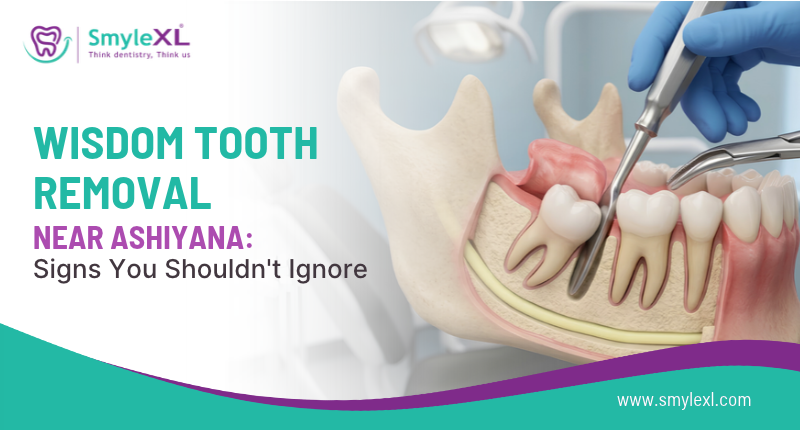
An impacted wisdom tooth may press against the neighboring tooth.
Over time, this pressure can contribute to damage to adjacent teeth, increasing the risk of decay and structural problems.
Gum Problems
Wisdom teeth can be difficult to clean.
When plaque and bacteria accumulate around partially erupted teeth, the likelihood of inflammation increases.
This contributes to several gum disease risk factors, particularly when oral hygiene becomes challenging.
Infection
Food particles and bacteria can become trapped around wisdom teeth.
This may lead to swelling, discomfort, and the need for infected molar treatment.
Jaw Discomfort
Many patients experience jaw stiffness and discomfort when wisdom teeth are creating pressure or inflammation in surrounding tissues.
What Is an Impacted Wisdom Tooth?
An impacted wisdom tooth is one that cannot erupt normally.
This may happen because:
- There is insufficient space
- The tooth is angled incorrectly
- Surrounding structures block the eruption
Impacted wisdom teeth often require impacted molar treatment and sometimes surgical molar removal, depending on their position.
In many cases, third molar surgery is recommended when the tooth remains trapped beneath the gum or bone.
The need for surgical wisdom tooth extraction usually depends on the position and eruption pattern of the tooth.
Is Age Important?
Yes.
Generally speaking, younger patients often recover more easily after wisdom tooth extraction.
The roots may be less developed, and healing can be more predictable.
That doesn’t mean older adults cannot undergo treatment successfully.
It simply means earlier evaluation often provides more options.
Waiting indefinitely may allow additional complications to develop.
What If It Only Hurts Sometimes?
The pain appears. Then it disappears. Then it returns months later.
Many people interpret this as a sign that the problem has been resolved.
In reality, intermittent symptoms often indicate an underlying issue that continues to flare up periodically.
Occasional discomfort may still justify further evaluation, particularly if the episodes become more frequent over time.
What Happens During Removal?
Many patients imagine the worst.
Fortunately, modern dentistry has made wisdom tooth extraction much more comfortable than most people expect.
The exact procedure depends on the position of the tooth.
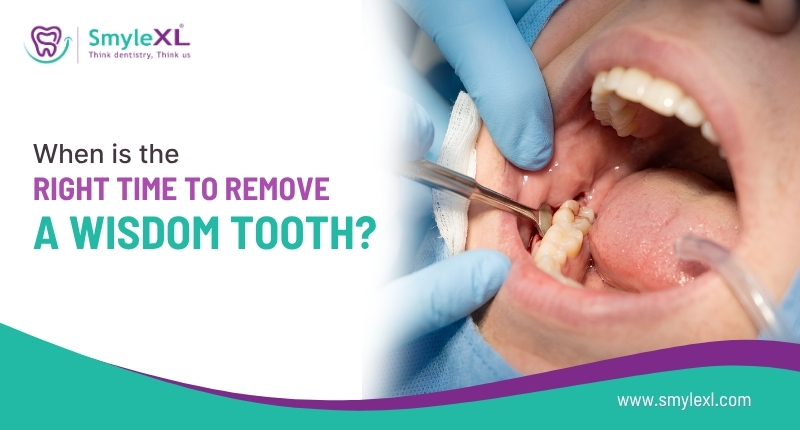
A simple extraction may be performed if the tooth has erupted normally.
More complex situations may require:
- surgical wisdom tooth extraction
- third molar surgery
- surgical molar removal
The procedure is performed under local anesthesia, ensuring the area remains numb throughout treatment.
Most patients feel pressure rather than pain.
Recovery Timeline
One of the biggest concerns patients have is recovery.
First 24 Hours
The focus is on blood clot formation and post extraction care.
Rest is important during this stage, after which patients notice that healing after tooth extraction becomes easier with each passing day.
Days 2–3
Mild swelling and soreness are common.
This is where proper tooth extraction aftercare becomes especially important.
Days 4–7
Most patients begin noticing gradual improvement.
The process of healing after tooth extraction continues steadily.
Weeks 2–4
The extraction site continues to close and strengthen.
Most normal activities can usually be resumed comfortably.
Preventing Dry Socket
One of the most important recovery goals involves dry socket treatment and prevention.
Following tooth extraction aftercare instructions carefully helps reduce the risk of complications and supports smoother healing.
When Should You Stop Waiting?
If your wisdom tooth is causing:
- recurring pain
- swelling
- infections
- jaw discomfort
- chewing difficulties
- pressure on neighboring teeth
It may be time to consider a professional evaluation.
The best time for treatment is often before complications become severe.
FAQs
Can wisdom teeth be removed before they start hurting?
Yes. Some wisdom teeth are removed because X-rays show potential future problems, even when symptoms have not started yet.
How do I know if my wisdom tooth is impacted?
Impacted wisdom teeth often remain trapped beneath the gums or erupt at unusual angles. Dental examinations and X-rays help confirm their position.
Is wisdom tooth removal always surgical?
No. Some wisdom teeth can be removed through a simple extraction, while others may require a surgical approach depending on their position.
How long does recovery usually take?
Most people feel significantly better within a week, although complete healing continues for several weeks afterward.
Can I ignore occasional wisdom tooth pain?
Occasional pain may still indicate an underlying issue. Recurrent symptoms should be evaluated rather than ignored.
Don’t Wait for Your Wisdom Tooth to Make the Decision for You
Wisdom teeth have a habit of staying quiet until they don’t.
While some remain harmless, others can create problems long before severe pain appears. Understanding the warning signs and seeking timely evaluation can help prevent unnecessary complications.
At SmyleXL Dental Clinic, New Bel Road, Bengaluru, patients receive personalized guidance to determine whether monitoring or wisdom tooth extraction is the better option. Early evaluation can help identify issues before they progress, making treatment more predictable and recovery smoother.
Wisdom isn’t always knowing when to wait. Sometimes it’s knowing when to act before a small problem becomes a bigger one.