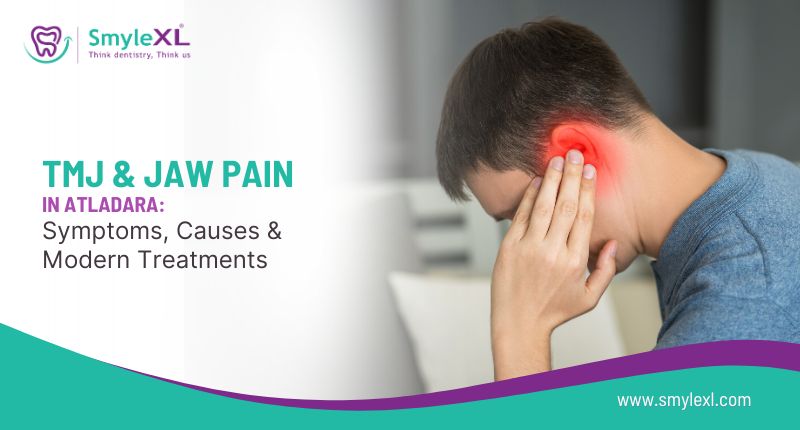

If you have ever felt a dull ache near your jaw, heard a clicking sound when you open your mouth, or experienced tightness while eating or talking, you might be dealing with a TMJ issue. These symptoms are more common than many people realize and often remain untreated until they start to affect daily comfort.
At SmyleXL Dental Clinic, many patients from Atladara and nearby areas come seeking relief from persistent jaw pain, headaches, and discomfort while chewing. Most are surprised to learn that their pain is not purely dental but related to the temporomandibular joint, or TMJ. Understanding this connection can make it much easier to find lasting relief and restore natural jaw movement.
If you live near Sun Pharma Road, consider professional care for your jaw pain treatment in Sun Pharma Road at SmyleXL Dental Clinic can help you overcome TMJ issues using modern, non-invasive techniques designed for long-term comfort.
Table of Contents
ToggleWhat exactly is the TMJ?
The temporomandibular joint (TMJ) is the hinge that connects your jawbone to your skull. It allows you to talk, eat, yawn, and express emotions. Because this joint is used constantly, it is one of the most complex and sensitive joints in the body.
When the TMJ is strained, misaligned, or inflamed, it leads to discomfort known as TMJ disorder or TMD. This can affect the muscles, ligaments, and even the alignment of your bite.
Common Symptoms of TMJ Disorders
TMJ disorders can appear in many ways, sometimes mimicking other health issues like ear infections or sinus pressure. Recognizing the signs early can prevent long-term complications.
You may have a TMJ disorder if you experience:
- Pain or tenderness in the jaw joint area
- Clicking, popping, or grinding sounds when opening or closing your mouth
- Difficulty chewing or talking comfortably
- Stiffness or locking of the jaw
- Headaches, earaches, or facial pain
- Swelling around the jaw or cheeks
Some people also experience pain radiating toward the neck and shoulders due to the way the jaw muscles connect with the rest of the body. If you notice any of the above symptoms, look no further than SmyleXL Dental Clinic for jaw pain treatment in Sun Pharma Road.
What Causes TMJ Pain?
TMJ pain often develops from a combination of physical and emotional factors. Understanding the triggers helps manage them more effectively.
- Stress and Clenching
Stress is one of the most common reasons behind TMJ pain. When you are anxious, you may unknowingly clench your jaw or grind your teeth, especially at night. This constant tension overworks the joint and surrounding muscles.
- Poor Posture
Slouching or sitting with your head tilted forward while using a phone or computer strains the neck and jaw muscles, creating tension that can affect TMJ function.
- Bite Misalignment
If your teeth do not come together properly, your jaw must work harder to chew and speak. Over time, this misalignment can lead to muscle fatigue and joint discomfort.
- Dental or Facial Injury
An injury to the jaw or face can damage the muscles, ligaments, or joint structures, leading to pain or clicking sensations.
- Arthritis or Joint Inflammation
Like other joints in the body, the TMJ can also suffer from arthritis, which reduces mobility and increases stiffness.
How TMJ Pain Affects Daily Life
Jaw pain may seem minor at first, but it can quickly affect normal activities. People with TMJ disorders often find it difficult to:
- Eat certain foods
- Speak clearly for long periods
- Yawn or laugh comfortably
- Sleep without tension in the jaw or face
Because the TMJ is so closely connected to the head and neck, many people also experience recurring headaches, ear pain, or neck stiffness.
Diagnosing TMJ Disorders
A proper diagnosis is essential for effective treatment. At SmyleXL Dental Clinic, TMJ evaluation includes a combination of:
- Physical examination of jaw movement and muscle tenderness
- Bite alignment assessment
- Dental X-rays or 3D imaging, if needed
- Review of lifestyle factors such as stress levels and posture
This holistic approach ensures that the exact cause of your discomfort is identified before any treatment begins.
Modern Treatments for TMJ and Jaw Pain
TMJ care has undergone significant evolution in recent years. Today, most patients can find relief through gentle, non-surgical methods that focus on muscle relaxation and restoring joint function.
Here are some of the most effective treatments:
- Customized Splints or Night Guards
These dental devices prevent teeth grinding and reduce pressure on the TMJ during sleep. They help the jaw muscles relax and minimize morning stiffness or headaches.
- Physiotherapy and Jaw Exercises
Targeted exercises strengthen the muscles and improve flexibility. Physiotherapy may also include gentle massage and posture training to ease muscle tension.
- Stress Management Techniques
Mindfulness, breathing exercises, and light yoga can reduce jaw clenching caused by anxiety. Relaxing the body naturally helps relieve TMJ symptoms.
- Bite Correction
If Misalignment is contributing to pain, minor dental adjustments or orthodontic treatments may be recommended to balance the bite and reduce strain on the joint.
- Cold and Warm Compress Therapy
Alternating between warm and cold compresses helps manage swelling and relax tight muscles.
- Medication Support
In some cases, mild anti-inflammatory or muscle relaxant medication may be prescribed to ease pain and inflammation during recovery.
- Advanced Laser or Ultrasonic Therapy
Modern dental clinics, such as SmyleXL, also utilize minimally invasive technologies to promote healing and enhance blood circulation around the joint, resulting in a faster recovery.
Simple Ways to Manage Jaw Pain at Home
Alongside professional treatment, a few lifestyle changes can make a big difference:
- Maintain good posture, especially when working on a computer
- Avoid opening your mouth too wide when yawning or eating
- Do not chew gum or tough foods that strain the jaw
- Apply a warm towel for 10–15 minutes daily to relax muscles
- Practice relaxation exercises before bedtime
Small steps like these can reduce daily tension and prevent flare-ups.
Living Comfortably with a Healthy Jaw
Jaw pain can be frustrating, especially when it interferes with basic daily tasks such as eating or speaking. Fortunately, TMJ disorders are highly treatable when addressed early.
At SmyleXL Dental Clinic, the focus is not just on relieving pain but also on identifying and correcting the factors that cause it. Patients receive individual attention, modern treatments, and practical guidance on posture, diet, and stress management.
If you have been living with persistent discomfort or jaw stiffness, it is time to take action. Professional jaw pain treatment in Sun Pharma Road at SmyleXL Dental Clinic in Atladara can help restore comfort and naturally regain control of your jaw movements.
A healthy smile depends on a healthy jaw. Paying attention to small symptoms today can protect your comfort, confidence, and overall well-being in the long run.
Frequently Asked Questions
- What is TMJ pain?
TMJ pain occurs when the temporomandibular joint becomes strained or inflamed, resulting in stiffness, clicking, and jaw pain.
- How do I know if I have a TMJ disorder?
Common signs include difficulty opening the mouth, clicking sounds, jaw locking, and pain near the ear or temples.
- Can stress really cause jaw pain?
Yes. Stress leads to clenching or grinding of teeth, which places continuous pressure on the TMJ and surrounding muscles.
- Are TMJ disorders permanent?
In most cases, TMJ disorders are temporary and respond well to conservative treatments when diagnosed early.
- What can I do at home to ease jaw pain?
Apply warm compresses, avoid chewy foods, and practice gentle stretching exercises. Managing stress also helps reduce clenching.