
There is a very specific kind of relief people feel after a root canal. The pain that kept you awake, made you chew on one side, or made cold water feel like an attack, finally starts calming down. But then comes the next big question: What now?
That is exactly where post-treatment care makes all the difference. When patients visit SmyleXL Dental Clinic for a root canal in Kothrud, the treatment itself is just one part of the journey. What you do afterward decides how well the tooth heals, how comfortable you feel, and how long the result lasts.
A root canal is designed to save your tooth. Post-care is what protects that investment.
Table of Contents
ToggleWhy Post-Root Canal Care Matters More Than You Think
Many people assume the hard part is over once the procedure is done. But the tooth is still healing from inflammation and infection. It needs time, support, and the right habits to settle down.
If the tooth is not protected or if you start eating the wrong foods too soon, it can lead to:
- Discomfort while chewing
• Cracks in the temporary filling
• Delayed healing
• Food getting trapped in the treated area
• Increased sensitivity
Proper care simply keeps the progress moving in the right direction.
What You Can Comfortably Eat After a Root Canal
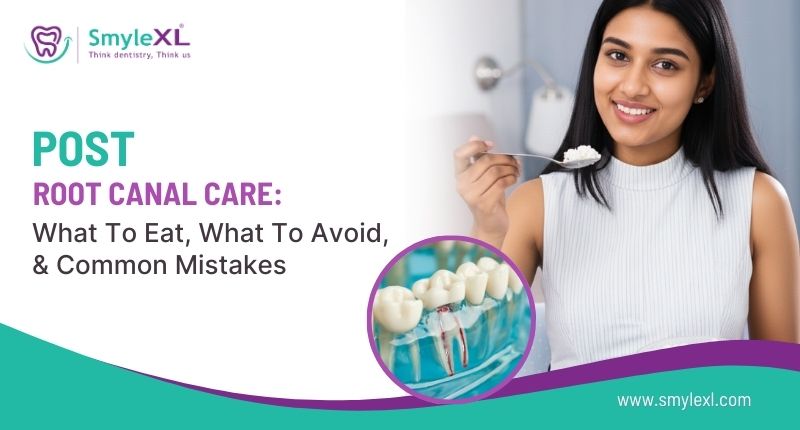
When the numbness wears off, your tooth and the surrounding area may feel slightly tender. Soft foods are your safest companions during the first few days. They keep your mouth comfortable and reduce pressure on the healing tooth.
Safe, easy-to-chew options
- Warm dal and well-cooked rice
• Upma, poha, or soft khichdi
• Smoothies and fruit pulp
• Curd, yogurt, and lassi
• Soft rotis soaked in curry
• Idlis or soft dosas
• Mashed potatoes or soft vegetables
These foods do not require heavy chewing, which is ideal while the treated tooth adjusts.
A small tip that improves comfort
Always chew on the opposite side of the treated tooth until your dentist places the final crown. This prevents unnecessary pressure and avoids accidental cracks.
Foods You Should Avoid Temporarily
Some foods can irritate the area or damage the temporary filling placed during your root canal in Kothrud. Avoiding them now saves you trouble later.
Avoid these until your dentist gives the green signal
- Very hot beverages
• Hard foods like chikki, nuts, or toast
• Sticky items such as caramel or chewing gum
• Extremely cold foods that trigger sensitivity
• Spicy snacks that may irritate the gums
• Crunchy foods like popcorn or chips
Even if you feel better, the tooth needs time to regain strength. These foods can push, pull, or crack the filling, which means another dental visit.
Common Post-Root Canal Mistakes That Slow Down Healing
Even the most careful patients end up making small mistakes without realising it. These habits can delay recovery or affect the long-term success of the treatment.
- Chewing on the treated side too soon
The tooth is fragile until the crown is placed. Using it for heavy chewing increases the risk of fractures.
- Skipping or delaying the crown appointment
This is the most common mistake. The root canal cleans the tooth from inside but leaves the outer shell hollow and weak. A crown strengthens it. Delaying it is like walking around with a cracked phone screen, hoping it won’t break further.
- Not taking medications regularly
Antibiotics or pain relievers are given for a reason. Stopping them halfway can bring back inflammation or infection.
- Ignoring mild discomfort
Healing takes time, but if the pain suddenly increases or feels unusual, it is better to have the dentist check it early.
- Using home remedies
Clove oil, hot compresses, salt rubs, or biting on a warm cloth may seem comforting, but often irritate the healing area more.
Why Some Foods and Habits Affect Healing
The root canal removes infection, but the tissues around the tooth are still recovering. Certain actions increase pressure or inflammation.
- Hard bites can crack the filling
• Cold foods irritate nerve endings around the tooth
• Sticky foods may pull out the temporary restoration
• Smoking reduces blood flow and delays healing
Your mouth needs a calm environment to heal. Small everyday choices go a long way.
How SmyleXL Dental Clinic Ensures a Comfort-First Experience
People looking for a comfortable, painless root canal in Kothrud often choose SmyleXL Dental Clinic because the process is detailed, gentle, and transparent. There is never a rushed moment, and patients are guided step-by-step, including what to eat, what to avoid, and how to manage the first few days.
The clinic uses modern technology for precise cleaning and shaping of the canals, which means faster relief and quicker recovery. Every patient receives personalised post-care instructions based on the tooth treated and their routine.
Extra Care Tips You Should Follow at Home
These simple habits can make your healing smooth and trouble-free.
- Brush gently around the treated area
• Rinse with warm salt water if recommended
• Use a soft-bristled brush
• Avoid biting nails or chewing pencils
• Stay hydrated to keep the mouth fresh
• Maintain regular oral hygiene without scrubbing aggressively
Your goal is to stay clean without disturbing the healing tooth.
When to Panic and When Not To
A little sensitivity is normal. Mild soreness is also expected. But certain signs need immediate attention.
Call your dentist if you notice:
- Sudden swelling in the gums or face
• Severe pain that worsens after two days
• A feeling that the tooth is “rising up”
• Fever or persistent discomfort
• A broken temporary filling
Catching these issues early keeps the healing smooth and prevents complications.
FAQs
- Is pain normal after a root canal?
Mild tenderness for a day or two is completely normal. The surrounding tissues are still healing, so slight discomfort is expected. If the pain increases or lasts longer than a few days, it’s best to get it checked by your dentist. - Can I brush normally after the procedure?
Yes, you can brush as usual, but be gentle around the treated area. Keeping your mouth clean supports healing and prevents irritation. Avoid brushing too aggressively until the sensitivity settles down. - Why does my tooth feel strange after a root canal?
The tooth and surrounding tissues need time to adjust, so it may feel slightly different for a short period. This sensation usually improves as inflammation reduces. If your bite feels uneven or the tooth feels “taller,” a simple adjustment by your dentist can fix it.
Your Smile Heals Better When You Care for It
A root canal saves your tooth, but what you do afterward decides how well it stays protected. Eating the right foods, avoiding unnecessary pressure, and following your dentist’s advice ensure the tooth stays strong for years. If you ever feel unsure, SmyleXL Dental Clinic is always ready to guide you through everything related to a root canal in Kothrud.
Caring for your teeth today gives you a healthier, pain-free smile tomorrow.