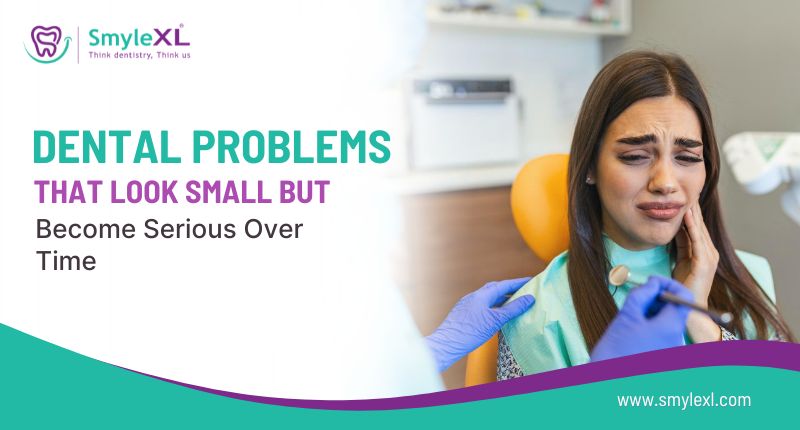

You notice a little blood when you brush. Just a tiny pink tinge in the sink. No pain, no visible problem, so you ignore it. A few months later, a small dark spot appears on a back tooth. It does not hurt, so you forget about it. Weeks pass.
Then one morning, you wake up with a toothache that stops you in your tracks. Suddenly, that tiny, harmless thing is a full-blown emergency. This pattern plays out in dental offices every single day. Small issues ignored become big problems that cost more, take longer to fix, and cause real pain.
The trick is knowing which little signs actually matter. If you are looking for a trusted dental clinic in Lal Darwaja, understanding these warning signs helps you catch problems early when they are simple to treat.
At SmyleXL Dental Clinic, we see patients all the time who wish they had come in sooner. Let us walk through the small things that deserve your attention before they turn into something major.
Table of Contents
ToggleBleeding Gums When You Brush
This is the most ignored dental problem in existence.
- Pink in the sink after spitting
- Blood on your toothbrush bristles
- Gums that feel tender to the touch
- No pain, so it seems harmless
Bleeding gums are not normal. They are a sign of inflammation called gingivitis. This is your body telling you that bacteria are building up along your gum line. Left alone, gingivitis turns into periodontitis, which is an infection that destroys the bone holding your teeth in place.
By the time that hurts, you have already lost bone that cannot grow back. A simple cleaning at a dental clinic reverses gingivitis completely. Waiting costs you bones and teeth.
A Tiny Dark Spot on a Tooth
You see it in the mirror. A small brown or black dot.
- Looks like a stain at first
- Does not hurt at all
- Easy to forget about
- Brushing does not make it go away
That spot is almost always decaying. Cavities start small on the outside of the tooth and grow inward. The outer enamel has no nerves, so you feel nothing while the decay spreads. Once it reaches the inner layer called dentin, sensitivity starts.
Once it hits a nerve, you get a toothache. By then, what could have been a small filling becomes a root canal or an extraction. Early treatment at a dental clinic saves your tooth and your wallet.
Bad Breath That Will Not Go Away
Everyone has morning breath. This is different.
- Breath smells even after brushing
- Family members mention it
- Mints only mask it temporarily
- You cannot figure out the cause
Persistent bad breath usually means bacteria are thriving somewhere they should not be. Deep gum pockets, decay under old fillings, or infected tonsil stones can all cause this.
It is your body signaling an infection. Ignoring it does not make it go away. It lets the infection grow.
A Cracked or Chipped Tooth Edge
You bit down on something hard and felt a small break.
- A rough edge your tongue finds
- No pain when eating
- Looks minor in the mirror
- Easy to file down mentally and ignore
Enamel is strong, but once it cracks, that crack can travel. Over weeks or months, chewing pressure forces that crack deeper toward the nerve. What starts as a tiny cosmetic flaw becomes a split tooth that needs extraction.
A dentist can smooth the edge or place a small filling to seal the crack. Waiting means losing the tooth.
Sensitivity to Cold That Comes and Goes
A sip of cold water makes you wince. Then it stops.
- Happens occasionally, not always
- Goes away quickly
- Only cold triggers it
- You adjust by drinking warm things
Intermittent sensitivity means the nerve is irritated but still alive. This could be from thin enamel, a small cavity, or gum recession exposing root surfaces. Left alone, the irritation can progress to nerve death.
Once the nerve dies, you need a root canal or extraction. Early treatment is simple. Waiting is not.
Food Getting Stuck in the Same Spot
Every meal, something lodges between two teeth.
- You reach for floss constantly
- The area feels irritated
- You accept it as normal
- It has been happening for months
A food trap means something changed. An old filling may have cracked. A tooth may have shifted. Decay may have opened a space. Whatever the cause, trapped food breeds bacteria that cause more decay in that exact spot.
It is a cycle that destroys teeth. Closing that space at a dental clinic stops the cycle.
A Tooth That Feels Slightly Loose
You wiggle it gently with your tongue and notice movement.
- Just a tiny bit
- No pain when you chew
- Probably normal, you think
- You check less often to avoid worrying
Teeth should not move. Even slight looseness means the supporting bone or ligament is damaged. This can happen from grinding, gum disease, or infection.
If caught early, splinting or deep cleaning can stabilize it. Ignored, the looseness increases until the tooth comes out on its own or needs removal.
Clicking or Popping in Your Jaw
You hear it when you open wide to eat or yawn.
- No pain, just noise
- Happens sometimes, not always
- Your jaw feels a little tired
- You assume it is normal
Joints should not click. This is often the first sign of temporomandibular joint dysfunction. Without treatment, the clicking can progress to locking, pain with chewing, and headaches.
Early intervention with a simple night guard or exercises prevents years of discomfort.
A Sore That Will Not Heal
A small ulcer inside your cheek or on your lip.
- Lasts more than two weeks
- Looks white or red
- Does not hurt much
- You keep waiting for it to go away
Mouth sores from biting usually heal in a week. Anything lasting two weeks needs examination. Most are harmless irritations, but some are not. Oral cancer often starts as a painless sore that never heals.
Catching it early saves lives. A quick check at a dental clinic brings either relief or early treatment when it matters most.
Grinding Your Teeth at Night
Your partner mentions hearing grinding sounds while you sleep.
- You wake with slightly sore jaws
- Teeth feel a little sensitive
- You do not remember grinding
- It seems harmless
Night grinding wears down enamel, the hardest substance in your body. Once enamel is gone, it does not grow back. Grinding can flatten teeth, chip edges, and cause jaw pain.
A simple night guard at our dental clinic in Lal Darwaja protects your teeth while you sleep and prevents decades of wear.
Why Do Small Problems Grow?
Understanding why tiny issues become big helps you take them seriously.
- Early decay has no symptoms
- Gum disease is painless until advanced
- Your brain adapts to small changes
- We convince ourselves it is normal
- Dental problems never heal on their own
Bodies heal cuts and bruises. Teeth do not heal cavities. Gums do not grow back after bone loss. What is gone is gone. This is why at our dental clinic in Lal Darwaja we prefer catching things early that makes our treatment procedure less confusing and more convenient.
FAQs
What is the most commonly ignored dental problem?
Bleeding gums are ignored more than anything else. People assume a little blood is normal, but it is actually the earliest sign of gum disease. Treating it early is simple and prevents serious bone loss.
Can small cavities heal on their own?
No. Once enamel is broken through, the cavity does not heal. It only grows. Fluoride can reverse very early white spots before a cavity forms, but once there is a hole, only a filling fixes it.
Why do dental problems take so long to hurt?
The outer enamel has no nerves. Decay can destroy a lot of tooth structure before reaching the sensitive inner layers. By the time you feel pain, the problem is already advanced.
Is it worth getting a small filling now or waiting?
Getting it now is always better. A small filling today is quick, affordable, and preserves your tooth. Waiting turns that small filling into a large one, a root canal, or an extraction.
Catching Problems Before They Catch You
Dental problems are tricky. They sneak up quietly, give no warning, and suddenly become emergencies. The bleeding gums you ignored, the tiny dark spot you forgot, the occasional sensitivity you worked around. None of them seemed like a big deal at the time. But together, they tell a story about your oral health that only a dentist can read. The good news is that you do not need to figure it out alone.
Regular checkups do the detective work for you. A small spot on an X-ray becomes a tiny filling instead of a root canal. A pocket measurement becomes a deep cleaning instead of bone loss. At our dental clinic in Lal Darwaja, we help patients stay ahead of these problems. We catch them early, treat them simply, and save you from the pain and expense of emergency care.
Consult us at SmyleXL Dental Clinic in Lal Darwaja for prevention, effective and affordable treatment plans.