
You may not feel it right away. There’s no sharp pain, no sudden emergency. But during a dental visit, you hear something unfamiliar: “deep pockets.”
It sounds technical. Maybe even a little confusing.
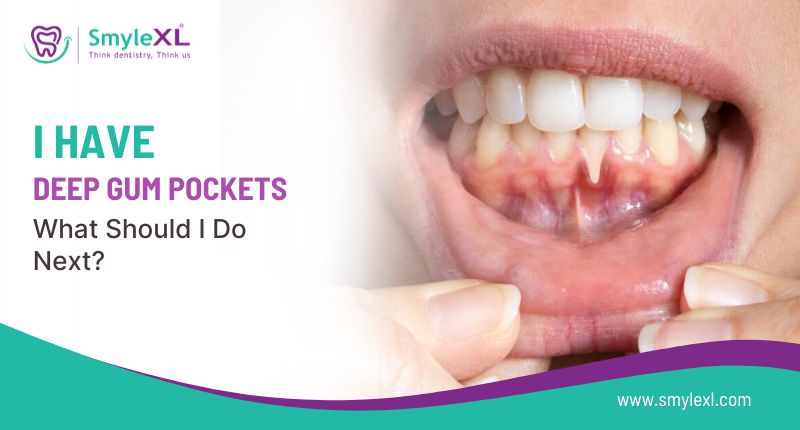
But what it really means is simple. The space between your teeth and gums has increased more than it should. And that space can quietly hold bacteria, leading to bigger problems over time.
At SmyleXL Dental Clinic, Vanasthalipuram, many patients come in unsure about what this actually means or what to do next. The good news is that understanding it early gives you a chance to manage it effectively with proper gum treatment.
Table of Contents
ToggleWhat Are Deep Gum Pockets?
Healthy gums fit snugly around your teeth and act as a protective seal. When that seal weakens due to bacteria or poor oral hygiene, small gaps begin to form between the teeth and gums. These gaps are known as deep pockets around teeth.
These pockets often develop due to plaque buildup under gums, which is a sticky layer of bacteria that forms daily. If not cleaned properly through brushing and flossing, this buildup gradually hardens into tartar below gumline, which cannot be removed by regular brushing alone.
Over time, this leads to irritation, infection, and gradual damage to the supporting structures of your teeth. The deeper these pockets become, the harder it is to keep them clean, allowing bacteria to multiply and worsen the condition.
Why Do Gum Pockets Become a Concern?
Deep gum pockets are not just about the gums. They affect the foundation that holds your teeth in place.
As bacteria settle deeper into these pockets, they begin to damage the surrounding tissues and bone. You may notice swollen and red gums, which is often one of the earliest visible signs. There may also be infection around teeth, which can lead to discomfort or sensitivity.
As the condition progresses, gums may start pulling away from the teeth, creating a need for a proper receding gums solution. In advanced stages, untreated infection can even lead to bone loss around teeth, weakening the support system of your teeth.
If ignored for too long, this can contribute to tooth loosening, and the cause of loose teeth is tooth mobility or even tooth loss. What starts as a small gap can slowly become a serious oral health concern.
Early Signs You Should Not Ignore
Deep gum pockets often develop quietly, without causing immediate pain. However, your body does give subtle warning signs that should not be ignored.
You may experience persistent bad breath linked to bad breath causes, which often comes from bacteria trapped under the gums. Bleeding while brushing may indicate the need for a solution for bleeding gums, especially if it happens frequently.
Some people notice sensitivity or mild discomfort near the gums, especially while eating or brushing. Food getting stuck more often between teeth is another common sign, as the gaps around teeth become more noticeable.
These signs may feel minor in daily life, but they often indicate deeper issues that need timely attention before they worsen.
What Should You Do Next?
If you’ve been told you have deep gum pockets, the next step is not panic; it’s taking the right action at the right time.
1. Start With a Professional Evaluation
A proper dental assessment helps determine the depth of the pockets and the level of damage already present. This forms the base of your gum disease management plan and helps your dentist decide the most suitable approach for your condition.
2. Consider Deep Cleaning
In most cases, dentists recommend deep cleaning of teeth, also known as scaling and root planing.
This procedure:
- Removes hardened deposits from below the gum line
- Smoothens the tooth roots to prevent further buildup
- Helps gums reattach more closely to the teeth
It is one of the most effective and commonly recommended steps in early to moderate gum treatment, especially when the condition is still manageable.
Why Deep Cleaning Matters?
Unlike regular cleaning, deep cleaning focuses on areas that are not visible or reachable through daily brushing.
It helps:
- Reduce bacterial infection at its source
- Control inflammation in the gums
- Support better healing of gum tissues
For many patients, this step alone significantly improves their oral health care and slows down the progression of gum disease. It also makes it easier to maintain gum health with regular hygiene practices.
When Is Advanced Care Needed?
If the pockets are deeper or the infection has progressed further, basic cleaning may not be enough to control the condition.
In such cases, advanced oral care may be required. This can include:
- Targeted therapies to manage deeper infections
- Procedures to repair or manage gum damage
- Long-term periodontal care plans personalized to your condition
The goal at this stage is not just treatment, but stabilization. Proper care helps prevent further damage and protects your teeth from long-term complications.
Daily Care Becomes More Important Now
Professional treatment is only one part of the process. What you do daily plays an equally important role in maintaining results.
Improving your oral hygiene routine helps prevent recurrence and supports healing:
- Brush twice daily using proper technique
- Clean between teeth regularly to remove trapped food
- Avoid aggressive brushing that can harm gums
- Stay consistent with dental visits and follow-ups
These simple but consistent steps support effective gum pocket care and help maintain long-term gum health.
Can Deep Gum Pockets Be Reversed?
In the early stages, yes. With timely and proper gum treatment, inflammation can be reduced, and gum health can improve significantly.
However, in advanced stages, the focus shifts from complete reversal to management. The goal becomes:
- Controlling infection effectively
- Lessens the chances of further damage to gums and bone
- Preventing tooth loss over time
Early action always leads to better outcomes and simpler treatment options.
When Should You Take It Seriously?
If you notice:
- Frequent bleeding while brushing
- Persistent swelling or redness
- Bad breath that does not improve
- Visible gum recession
…it is time to act without delay.
At SmyleXL Dental Clinic, Vanasthalipuram, early diagnosis often helps patients avoid more complex and invasive procedures later. Addressing the issue at the right time makes treatment more effective and easier to manage.
A Small Space That Shouldn’t Be Ignored
Deep gum pockets may not feel urgent, but they are not something to overlook or delay.
They are a clear sign that your gums need attention, not later, but now.
With the right gum treatment, consistent care, and timely action, you can manage the condition effectively and protect your oral health in the long run.
Because sometimes the smallest spaces can lead to the biggest problems if ignored for too long.
FAQs
What is the cost of gum treatment in Vanasthalipuram, Hyderabad?
The cost of gum treatment in Vanasthalipuram, Hyderabad, depends on the type and severity of the condition. Basic procedures like scaling usually start around ₹1,000–₹2,500, while more advanced treatments such as laser therapy may range between ₹8,000 and ₹60,000 or more for full-mouth care. Procedures like gum grafting can cost between ₹25,000 and ₹60,000, depending on complexity. These treatments fall under advanced oral care, especially when addressing issues like plaque buildup under gums. The final cost varies based on how deep the infection is and how many areas need treatment.
Is a deep gum cleaning painful?
Deep cleaning, also known as scaling and root planing, is a key part of deep cleaning of teeth and is usually performed under local anesthesia. This means the procedure itself is generally comfortable and pain-free. After the treatment, you may experience mild sensitivity or soreness for a few days, especially if there was a significant infection around teeth. However, this discomfort is temporary and manageable. Proper aftercare and following your dentist’s advice can make recovery smoother and support effective gum disease management.
Do gums grow back after deep cleaning?
Gums do not naturally grow back once they have receded, but gum treatment like deep cleaning can significantly improve gum health and stop further damage. It helps reduce inflammation and allows the gums to reattach more closely to the teeth. While it may not fully reverse deep pockets around teeth, early intervention can stabilize the condition. With proper periodontal care and consistent oral hygiene, you can maintain healthy gums and prevent the condition from worsening over time.
How long will gums be sore after deep cleaning?
After scaling and root planing, it is common for gums to feel sore or sensitive for about 5 to 7 days. This happens because the procedure removes tartar below gumline, allowing the gums to start healing. During this time, you may notice slight swelling or tenderness, which gradually improves. Following a proper oral hygiene routine and avoiding hard or spicy foods can help speed up recovery and keep discomfort minimal.
What slows down gum healing?
Several factors can delay healing after gum treatment, with smoking being one of the most significant. It reduces blood flow to the gums, making it harder for tissues to repair. Poor oral hygiene, unmanaged diabetes, and high stress levels can also slow recovery. These factors can worsen swollen and red gums and make gum pocket care more difficult. Maintaining good habits and following professional advice play a key role in faster healing and better results.
What should you eat after deep gum cleaning?
After deep cleaning of teeth, it is best to choose soft and gentle foods for a few days. Options like soups, yogurt, mashed vegetables, smoothies, and scrambled eggs are easy on the gums and help avoid irritation. These foods also reduce pressure on sensitive areas affected by the removal of tartar below gumline. Maintaining proper nutrition supports healing and complements your oral health care, helping your gums recover more comfortably.
What is the biggest cause of receding gums?
The most common cause of gum recession is untreated gum disease, which often starts with plaque buildup under gums. Over time, this leads to infection and weakening of the gum tissue. Other contributing factors include aggressive brushing, smoking, hormonal changes, and teeth grinding. These can worsen deep pockets around teeth and increase the need for a proper receding gums solution. Identifying the cause early helps in preventing further damage and maintaining gum health.
Can deep gum pockets lead to tooth loss if untreated?
Yes, if left untreated, deep gum pockets can gradually lead to tooth loss. As bacteria continue to accumulate in these spaces, they cause ongoing damage to the gums and supporting bone. This can result in bone loss around teeth, weakening the foundation that holds your teeth in place. Over time, teeth may become loose or shift, which is a common cause of loose teeth linked to advanced gum disease. With timely gum disease management and proper care, this progression can be controlled, and the risk of tooth loss can be significantly reduced.