
There’s a particular kind of frustration that comes with researching dental implant costs online. You find a number, say, ₹25,000, feel relieved, and then slowly realize that number might be for the implant post alone, or doesn’t include the crown, or assumes you don’t need a bone graft, or any number of other situations that only surface later. By the time you’re actually sitting in the chair, the figure looks quite different from what you started with.
Single dental implant cost in India varies significantly, and the variation isn’t arbitrary. It reflects real differences in what’s included, what materials are used, and what your specific case requires. Understanding the breakdown upfront means no surprises, no confusion, and a much more useful comparison when you’re evaluating your options.
Here’s exactly what you’re paying for and what might cost extra.
Table of Contents
ToggleThe Base Cost: What’s Usually Included
A standard single dental implant cost in India typically covers three components, and all three are necessary for a complete, functional tooth replacement:
The Titanium Dental Implant Post
The titanium dental implant is the foundation, a small post surgically placed into the jawbone to serve as the tooth root replacement. This is the component that undergoes osseointegration, the process by which the jawbone fuses with the implant surface over 3–6 months, creating a stable, permanent anchor.
Biocompatible implant material, specifically titanium, is used because the body accepts it without rejection. It doesn’t corrode, doesn’t decay, and in most cases lasts a lifetime.
The Abutment
The abutment is the connector piece between the implant post and the crown. It’s sometimes included in the base price, sometimes quoted separately, so it’s worth clarifying upfront.
The Implant-Supported Crown
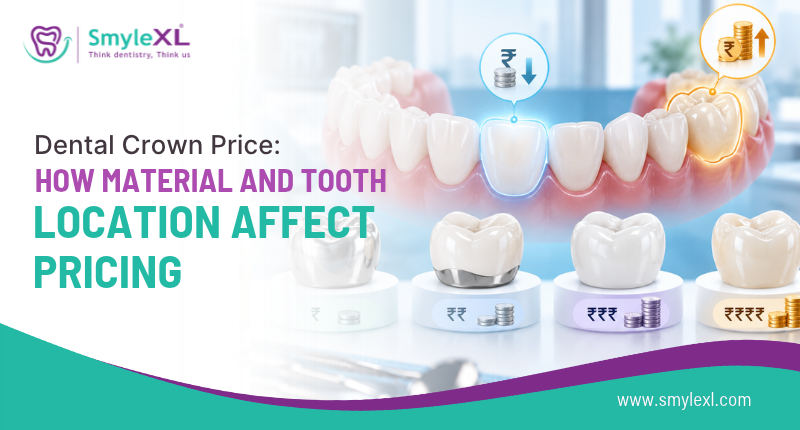
The implant-supported crown is the visible tooth, the part that looks and functions like a natural tooth. Crown material significantly affects both cost and appearance:
- Zirconia crown: the premium option. Tooth-colored, strong, and the closest to a natural-looking tooth. Most commonly recommended for visible teeth.
- PFM (Porcelain-Fused-to-Metal): more affordable, functional, but can show a metal margin at the gumline over time
- Metal crown: durable, least expensive, typically used for back teeth where aesthetics don’t matter as much
What Does a Single Dental Implant Cost in India?
At SmyleXL Dental Clinic, single dental implant cost typically ranges between ₹20,000 and ₹75,000 per tooth, covering the implant post, abutment, and crown.
| Component | Approximate Cost |
| Titanium dental implant + abutment + implant-supported crown | ₹20,000 – ₹75,000 |
| CBCT 3D scan | ₹2,000 – ₹4,000 |
| Bone grafting (if required) | ₹8,000 – ₹25,000 |
| Sinus lift (if required) | ₹10,000 – ₹40,000 |
The lower end of the range typically reflects a straightforward case, adequate bone, no grafting needed, and a standard implant brand. The higher end reflects premium implant brands, zirconia crown placement, and more complex cases.
What’s NOT Included: The Extras Worth Knowing About
This is the section most cost breakdowns skip. Here’s what can add to the single dental implant cost beyond the base figure:
CBCT 3D Scan
A cone beam CT scan is essential for accurate implant planning; it shows bone density, nerve positions, and sinus proximity in three dimensions. Not always included in the base quote. At ₹2,000–₹4,000, it’s a relatively minor addition, but worth confirming up front.
Bone Grafting
Bone grafting becomes necessary when jawbone preservation hasn’t happened, either because the tooth was extracted long ago and the bone has resorbed, or because the existing bone isn’t dense enough to support stable osseointegration. At ₹8,000–₹25,000, it adds meaningfully to the total and extends the treatment timeline by 3–6 months.
Sinus Lift
For implants in the upper back jaw, the sinus cavity sometimes sits too close to the surface to allow adequate implant depth. A sinus lift procedure creates the necessary space, adding ₹10,000–₹40,000 depending on complexity.
Extraction
If the tooth hasn’t been removed yet, the extraction costs are separate from the dental implant procedure costs.
Why Does the Cost Vary So Much?
Single dental implant cost across India ranges from ₹15,000 to over ₹1,00,000, and the difference comes down to several factors:
Implant brand: Imported brands have well-documented implant longevity and implant safety records built over decades. Domestic implants are more affordable and increasingly reliable, but brand reputation reflects years of clinical data on osseointegration outcomes.
Crown material: A zirconia crown costs more than a PFM but delivers superior aesthetics and durability. For missing tooth replacement in a visible area, the difference is noticeable.
Case complexity: A straightforward single implant in a patient with good bone takes less time and fewer materials than one requiring bone grafting, sinus lift, or complex positioning.
Implant vs. Bridge vs. Denture: The Cost Comparison
Permanent tooth replacement through implants looks expensive upfront, but the long-term picture changes the comparison significantly.
| Option | Upfront Cost | Lifespan | Addresses Bone Loss? |
| Tooth implant | ₹20,000 – ₹75,000 | Lifetime (post) | Yes |
| Bridge | ₹10,000 – ₹40,000 | 10–15 years | No |
| Removable denture | ₹5,000 – ₹25,000 | 5–8 years | No |
A bridge requires replacement every 10–15 years and involves grinding down healthy adjacent teeth. A denture needs relining as the jaw changes shape. Only a tooth root replacement through a dental implant procedure preserves jawbone preservation and functions like a natural tooth indefinitely.
Post-Implant Care: Protecting the Investment
Post-implant care determines how long the implant actually lasts. The essentials:
- Brush twice daily, including around the implant crown margins
- Floss or use an interdental brush around the implant
- Avoiding smoking significantly reduces implant safety and osseointegration success
- Wear a nightguard if grinding is a factor
- Attend regular check-ups, and early detection of any issues around the implant keeps options open
Implant longevity of 20+ years is consistently achievable with proper post-implant care, making the upfront investment increasingly reasonable when spread across decades of use.
The Transparent Option
Single dental implant cost at SmyleXL Dental Clinic is always presented as a complete, itemized breakdown, covering what’s included, what additional procedures may be needed based on your specific case, and why. No vague quotes, no mid-treatment additions that weren’t discussed upfront.
Missing tooth replacement through a titanium dental implant is one of the most durable, natural-feeling solutions in dentistry, and knowing exactly what you’re paying for is what makes the decision a confident one.
Book your implant consultation at SmyleXL Dental Clinic today and get a clear, honest cost breakdown before anything begins.
Frequently Asked Questions
What is included in the cost of a dental implant?
A complete single dental implant cost typically includes the titanium dental implant post, the abutment connector, and the implant-supported crown. What’s often quoted separately includes the CBCT scan, bone grafting if needed, sinus lift if required, and tooth extraction if the tooth is still present. Always ask for an itemized breakdown; understanding exactly what’s covered prevents unexpected additions mid-treatment.
How long does a dental implant procedure take?
The dental implant procedure itself, placing the titanium dental implant post, takes 1–2 hours per implant. The overall timeline is longer: osseointegration takes 3–6 months, after which the implant-supported crown is attached. If bone grafting is needed, add another 3–6 months before implant placement. Total timeline from first appointment to final natural-looking tooth ranges from 4 months to over a year, depending on case complexity.
How long do dental implants last in India?
The titanium dental implant post, once fully integrated, can last a lifetime with proper post-implant care. The zirconia crown or other crown on top typically lasts 10–15 years before normal wear may require replacement. Implant longevity depends on oral hygiene consistency, smoking habits, and regular dental check-ups. Published research consistently shows implant safety and success rates above 95% over 10 years, making permanent tooth replacement through implants the most durable option available.
Is dental implant surgery painful?
The dental implant procedure is performed under local anesthesia, with no pain during surgery, just pressure and movement. Mild soreness and swelling for 3–5 days afterward are normal and can be managed with prescribed medication. Biocompatible implant material minimizes the body’s inflammatory response, and most patients find recovery more comfortable than anticipated, comparable to a tooth extraction. The osseointegration healing phase that follows is largely painless.
What should I avoid after dental implant surgery?
For the first 48–72 hours: avoid hot foods and drinks, smoking, alcohol, and vigorous rinsing, all of which interfere with initial healing and osseointegration. Avoid hard or crunchy foods on the implant side until the crown is placed. Smoking is the most significant risk factor for implant failure; stopping before and after surgery substantially improves implant safety outcomes. Consistent post-implant care, brushing, flossing, and regular check-ups, are what determine implant longevity long-term.