
Many people are surprisingly comfortable living with a missing tooth.
They’ll adjust their chewing.
Smile on one side.
Avoid certain foods.
But the moment they hear:
“We place a titanium implant inside the jaw…”
…the face changes immediately.
“Metal? Inside the body?”
Somehow, the missing tooth feels less frightening than the idea of titanium in the mouth.
Which is interesting, because titanium is one of the few metals the human body quietly cooperates with. It has an unusually high resistance to corrosion, meaning it does not easily break down in the mouth despite constant exposure to saliva, food, temperature changes, and chewing pressure.
And then comes the part that completely changed modern dental implant treatment:
Titanium doesn’t just sit inside the bone.
Over time, it actually fuses with it.
At SmyleXL Dental Clinic, one of the most common questions patients ask about dental implants is:
“Will my body accept it for years?”
The short answer is yes. But understanding why titanium became the gold standard helps patients feel much more confident about the decision.
Table of Contents
ToggleDental Implants Have Been Around Longer Than Most People Think
Many patients still imagine dental implants as some new or experimental technology.
In reality, dental implant treatment has been used successfully for more than 50 years.
Titanium implants became popular in modern dentistry after researchers discovered something remarkable in the 1960s: human bone naturally bonds with titanium. This bonding ability, called the osseointegration process, transformed the future of missing teeth replacement.
At SmyleXL Dental Clinic, patients are often surprised to learn that long-term dental implants are now considered one of the most researched and predictable procedures in modern dentistry.
Why Do Dental Implants Feel Different from Other Tooth Replacements ?
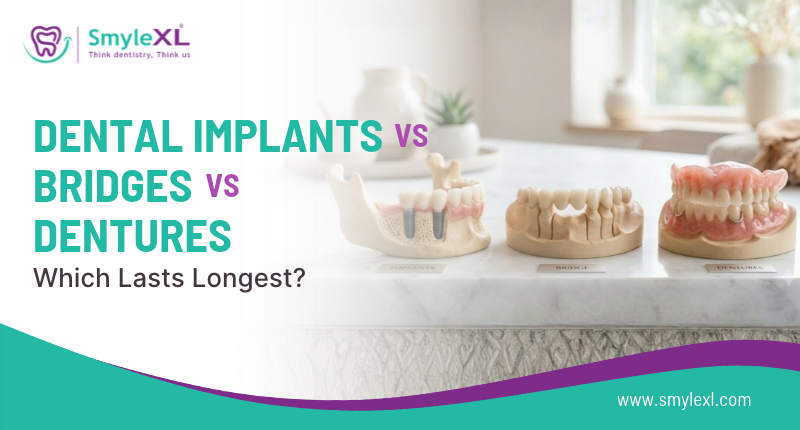
Unlike dentures, implants remain fixed inside the jaw. This creates:
- stronger chewing support
- better stability
- improved confidence
- clearer speech
- more natural oral function improvement
Another important benefit is bone loss prevention.
Patients who live with missing teeth for years often adapt slowly without realizing how much oral function they lost over time.
That happens because implant-supported teeth restore stability during chewing in a way many removable solutions cannot.
This oral function improvement affects daily life more than most people expect.
When a natural tooth is lost, the jawbone underneath slowly begins shrinking because it no longer receives chewing pressure. Dental implants help preserve that stimulation through jawbone integration, which helps maintain facial structure over time.
This is one reason dental implant treatment is often considered more than a cosmetic procedure. It is also a long-term tooth restoration solution for protecting oral health.
Why is Titanium Used in Dental Implants?
Not every metal can survive comfortably inside the human body.
Titanium became the preferred material because it behaves differently from most metals.
First, it has exceptional corrosion resistance. The mouth constantly secrets saliva, then experiences bacteria, acidic foods, temperature changes, and chewing pressure. Many metals would slowly break down in that environment.
Titanium protects itself naturally by forming a thin protective oxide layer over its surface. This layer makes it highly stable inside the body.
Second, titanium is a highly biocompatible material.
That means the surrounding bone and gum tissues usually accept it without aggressive immune reactions. Instead of treating the implant like a dangerous foreign object, the body gradually bonds with it during the osseointegration process.
At SmyleXL Dental Clinic, we often explain this to patients in a simple way:
“The bone starts cooperating with the implant.”
That jawbone integration is what gives titanium implants their remarkable long-term stability.
Titanium is also extremely strong while remaining lightweight. It tolerates chewing pressure well, which contributes significantly to implant durability over decades of use.
Are Titanium Dental Implants Actually Safe for Long-Term Use?
For the vast majority of patients, yes.
Modern dental implants have shown excellent long-term success rates worldwide. Research consistently shows high survival rates when patients maintain proper oral hygiene and receive quality treatment planning.
Healthy gums, strong bone support, and good maintenance habits all influence how well long-term dental implants perform.
Most successful implant patients eventually stop noticing the implant altogether. It becomes part of normal life like eating comfortably, smiling naturally, and speaking confidently again.
And that is usually the hidden success of permanent tooth replacement:
it stops feeling like treatment.
Even Titanium Implants Can Have Complications
The important thing is this:
Most complications are uncommon, manageable, and significantly reduced through proper planning and aftercare.
Gum Inflammation Around Implants
One of the most common implant-related issues is inflammation around the implant area.
This usually happens because plaque and bacteria accumulate around the gums surrounding the implant-supported teeth.
Symptoms may include:
- gum swelling
- bleeding
- bad breath
- discomfort around the implant
This is why gum health maintenance becomes extremely important after dental implant surgery.
At SmyleXL Dental Clinic, we remind patients that implants still require daily brushing, flossing, and professional cleanings just like natural teeth.
Titanium Sensitivity
Some patients worry about metal allergies.
True titanium allergy is very rare, but it can happen in isolated cases. Patients with a strong history of metal sensitivity should discuss this before starting dental implant treatment.
Fortunately, titanium is considered one of the safest and most used biocompatible materials in dentistry today.
Implant Failure and Healing Problems
Sometimes implants fail not because of the titanium itself, but because healing conditions were poor.
Smoking, uncontrolled diabetes, severe gum disease, and poor oral hygiene can affect the osseointegration process and reduce treatment success.
At SmyleXL Dental Clinic, every patient undergoes a detailed evaluation before dental implant surgery to reduce these risks as much as possible.
Dentistry Is Becoming More Comfortable Than Ever
One reason dental implant treatment feels far less intimidating today is that modern dentistry has evolved dramatically.
Earlier, patients imagined implant procedures as long, painful, and unpredictable. Today, digital scans, advanced imaging, and guided placement techniques have made treatment far more accurate and comfortable.
At SmyleXL Dental Clinic, implant planning begins before the procedure itself. Detailed scans help evaluate:
- bone quality
- gum condition
- implant positioning
- bite pressure
- long-term support
This careful planning improves comfort, healing, and implant durability.
Modern dentistry is also becoming more patient-focused.
People today want:
- faster healing
- less discomfort
- natural-looking results
- predictable treatment
- comfortable recovery experiences
And dentistry is evolving rapidly to meet those expectations.
The fear surrounding “metal inside the body” often comes from imagining something harsh or unnatural. But modern dental implant treatment is moving in the opposite direction, toward treatments that feel more biologically natural, minimally invasive, and long-lasting.
Frequently Asked Questions
Why is titanium used in dental implant treatment?
Titanium is used because it is a strong and biocompatible material that works naturally with human bone. During the osseointegration process, the implant bonds with the jawbone and functions like an artificial tooth root.
Can dental implants help prevent bone loss?
Yes. One major advantage of a dental implant is bone loss prevention. Since the implant stimulates the jawbone during chewing, it helps preserve bone strength after tooth loss.
What happens if missing teeth are not replaced?
Ignoring missing teeth replacement can affect chewing ability, jawbone density, and the alignment of nearby teeth over time. This may gradually reduce oral function improvement and create additional dental problems.
Are dental implants better than removable dentures?
For many patients, yes. Implant-supported teeth feel more stable, improve chewing comfort, and provide a more natural permanent tooth replacement compared to removable dentures.
Who is a good candidate for dental implant treatment?
Most healthy adults with sufficient jawbone support are candidates for a dental implant. At SmyleXL Dental Clinic, we carefully evaluate bone quality, gum health, and medical history before recommending treatment.
A Missing Tooth Shouldn’t Become a Permanent Compromise
Many people spend years adjusting to a missing tooth because treatment sounds intimidating.
But titanium dental implants have quietly proven themselves for decades.
They resist corrosion remarkably well. They bond naturally with bone. They restore chewing comfort, preserve jawbone structure, and help patients regain confidence in daily life.
Yes, complications can exist. But for most people, those risks remain manageable with proper planning, experienced care, and consistent gum health maintenance.
At SmyleXL Dental Clinic, we believe implant consultations should reduce fear, and not increase it. Patients deserve realistic expectations, proper guidance, and treatment designed around long-term comfort.
Because eventually, the goal of successful dental implant treatment is very simple:
It should stop feeling like an implant…and start feeling like your tooth again.