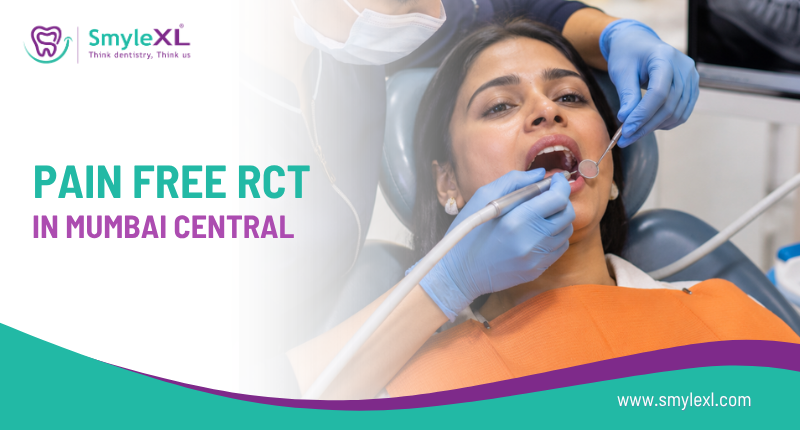

Root canal — two words that can make even a brave dental patient sit up a little straighter.
Root canal treatment has long been feared for its perceived pain, leading many to postpone necessary care. However, modern dentistry has advanced significantly. With accurate diagnosis, local anesthesia, and improved techniques, root canal therapy can be much more comfortable than people anticipate.
If you are looking for pain free RCT in Mumbai Central, the goal is not to promise that every patient will feel absolutely nothing. It is to make the procedure as comfortable as possible while effectively treating the source of the tooth problem.
At SmyleXL Dental Clinic, the focus is on understanding what is causing your pain, explaining the treatment clearly, and helping you feel comfortable throughout the process. So, let’s answer the question most nervous patients really want to ask: Does a root canal actually hurt?
Table of Contents
ToggleDoes a Root Canal Hurt?
The short answer is: it shouldn’t be the painful experience many people imagine.
When a tooth has a nerve infection or a severely inflamed pulp, the tooth itself may already be causing significant pain. You might experience throbbing, sensitivity to hot or cold, pain while biting or even discomfort that keeps you awake at night.
During the root canal procedure, the dentist uses local anesthesia to numb the area before treatment begins. This means you should not normally feel sharp pain while the dentist works on the tooth. You may notice pressure, vibration, or movement, but these sensations are different from the intense toothache caused by an infected tooth.
At SmyleXL Dental Clinic, the aim of offering pain free RCT in Mumbai Central is not simply to make the appointment comfortable. It is also to treat the underlying infection that may be responsible for your discomfort in the first place.
What Is a Root Canal Treatment?
Inside every tooth is a soft tissue called dental pulp, which contains nerves and blood vessels. When deep decay, trauma, or repeated dental procedures damage this tissue, bacteria can enter and cause a dental pulp infection.
If the infection reaches the inner part of the tooth, simply placing a filling may no longer be enough. Root canal treatment involves removing the infected or damaged pulp, cleaning and disinfecting the canals, filling them, and sealing the tooth.
This allows the dentist to treat the infection while preserving the natural tooth.
That is one of the biggest advantages of RCT. Instead of immediately removing a badly infected tooth, treatment may allow natural tooth preservation and help you continue using your own tooth.
At SmyleXL Dental Clinic, the dentist first evaluates the tooth and surrounding tissues before recommending treatment. This helps determine whether RCT is appropriate and what approach would be most suitable for your particular tooth.
How Does Our Pain Free RCT in Mumbai Central Work?
A comfortable RCT is not about one magic step. It is about combining proper diagnosis, anesthesia, technique, and patient communication.
- Diagnosis comes first
The dentist examines the tooth and may recommend a Digital X-ray to understand the extent of decay or infection and examine the roots and surrounding bone. This is important because tooth pain can have several causes. Treating the wrong tooth or assuming every toothache needs an RCT can lead to unnecessary treatment. - The tooth is numbed
Before beginning treatment, the dentist administers local anesthesia for RCT to numb the affected area. If you are particularly nervous about injections or dental treatment, tell your dentist. Knowing what makes you uncomfortable allows the dental team to explain each step and make the experience easier. - The infected tissue is removed
Once the tooth is numb, the dentist accesses the inside of the tooth and removes the infected pulp. This is the part patients often fear most, but the anesthesia is intended to prevent sharp pain during treatment. - The canals are cleaned
The dentist carefully cleans and shapes the root canals to remove infected tissue and bacteria. The purpose is to reduce the infection inside the tooth rather than simply covering up the problem. - The canals are sealed
After cleaning, the canals are filled and sealed to help prevent bacteria from entering again.
Depending on the condition and complexity of the tooth, treatment may be completed in one visit or may require additional appointments.
Can You Get a Single Sitting RCT?
In suitable cases, Single sitting RCT can be an option. However, it is not appropriate for every tooth.
The number of appointments depends on factors such as the severity of infection, tooth anatomy, number of canals, and how the tooth responds to treatment.
Patients often search for Single sitting RCT because they want to save time, particularly when work and family responsibilities make multiple dental visits difficult. But completing treatment in one visit should never be the only goal. Proper cleaning, disinfection, and sealing of the canals are more important than simply finishing quickly.
How We Make Pain Free RCT in Mumbai Central Possible
Modern Painless root canal treatment depends on more than anesthesia.
At SmyleXL Dental Clinic, accurate diagnosis helps the dentist understand the problem before treatment begins. Proper local anesthesia for RCT helps control discomfort during the procedure. Modern instruments and careful techniques can make canal cleaning more precise, while clear communication can help anxious patients feel more in control.
The dentist may also check whether the anesthesia has taken effect before beginning treatment. If you feel discomfort during the procedure, communicating it immediately allows the dentist to address it rather than asking you to simply tolerate it.
This patient-focused approach is an important part of painless root canal treatment at SmyleXL Dental Clinic.
What Happens If You Delay Treatment for an Infected Tooth?
One of the biggest mistakes patients make is waiting because the pain becomes manageable.
An infected tooth does not necessarily mean the pain will remain constant. Sometimes symptoms may reduce temporarily, but that does not automatically mean the infection has disappeared.
When an infection is left untreated, it can spread beyond the tooth and affect the surrounding tissues. In more advanced situations, swelling, an abscess or damage to the supporting structures may develop.
That is why getting an examination when symptoms first appear can be much more sensible than waiting until the tooth becomes unbearable.
If your dentist has already recommended RCT, ask why it is necessary, what alternatives exist and what could happen if you delay it. An informed decision is better than making a decision based purely on fear.
What Is Root Canal Recovery Like?
One of the most common concerns after treatment is Root canal recovery.
A treated tooth may feel tender for a short time, especially if there was prior infection. This is normal. Follow your dentist’s aftercare instructions and avoid pressure on the tooth to help recovery. Good Root canal recovery also includes maintaining your regular brushing and oral hygiene routine and returning for the recommended restoration or follow-up.
If you experience severe, persistent or worsening pain after treatment, contact your dentist rather than trying to manage it indefinitely at home.
Will I Need a Crown After RCT?
A root canal treats the infection inside the tooth, but the tooth may still need protection afterward.
Depending on which tooth has been treated and how much natural structure remains, the dentist may recommend a crown or another suitable restoration.
A root canal crown can help protect a weakened tooth from excessive biting forces and restore its function. The need for one depends on the individual case.
This is also part of natural tooth preservation. Saving the natural tooth is only useful if it can be properly restored and maintained afterward.
How Much Does Root Canal Treatment Cost in Mumbai Central?
The root canal treatment cost in Mumbai Central can vary because no two RCT cases are exactly alike.
Factors that may influence the cost include:
- The tooth being treated
- Number and shape of root canals
- Severity of infection
- Complexity of the case
- Number of appointments
- Type of final restoration or crown
- Additional diagnostic procedures, when required
So, instead of choosing a clinic solely by the lowest quoted amount, consider what is included in the painless root canal treatment plan.
At SmyleXL Dental Clinic, patients can discuss their diagnosis, treatment options and expected expenses with the dental team before proceeding. Understanding the complete treatment plan makes it easier to make a confident decision about your dental care.
Why Choose SmyleXL Dental Clinic for RCT in Mumbai Central?
When you are already dealing with tooth pain, the last thing you want is uncertainty about what happens next.
At SmyleXL Dental Clinic, the focus is on making the treatment journey easier to understand from the initial examination through treatment and restoration. Your dentist can evaluate the affected tooth, use appropriate diagnostic imaging such as a Digital X-ray, explain the findings and discuss the recommended treatment.
If you are anxious about dental procedures, tell the team. Fear should not stop you from getting necessary treatment.
Whether your concern is pain, appointment time, treatment cost or the possibility of losing your natural tooth, having an open conversation with your dentist can help you understand your options.
If you have been searching for pain free RCT in Mumbai Central, don’t wait for a painful tooth to dictate when you finally visit the dentist. Getting the problem assessed early may give you more treatment options and help prevent the infection from becoming more complicated.
Frequently Asked Questions
Is Pain Free RCT in Mumbai Central really possible?
Modern RCT uses local anesthesia and careful techniques to make treatment comfortable. While experiences vary, the procedure is generally designed to avoid sharp pain during treatment.
How long does a root canal take?
It depends on the tooth and complexity of the infection. Some cases may be completed in one sitting, while others require additional appointments.
Does RCT provide root canal pain relief?
Yes. RCT removes infected or damaged pulp that may be causing the toothache. Mild tenderness can still occur temporarily after treatment.
Is a root canal better than removing an infected tooth?
When the tooth can be successfully treated and restored, RCT may allow you to keep your natural tooth. Your dentist can determine whether the tooth is suitable for preservation.
When should I see a Root Canal Specialist?
If you have a persistent toothache, prolonged sensitivity, pain while biting, swelling or signs of infection, schedule a dental examination. A Root Canal Specialist can evaluate whether the pulp is affected and whether RCT is appropriate.
Can I avoid RCT if my tooth stops hurting?
Not necessarily. Pain reduction does not always mean that the underlying infection has resolved. If RCT has been recommended, discuss the situation with your dentist before deciding to postpone treatment.