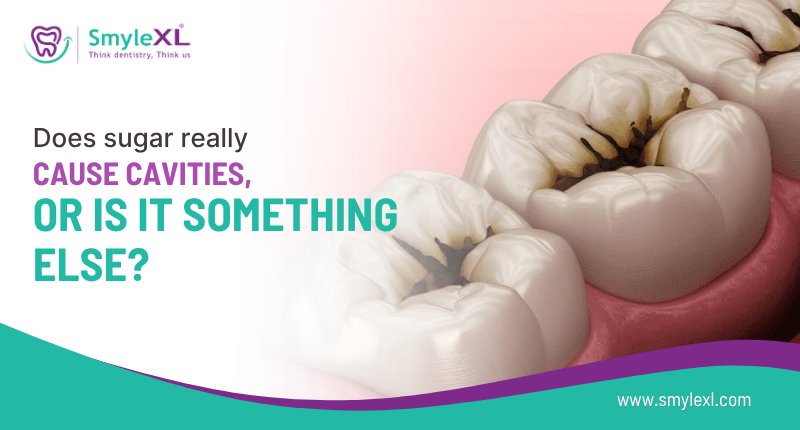

Sugar does not directly create cavities, but it feeds bacteria in your mouth that produce acids. These acids gradually damage tooth enamel and can lead to decay when the process continues over time.
Many people assume avoiding sweets alone is enough to prevent cavities. However, the causes of tooth decay involve multiple factors, including oral bacteria, plaque buildup, eating habits, enamel strength, and dental hygiene practices. Understanding the reasons for cavities can help you take timely action and know when professional care is needed.
At SmyleXL Dental Clinic, Dr. Mohan K. B evaluates the extent of decay and recommends suitable restoration options based on your dental needs. If decay has already affected your tooth structure,
we provide dental fillings treatment in RMV, Bengaluru that can help restore the damaged area and prevent the cavity from progressing further.
Table of Contents
ToggleHow Do Cavities Form in Teeth?
Cavities are areas of damage that develop when acids produced by bacteria gradually break down the protective outer layer of teeth. This process is known as tooth decay.
When you eat foods containing sugar or carbohydrates, bacteria present in plaque use these sugars and release acids. Repeated acid exposure can weaken enamel and create small openings where decay begins.
The process of how cavities form in teeth usually involves:
- Bacteria mixing with food particles and forming plaque
- Acid production after sugar consumption
- Gradual enamel damage
- Formation of a cavity or hole in the tooth
- Deeper decay affecting inner tooth layers
This explains the sugar and tooth decay connection. Sugar is not the only cause, but frequent exposure gives harmful bacteria more opportunities to produce acids.
Does Sugar Directly Cause Cavities?
No, sugar alone does not directly cause cavities. The real problem occurs when bacteria in plaque break down sugar and release acids that attack your teeth.
The longer and more frequently your teeth are exposed to these acids, the higher the chance of developing dental cavities. For example, sipping sugary drinks throughout the day may expose your teeth to repeated acid attacks compared to consuming sugar occasionally with meals.
Other factors that influence cavity development include:
- Poor plaque removal
- Inadequate brushing habits
- Reduced saliva flow
- Weak enamel
- Frequent snacking
- Existing dental problems
Understanding these factors helps answer an important question: What is the main cause of tooth decay? The answer is a combination of bacterial activity, acid exposure, and conditions that allow enamel breakdown.
What Are the Main Causes of Tooth Decay?
While sugar receives much of the attention, several factors contribute to decay.
Plaque and Bacteria
A sticky layer called plaque forms on teeth when bacteria combine with food particles. These bacteria release acids that attack tooth surfaces.
The plaque and bacteria buildup is one of the major contributors to cavities because it creates an environment where acid production continues.
Acid Attack on Teeth
Every time bacteria produce acids, teeth experience an acid attack on teeth. Repeated attacks weaken enamel and make the surface more vulnerable to decay.
Poor Oral Hygiene
When plaque is not removed properly, bacteria remain on tooth surfaces for longer periods. This increases the risk of decay and may lead to the need for tooth decay treatment.
Frequent Sugar Exposure
The frequency of sugar intake matters. Regularly consuming sugary snacks or drinks throughout the day gives bacteria repeated opportunities to produce acids.
Natural Tooth Factors
Some people may have deeper grooves in their teeth, crowded areas that are difficult to clean, or naturally weaker enamel. These factors can increase cavity risk even with good habits.
What Are the Early Signs of Cavities?
Cavities do not always cause pain in the beginning. Recognizing the early signs of cavities can help you seek treatment before the damage becomes extensive.
Common signs include:
- Tooth sensitivity while eating hot, cold, or sweet foods
- Mild discomfort while chewing
- Visible dark spots or holes on teeth
- Food getting trapped in certain areas
- Occasional tooth pain
Tooth sensitivity is one of the symptoms many people notice first. However, sensitivity can have several causes, so a dental examination is important to identify the actual problem.
When Do You Need Dental Fillings?
Many people ask, “When should a cavity be filled?” A filling is usually recommended when decay has created a cavity that cannot repair itself naturally.
Small areas of enamel weakening may sometimes be managed through preventive care, but once a cavity forms a physical defect in the tooth, professional restoration is generally needed.
Signs you may need a filling include:
- A visible cavity or hole
- Increasing sensitivity
- Pain while biting
- Food repeatedly getting stuck
- A dentist detecting decay during examination
Understanding the signs you need a filling helps you avoid waiting until the cavity becomes larger.
How Does a Dentist Treat Cavities?
The tooth filling procedure involves removing the decayed portion of the tooth and restoring the area with a suitable filling material.
The general process includes:
Examination and Diagnosis
The dentist examines the tooth and may use dental X-rays if needed to understand the depth of decay.
Removing Decay
The damaged portion of the tooth is carefully removed to stop the progression of decay.
Restoring the Tooth
The cleaned area is filled with a restorative material that helps rebuild the tooth structure.
Final Adjustment
The dentist checks the bite and makes adjustments to ensure comfort while chewing.
For patients looking for dental fillings treatment in RMV, Bengaluru, proper evaluation helps determine whether a filling is the right solution or whether another restoration approach is needed, and SmyleXL Dental Clinic is surely the best place for that.
What Are the Different Cavity Treatment Options?
The right treatment depends on the size and location of the cavity.
Dental Fillings
Fillings are commonly used for small to moderate cavities. They restore the damaged portion and help maintain normal tooth function.
Advanced Restoration
If decay has affected a larger area, other restoration methods may be considered. These options focus on rebuilding and protecting the remaining tooth structure.
Preventive Care
Early detection and good oral habits play an important role in avoiding extensive treatment.
The available cavity treatment options depend on how early the problem is identified. This is why regular dental visits are important even when there is no pain.
Can Cavities Be Reversed Naturally?
Early enamel changes may sometimes be improved with proper oral care and fluoride support before an actual cavity develops. However, once a physical hole forms in the tooth, it cannot naturally rebuild itself.
If decay has progressed, restoring decayed teeth through professional treatment may be required.
A dentist can determine whether your tooth needs monitoring, preventive care, or restoration based on the condition of your enamel and the extent of damage.
How Can You Prevent Tooth Decay?
Preventing the reasons for cavities involves reducing bacterial activity and protecting your enamel.
Helpful habits include:
- Brushing twice daily with proper technique
- Cleaning between teeth regularly
- Limiting frequent sugar exposure
- Drinking enough water
- Maintaining regular dental checkups
Preventing tooth decay is easier when small changes become part of your daily routine.
Why Choose SmyleXL Dental Clinic for Dental Fillings Treatment in RMV, Bengaluru?
When you notice sensitivity, pain, or signs of decay, delaying treatment can allow the problem to progress.
At SmyleXL Dental Clinic, Dr. Mohan K. B focuses on identifying the cause of decay and providing suitable restoration options based on your tooth condition. A proper examination helps determine whether you need fillings or another form of tooth decay treatment.
For those searching for a dentist for cavities, visiting SmyleXL Dental Clinic in Bangalore and understanding your treatment options is the first step toward protecting your smile. Professional care can help restore damaged teeth and maintain better oral health.
Frequently Asked Questions
How Long Do Dental Fillings Usually Last?
The lifespan of a filling depends on factors such as the filling material, location of the tooth, chewing pressure, and your oral care habits. Regular dental checkups help your dentist monitor the condition of the filling and identify any signs of wear or damage early.
Is Getting a Dental Filling Painful?
Most people experience minimal discomfort during a filling procedure. Your dentist focuses on making the process comfortable by first addressing the affected area and removing the damaged portion before restoring the tooth.
If you are considering Dental Fillings Treatment in RMV, Bengaluru, a consultation at SmyleXL Dental Clinic can help you understand the procedure and what to expect during treatment.
How Much Time Does a Tooth Filling Procedure Take?
The time required for a filling depends on the size and location of the cavity. Small cavities may be restored in a shorter visit, while larger areas of decay may require more detailed treatment planning.
A dentist evaluates the condition of your tooth before recommending the appropriate cavity treatment options.
Can a Tooth Get Decayed Again After a Filling?
Yes, a filled tooth can develop decay again if plaque buildup, frequent sugar exposure, or poor oral hygiene continues. Maintaining good brushing habits and regular dental visits can help reduce the chances of further enamel damage.
What Should You Avoid After Getting a Dental Filling?
Your dentist may provide specific instructions based on the filling type and your tooth condition. Generally, maintaining oral hygiene and avoiding habits that increase the risk of decay can support long-term restoration.
Following proper care helps protect the results of damaged tooth restoration.
How Does a Dentist Decide If I Need a Filling or Another Treatment?
A dentist considers factors such as cavity size, depth of decay, tooth structure, and symptoms before recommending treatment. Early cavities may need simpler care, while deeper decay may require advanced restoration.
A proper evaluation helps determine whether you need fillings, other cavity repair options, or additional care.
Protect Your Teeth Before Small Problems Become Bigger
Cavities often develop silently before causing noticeable discomfort. Understanding the role of sugar, bacteria, and enamel damage can help you take preventive steps at the right time.
If you need Dental Fillings Treatment in RMV, Bengaluru, SmyleXL Dental Clinic can help evaluate your tooth condition and recommend appropriate care. Early diagnosis and timely restoration can help protect your teeth and maintain a healthier smile.

Dr. Mohan K B
Orthodontist & Dentofacial Orthopedics Specialist
Dr. Mohan K B is an experienced orthodontist with 15+ years of experience, serving patients at SmyleXL Dental Clinic in Bengaluru. He completed his dental education at Bapuji College of Dental Sciences, Davanagere, followed by higher studies in Orthodontics and Dentofacial Orthopedics at Krishnadevaraya Institute of Dental Sciences, Bengaluru. His areas of expertise include orthodontic treatment, Invisalign aligners, dental implants, smile designing and comprehensive dental care.
Professional Profile: Dr Mohan K B
Facebook: SmyleXL Facebook
Instagram: SmyleXL Instagram
YouTube: SmyleXL YouTube