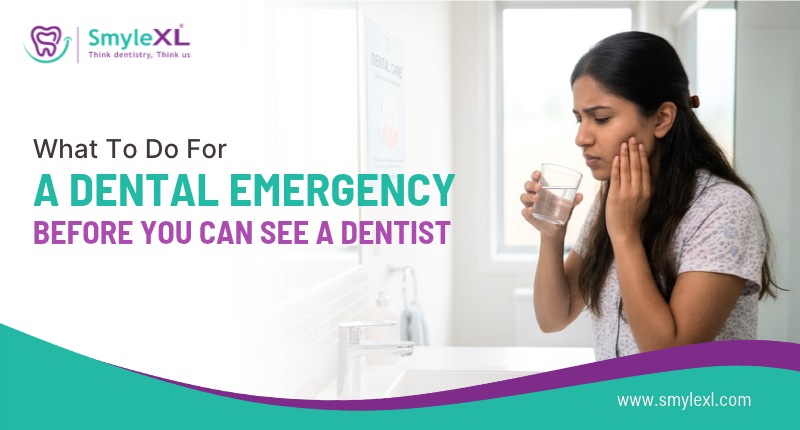

A sudden toothache, a broken tooth, or swelling that appears out of nowhere can leave you wondering what to do first. The steps you take before reaching a dentist can protect the affected area and prevent the situation from worsening. Knowing some basic dental first aid can help you stay calm while arranging emergency dental care. However, home measures are only temporary. They cannot treat the underlying cause of an infection, injury, or damaged tooth.
If you are looking for an Emergency Dentist Near Mumbai Central, we are always there. At SmyleXL Dental Clinic, we recommend getting immediate dental attention when pain, swelling, bleeding, or trauma suggests that waiting could make treatment more complicated.
Table of Contents
ToggleIs Every Toothache a Dental Emergency?
Not every dental problem requires an emergency appointment, but certain symptoms should not be ignored. A severe toothache that keeps you awake, becomes increasingly painful or is accompanied by swelling may indicate a deeper problem such as decay, an infection or an abscess.
A dental emergency can also involve an injury rather than pain. A knocked-out tooth, fractured tooth, uncontrolled bleeding or significant facial swelling needs prompt assessment.
If you are unsure whether your symptoms need an emergency dentist, it is safer to contact a dental clinic and describe what has happened. The dentist can guide you on how quickly you should be seen.
What Should You Do Before Seeing a Dentist?
If you cannot reach the dentist right away, a few simple steps can help you manage the situation temporarily.
- Rinse your mouth gently
If you have a severe toothache or food trapped around the painful area, gently rinse your mouth with warm water. A warm salt-water rinse can help keep the area clean. Avoid using sharp objects to dig around the tooth.
This is a basic form of dental first aid, not a replacement for treatment.
- Use a cold compress for swelling
If you notice facial swelling after an injury or because of a painful tooth, place a cold compress against the outside of your cheek for short periods. Avoid applying ice directly to your skin or affected tooth.
- Protect the affected tooth
If you have a broken tooth or dental injury, avoid chewing on that side. Choose softer foods until you can receive urgent dental care.
- Don’t attempt a DIY repair
A damaged crown, filling or tooth should not be permanently repaired at home. Avoid household glue, sharp instruments or other unapproved materials.
- Book an appointment
These measures may provide temporary tooth pain relief, but they do not remove the cause of the problem. Contact our Emergency Dentist Near Mumbai Central if your symptoms are severe, worsening, or associated with swelling, trauma or bleeding.
What to Do for Common Dental Emergencies
Different emergencies need different immediate steps. Knowing what to do can help protect your tooth while you arrange emergency dental care.
Severe Toothache
It can result from deep decay, a cracked tooth, an infection or inflammation inside the tooth.
Until you see a dentist, gently rinse your mouth, keep the area clean and avoid extremely hot or cold foods if they increase your discomfort. A cold compress may also help if there is swelling.
Do not place any painkiller or medication directly against your gums or tooth, as this can irritate the tissues.
If the pain continues or keeps returning, arrange immediate dental attention rather than relying on temporary tooth pain relief.
Broken Tooth
It can expose sensitive inner structures and make eating uncomfortable. Rinse your mouth gently and avoid biting with the damaged tooth. If the edge is sharp and irritating your cheek or tongue, you can temporarily cover it with dental wax.
A dentist will need to assess how much of the tooth has been damaged and how it can be repaired or requires another form of treatment.
Knocked-Out Tooth
If the tooth is dirty, gently rinse it without scrubbing the root. Hold it by the crown rather than the root. Keep the tooth moist in milk and contact an emergency dentist immediately. If possible, take the tooth with you when you seek care.
It is caused by sports, an accident, or another form of dental trauma, it should not simply be left untreated, even if the pain appears manageable.
Dental Abscess
A dental abscess can develop when bacteria infect the tissues around or inside a tooth. It may cause pain, swelling, a bad taste, pus or tenderness.
Do not treat it with home remedies alone, because a professional assessment is needed to address the underlying cause.
If an abscess is accompanied by increasing facial swelling, fever or difficulty swallowing, seek urgent medical or dental care rather than waiting for the symptoms to settle.
Dental Trauma and Bleeding
A blow to the mouth can damage teeth, gums or other oral tissues even when there is no obvious fracture. Assess this type of dental trauma, especially if a tooth has become loose, displaced, or painful.
For bleeding, apply gentle pressure with clean gauze or a clean cloth. If bleeding remains heavy or does not stop, seek immediate dental attention.
What Should You Avoid During a Dental Emergency?
Knowing what not to do is just as important as knowing what to do.
- Don’t place any medication directly on your tooth or gums.
- Don’t use sharp objects to remove something stuck between your teeth.
- Don’t try to glue a broken tooth back together.
- Don’t ignore increasing swelling.
- Don’t chew on a damaged or loose tooth.
- Don’t delay treatment because pain temporarily disappears.
- Don’t attempt to push a displaced tooth back into position without professional guidance.
When Should You See a Dentist Immediately?
Some symptoms deserve faster attention than others. Seek urgent dental care if you have:
- severe or persistent dental pain
- a knocked-out tooth
- a broken tooth with significant pain
- swelling around the tooth or face
- a suspected dental abscess
- uncontrolled bleeding
- a loose or displaced permanent tooth
- significant dental trauma
If swelling spreads toward the neck or you have difficulty breathing or swallowing, seek emergency medical care immediately.
If you are searching for an Emergency Dentist Near Mumbai Central, don’t wait for symptoms to become unbearable before asking for professional guidance. Early assessment at SmyleXL can help determine whether you need same-day treatment or a planned appointment.
How SmyleXL Dental Clinic Can Help
Whether you have a severe toothache, tooth injury, swelling, or another urgent concern, the treatment depends on the underlying cause.
Our team can evaluate the problem and explain the appropriate treatment rather than simply masking the symptoms.
If you need an Emergency Dentist Near Mumbai Central, contacting SmyleXL Dental Clinic early allows us to understand your symptoms and advise you on the next step. For problems that require emergency dental care, prompt assessment can help prevent a manageable dental problem from becoming more complicated.
Frequently Asked Questions
What should I do first during a dental emergency?
Stay calm, protect the affected area, rinse gently if appropriate, use a cold compress for swelling, and if you are in Mumbai, contact SmyleXL and our Emergency Dentist Near Mumbai Central can guide you. Avoid attempting permanent treatment at home.
Is a severe toothache always a dental emergency?
No, a severe toothache is not always a dental emergency. But don’t ignore a toothache, especially if it persists or comes with swelling, fever, or sensitivity. Contact a dentist to determine whether you need urgent treatment.
What should I do if I have a knocked-out tooth?
Handle the knocked-out tooth by its crown, avoid scrubbing the root, keep it moist in milk, and seek our emergency dentist near Mumbai Central at SmyleXL as soon as possible.
Can a dental abscess go away on its own?
It needs professional assessment because the infection can continue even if pain temporarily improves. Seek dental care promptly, especially if swelling is increasing.
When should I go to an emergency dentist?
If a dental problem causes difficulty breathing or swallowing, rapidly increasing facial or neck swelling, serious facial injury, or uncontrolled bleeding, seek emergency medical care immediately.
How can SmyleXL Dental Clinic help during a dental emergency?
SmyleXL Dental Clinic can assess the cause of your symptoms and guide you toward appropriate treatment. If you need an Emergency Dentist Near Mumbai Central, contact the clinic as soon as possible so we can evaluate your symptoms and plan the next steps.

Dr Ahmedbashir Holy
Dentist & Root Canal Specialist
Dr. Ahmed Bashir Holy is an MDS-qualified dentist with 6+ years of experience, serving patients at SmyleXL Dental Clinic, Mumbai Central. He specialises in root canal treatment, including single-visit RCT, and uses advanced dental microscopy for precise treatment. Dr. Holy is known for his skilled, gentle and patient-focused approach to dental care.
Professional Profile: Dr.Ahmed Bashir Holy
Facebook: SmyleXL Facebook
Instagram: SmyleXL Instagram
YouTube: SmyleXL YouTube