
Are You Experiencing These?
- A clicking or popping sound when you open your mouth?
- Jaw pain while chewing or yawning?
- Stiffness or difficulty opening your mouth fully?
- Pain around your ears, temples, or cheeks?
- Is your jaw getting stuck when you try to open or close your mouth?
These symptoms can be associated with temporomandibular joint (TMJ) problems, although they don’t automatically mean you have a temporomandibular joint disorder.
If you’ve noticed a click while eating or yawning, you may wonder whether it will disappear on its own. The answer depends on what’s causing the jaw clicking and whether you have other symptoms.
Table of Contents
ToggleQuick Summary: When Should You Be Concerned?
- Painless clicking without restricted movement may not require treatment.
- Clicking accompanied by pain, locking, or difficulty chewing deserves attention.
- Nighttime teeth grinding, jaw clenching, and joint-related changes may contribute to symptoms.
- Avoid repeatedly forcing your jaw to recreate the sound.
- Persistent, worsening, or function-limiting symptoms should be evaluated by a dental professional.
Can Jaw Clicking Go Away on Its Own?
Yes, occasional clicking can settle on its own, particularly when it occurs without pain, jaw locking, or difficulty moving the jaw. However, whether it resolves depends on the underlying cause.
Sometimes, a click happens because of changes in how the jaw joint moves. If it doesn’t affect eating, speaking, or opening your mouth, jaw pain treatment may not be necessary. But a persistent sound accompanied by discomfort deserves closer attention.
A jaw joint disorder can involve the joint, surrounding muscles, or structures that help the jaw move smoothly. Not every click indicates a TMJ disorder, and treating the sound alone isn’t always necessary.
The important distinction is whether your jaw functions comfortably. If the clicking becomes painful, your mouth starts opening less than usual, or the jaw gets stuck, arrange a dental evaluation instead of waiting indefinitely.
What Causes Your Jaw to Click?
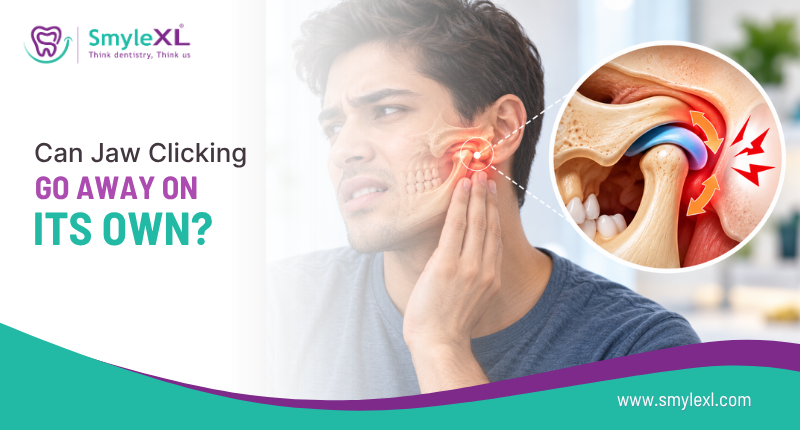
Your lower jaw connects to your skull through the temporomandibular joint, located just in front of each ear. This joint helps you speak, chew, yawn, and open your mouth.
Changes in joint movement, muscle tension, and certain habits can contribute to clicking.
Changes in the Jaw Joint
The temporomandibular joint contains a small cartilage disc that helps the joint move smoothly. If the disc moves differently during opening and closing, you may hear a click.
This can cause jaw popping when chewing or a clicking near the ear. The sound may occur without pain, but clicking accompanied by discomfort or restricted movement deserves jaw joint evaluation.
Teeth Grinding and Jaw Clenching
Do you wake up with a tired jaw or notice that you clench your teeth when concentrating? These habits can strain the muscles around your jaw.
Nighttime teeth grinding may contribute to facial muscle soreness, headaches, and jaw muscle pain. In some people, repeated clenching also aggravates existing joint symptoms.
Teeth grinding treatment may be appropriate when grinding is contributing to discomfort or tooth damage. The approach depends on the findings during examination.
Muscle Tension and Bite-Related Concerns
Muscle tension can develop when you repeatedly clench your teeth or overwork your jaw. This may cause facial muscle soreness, tenderness around the cheeks, or discomfort while opening your mouth.
Some people also have changes in their bite or other dental concerns that need assessment. However, clicking alone does not mean you need bite alignment treatment. A dentist should first identify whether a specific bite problem is present.
When Is Jaw Clicking More Than Just a Sound?
Clicking becomes more concerning when it affects how comfortably you use your jaw. Watch for symptoms that persist, worsen, or interfere with everyday activities.
| Symptom | What it may indicate |
| Pain while chewing | Joint or jaw muscle pain |
| Jaw stiffness after waking | Muscle tension or joint discomfort |
| Difficulty opening your mouth | Restricted joint movement or another underlying problem |
| Jaw getting stuck | Possible joint dysfunction requiring assessment |
| Persistent facial pain | A jaw joint pain, jaw muscle pain, or other cause that needs evaluation |
Limited jaw movement can make ordinary activities, such as eating a sandwich or yawning, unexpectedly difficult. You may also experience difficulty chewing food or find yourself avoiding certain foods because opening your mouth hurts.
Pay attention if jaw popping when chewing starts occurring alongside pain or if clicking near the ear becomes more frequent and uncomfortable. These changes don’t confirm a particular diagnosis, but they are reasons to seek an assessment.
Sudden inability to open or close your mouth, significant swelling, or severe pain warrants prompt medical or dental attention.
What Can You Do at Home Without Making It Worse?
If your jaw clicks occasionally without significant pain, simple changes may help reduce unnecessary strain. However, home care cannot identify every underlying cause.
- Stop testing the click repeatedly. Opening your mouth again and again to recreate the sound may irritate the joint.
- Choose comfortable foods temporarily. Avoid very hard foods or chewing gum if they aggravate your symptoms.
- Try a warm compress. Gentle warmth may ease mild muscular discomfort.
- Keep your jaw relaxed. Avoid clenching your teeth when working, driving, or concentrating.
- Avoid forceful exercises. Don’t stretch your jaw aggressively or try to reposition the joint yourself.
If muscle tension contributes to your symptoms, muscle relaxation therapy or professionally guided exercises may be considered after assessment. The right approach depends on the cause.
Avoid starting jaw stiffness treatment or exercises based on online instructions alone, particularly if your jaw locks or opening your mouth is painful. If symptoms persist despite these measures, seek professional advice.
When Should You See a Dentist?
Arrange a dental evaluation if the clicking persists, becomes painful, or starts affecting chewing and mouth opening. You should also seek assessment if your jaw repeatedly locks or you experience increasing discomfort around your ears or temples.
During a jaw joint evaluation, the dentist may check how widely you can open your mouth, how your jaw moves, and whether the joint or surrounding muscles are tender. They may also examine your teeth for signs of grinding, clenching, or other dental problems.
This assessment helps distinguish a possible temporomandibular joint disorder from muscle-related discomfort or other causes. Depending on the findings, further investigations may be recommended.
If you’re experiencing persistent symptoms, SmyleXL Dental Clinic in Lal Darwaja is a place to discuss your concerns and seek an appropriate dental assessment. Identifying the cause is more useful than simply trying to eliminate the clicking sound.
What Treatments Are Available for Jaw Clicking?
Treatment depends on the underlying problem. Painless clicking may only need monitoring, while painful or restricted movement may require further management.
Possible approaches include:
- Habit changes: Reducing clenching and avoiding activities that aggravate symptoms.
- Conservative care: Using appropriate self-care measures and guided exercises when recommended.
- Dental splints: A dentist may recommend a suitable appliance in selected cases involving teeth grinding.
- Further assessment: Persistent symptoms may require additional investigation or referral.
TMJ disorder treatment should be based on the diagnosis rather than the sound alone. Similarly, jaw pain treatment may involve managing muscular strain, addressing grinding, or investigating a joint problem, depending on the cause.
If the jaw repeatedly locks, jaw locking treatment requires an assessment of why the jaw joint movement is restricted. Don’t attempt to force the jaw open.
Where muscle-related symptoms are identified, muscle relaxation therapy may form part of the management plan. If a specific bite problem is contributing to symptoms, the dentist can determine whether bite alignment treatment is appropriate.
The goal is to improve comfort and function, not simply make every click disappear.
Don’t Let the Click Keep You Guessing
An occasional painless click may not require treatment, but pain, locking, or limited jaw movement should not be ignored. Jaw Clicking is a symptom, not a diagnosis, and the reason behind it matters more than the sound itself.
At SmyleXL Dental Clinic in Lal Darwaja, you can discuss persistent jaw symptoms and understand whether further evaluation is appropriate. Getting the cause assessed can help you decide what to do next instead of repeatedly testing the click and hoping it disappears.
Frequently Asked Questions
Is painless jaw clicking normal?
It can occur without indicating a problem that needs treatment. If it becomes painful or affects jaw joint movement, seek an evaluation.
Can stress cause jaw clicking?
Stress may contribute to clenching and muscle tension, which can aggravate jaw symptoms. It may not be the only cause.
Should I stop chewing gum if my jaw clicks?
If chewing gum aggravates clicking or discomfort, take a break and avoid overworking the jaw.
Can jaw clicking lead to locking?
Clicking does not necessarily lead to locking. However, if your jaw becomes stuck or you cannot open or close your mouth normally, seek prompt assessment.
When should I seek help for jaw clicking?
Seek a jaw joint evaluation if the clicking persists, becomes painful, or occurs with jaw stiffness, locking, or difficulty chewing food.

Dr. Devanshi Patel
Chief Dentist & Cosmetic Dental Care Specialist
Dr. Devanshi Patel is the Chief Dentist at SmyleXL Dental Clinic, Surat, with expertise in full mouth rehabilitation, root canal treatment, conventional dentures, implant-supported overdentures, implantology and veneers. She completed her BDS from Dharmsinh Desai University and MBA in Healthcare from Sikkim Manipal University. She is committed to providing personalised, technology-driven and patient-focused dental care.
Professional Profile: Dr. Devanshi Patel
Facebook: SmyleXL Facebook
Instagram: SmyleXL Instagram
YouTube: SmyleXL YouTube