
Ever had your upper denture move just when you were trying to enjoy your favorite meal? Or felt the need to adjust it while speaking? A conventional denture can sometimes lack the stability you want, which raises an important question: can dental implants help keep an upper denture firmly in place?
If you’re exploring dental implant treatment in Ashiyana, Lucknow, this can be an important option to consider. At SmyleXL Dental Clinic in Ashiyana, Lucknow, we can plan implant-based tooth replacement after assessing your jawbone, gums, and existing denture. So, how does an implant-supported upper denture work, and who is it suitable for? Let’s find out.
Table of Contents
ToggleCan Dental Implants Support an Upper Jaw Denture?
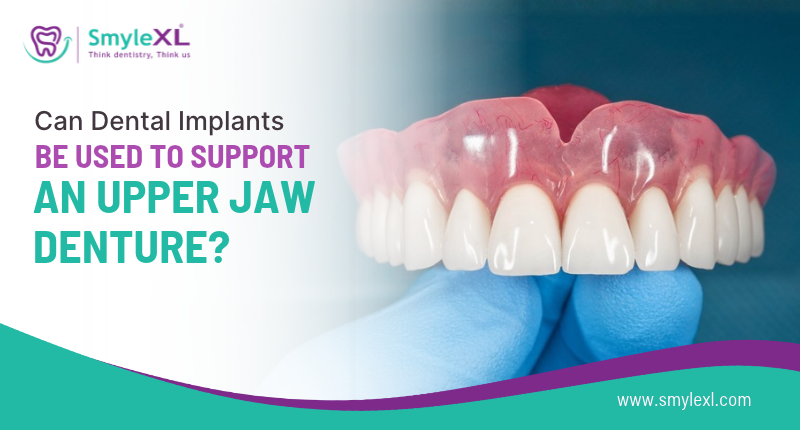
Yes, dental implants can support an upper denture. Instead of relying only on suction and the palate’s shape, implants placed in the upper jaw can provide additional retention and stability.
An implant-supported upper denture can either be removable or, in selected cases, replaced with a fixed implant-supported restoration. The appropriate option depends on factors such as available bone, the number and position of implants, bite, and the type of prosthesis being planned.
A removable implant-retained denture is attached to implants using specialized attachments. The patient can remove it for cleaning, while the implants help reduce unwanted movement during everyday activities.
What Is an Implant-Supported Upper Denture?
An implant-supported upper denture is a denture supported by dental implants rather than resting entirely on the gums. Dentists place implants in selected areas of the upper jaw, which become the foundation for the prosthesis.
In a conventional denture, stability mainly comes from jaw shape and denture fit. With an implant-supported design, the implants provide additional anchorage.
This approach can be used for patients who have lost several or all upper teeth. Depending on the case, the treatment may involve an implant-retained denture, a removable maxillary overdenture, or a fixed full-arch restoration.
What Are the Options for Supporting an Upper Denture?
No single implant design suits everyone. Your dentist considers the condition of your upper jaw before choosing among restoration options.
Implant-Retained Denture
An implant-retained denture is removable but attaches to implants through a retention system. It can provide more stability than a conventional denture while still allowing the patient to remove the prosthesis for cleaning.
Maxillary Implant Overdenture
A maxillary implant overdenture is a removable prosthesis supported and retained by implants in the upper jaw (maxilla). Clinicians plan the number and placement of implants based on available bone and prosthetic requirements.
Fixed Implant-Supported Restoration
Some patients may be suitable for a fixed restoration rather than a removable denture. A full-arch prosthesis can be supported by multiple implants and may incorporate artificial teeth resembling crowns and other restorative components.
The choice between these types of implants and prostheses depends on individual anatomy, functional needs, and treatment planning.
How Are Upper Jaw Dental Implants Planned?
Before placing implants, the dentist needs to determine whether the upper jaw can support them safely and predictably. This begins with a detailed dental examination and review of the patient’s medical and dental history.
Assessment of the Jawbone
The amount and quality of available bone are important factors in implant planning. The upper jaw can lose bone volume after tooth loss, which may reduce the space available for implant placement.
If the bone is insufficient in the planned area, bone grafting may sometimes be considered before or alongside implant treatment. This is not required in every patient.
Choosing the Implant Position
The dentist evaluates where implants can be positioned to provide appropriate support for the planned denture. Prosthesis design, bone availability, and bite influence the number and distribution.
Selecting the Restoration
The final restoration may be a removable overdenture or a fixed implant-supported prosthesis. The consultation process helps determine which option fits the patient’s oral condition and functional requirements.
What Happens During Dental Implant Treatment in Ashiyana, Lucknow?
The exact sequence varies by patient, but treatment generally follows several stages.
1. Dental Examination and Treatment Planning
The dentist examines the entire oral health, and existing teeth or dentures. The dentist may use imaging to assess bone dimensions and identify suitable implant sites.
2. Implant Placement
During implant placement, the dentist positions the implants in the planned areas of the upper jaw. Local anesthesia numbs the treatment area.
3. Healing and Integration
Implants need time to heal and fuse with the surrounding jawbone. That’s why the treatment plan always includes the duration before the dentist adds the final restoration.
4. Attaching the Denture
Once the implants are strong and healed enough, the dentist puts in the attachment system or the finished prosthesis.
5. Final Adjustments
The dentist checks the restoration’s fit, bite, comfort, and function. They make any necessary adjustments to ensure the prosthesis works properly with the implants.
Are Upper Denture Implants Better Than Conventional Dentures?
Implants are not automatically suitable or necessary for every patient. However, upper denture implants can provide an alternative when conventional dentures have inadequate retention or when a patient wants an implant-supported solution.
A conventional upper denture covers part of the palate and depends largely on its fit and surrounding tissues for stability. An implant-supported design uses implants for additional retention.
The decision depends on factors such as oral health, bone availability, medical history, expectations, and the desired type of restoration. So, choosing implants should therefore involve an individual assessment rather than a general comparison.
How Many Implants Do You Need for an Upper Denture?
The number of implants depends on the planned prosthesis. Also, the patient’s dental anatomy matters. A removable maxillary overdenture and a fixed full-arch restoration may require different implant configurations.
The dentist considers:
- Available bone volume
- Implant distribution
- Prosthesis design
- Bite and functional forces
- Existing restorations
- Overall oral health
No universal number applies to every patient. The appropriate number is determined during treatment planning.
Can Implants support Full Upper Dentures?
Yes. Full upper denture with implants treatment is an option for people who have lost all or most of their upper teeth. Depending on the case, implants can support the denture or be replaced with a fixed full-arch prosthesis.
Implant-supported dentures can be either removable or fixed. The choice depends on the patient’s anatomy and treatment objectives. Dentists may also assess patients who already wear a traditional denture and are considering conversion.
What If There Is Not Enough Bone for Implants?
Insufficient bone does not automatically rule out implant treatment. The dentist first evaluates the available bone and determines whether implants can be placed in suitable positions.
In some cases, bone grafting is considered to increase the available bone volume. For upper jaw treatment, the dentist also assesses the relationship between the implant site and nearby anatomical structures.
The need for grafting depends on the individual case, so do not assume it before completing the dental examination and imaging.
What Does Upper Jaw Implant Treatment Cost?
The cost of treatment depends on various factors, including the number of implants, implant system, type of restoration, additional procedures, and laboratory requirements.
The overall expense might include the number of implants, surgical procedure used, temporary restoration, imaging or other diagnostic procedures, and any required bone grafting. Therefore, the price of the implant procedure alone may not represent the total cost of treatment.
It’s also important to know that removable overdentures and fixed implant restorations aren’t the same thing. Each comes with its own parts and lab work. Getting a detailed treatment estimate upfront helps you see exactly what’s covered.
How Do You Maintain an Implant-Supported Upper Denture?
Implants still require regular oral hygiene even though the artificial teeth cannot develop cavities like natural teeth.
For removable implant-supported dentures, remove the prosthesis and clean it according to your dentist’s instructions. The areas around the implants also need daily cleaning to control plaque and protect the surrounding gums.
When you have fixed restorations, cleaning under and around them often takes more than just a regular toothbrush. You’ll probably need special brushes, floss threaders, or maybe even a water flosser. Don’t skip your regular dental check-ups; they’re important for keeping an eye on your implants, your gums, and the restoration itself.
Good maintenance is an important part of long-term implant care, regardless of which implant types or prosthesis design is selected.
Is an Implant-Supported Upper Denture Right for You?
Consider an implant-supported solution when a conventional upper denture does not provide adequate stability or when a patient wants an alternative to a traditional removable denture. However, suitability depends on bone availability, gum health, general health, bite, and the type of prosthesis required.
A detailed consultation process helps determine whether a removable maxillary overdenture, fixed restoration, or conventional denture is more appropriate. The assessment also helps determine whether additional procedures, such as bone grafting, are needed.
For patients considering dental implant treatment in Ashiyana, Lucknow, SmyleXL Dental Clinic provides dental implant treatment and related restorative care. Dr. Ankit Bahal can assess the individual’s dental condition and discuss the treatment options that may be appropriate for their upper jaw.
FAQs
Can dental implants help support a removable upper denture?
Yes, implants help in supporting the removable upper denture. How many implants you need and where they go depends on your bone density and what the prosthesis is supposed to do.
Are implants suitable for everyone with an upper denture?
Not necessarily. Suitability depends on bone volume, gum health, medical history, oral hygiene, and the type of restoration being considered.
Is bone grafting always needed for upper jaw implants?
No. Bone grafting is only considered when the available bone is insufficient for the planned implant placement. Imaging and clinical assessment help determine whether it is necessary.
Can I replace my existing upper denture with an implant-supported denture?
In many cases, we can evaluate an existing denture as part of the treatment plan. Still, you may need a new prosthesis depending on its fit, design, and compatibility with the planned implants.
How long does treatment with an implant-supported upper denture take?
Treatment timelines aren’t set in stone. They change based on stuff like whether you need bone grafts, other procedures, how quickly you heal, and the kind of restoration you’re getting. After your dentist checks you out and makes a plan, you’ll get a better idea of how long it’ll take.