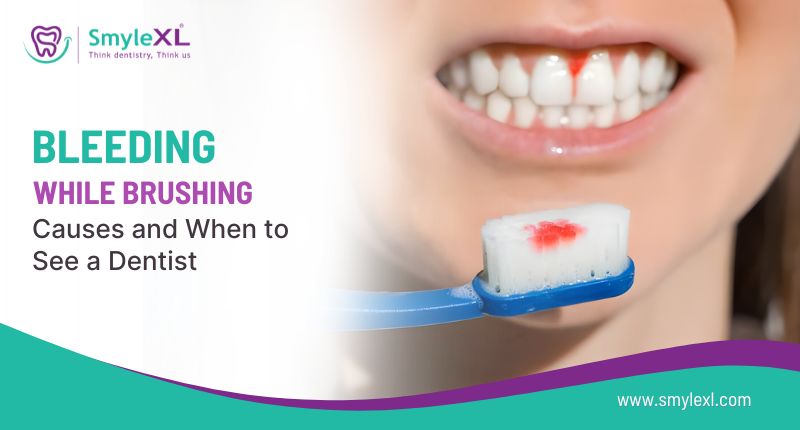

A pink streak in the sink can be unsettling. You might wonder if you brushed too hard or if something is wrong with your gums. At SmyleXL Dental Clinic, we hear this worry often. The good news is that gum treatment for bleeding gums can stop the problem safely and quickly. The first step is understanding why it happens and when it’s time to see a professional.
If you’ve been searching for reliable gum treatment in Viman Nagar, Pune, you are in the right place. Let’s talk about what your gums are trying to tell you and how to bring them back to health.
Table of Contents
ToggleIs It Normal for Gums to Bleed While Brushing?
No, healthy gums do not bleed. This is one of the biggest myths we clear up every day. Seeing blood during or after brushing is a sign that something is off. It may be mild irritation, or it could point to early gum disease. The important thing is not to ignore it and assume it will pass.
Bleeding is your body’s way of raising a flag. When your gums are inflamed, even a soft bristle brush can cause them to bleed. The sooner you address it, the simpler the fix. In many cases, a targeted gum treatment can reverse bleeding gums without major procedures.
Common Causes of Bleeding While Brushing
Your gums can bleed for several reasons. Some are tied to daily habits. Others are signs of a deeper gum infection that needs attention. Let’s look at the most common triggers.
Plaque Buildup Along the Gumline
The most common cause is dental plaque that sits too long along the gumline. Plaque is a sticky film of bacteria that forms constantly. If it’s not removed by proper brushing and flossing, it irritates the gums. The body responds with inflammation, making the gums tender and prone to bleeding gums.
- Plaque hardens into tartar within 24 to 72 hours
- Once tartar forms, a toothbrush cannot remove it
- The gums stay swollen and bleed at the slightest touch
- A professional scaling session can clear the buildup and let healing begin
Early Stage Gum Disease (Gingivitis)
If plaque stays too long, gingivitis sets in. This is the earliest form of gum disease. The gums become red, puffy, and bleed easily. At this stage, there is no permanent damage yet. The right gum disease treatment can fully reverse gingivitis and bring the gums back to health.
- Gingivitis is painless, so bleeding may be the only sign
- It is caused by bacteria in dental plaque
- Without treatment, it can progress to periodontitis
- Good oral hygiene and a gum treatment for bleeding gums can fix it quickly
Other Causes Worth Knowing
Less often, bleeding can be linked to other factors. Vitamin deficiencies, certain medications, or hormonal changes during pregnancy can make gums more fragile. Even stress can lower the body’s ability to fight off gum infection. In these cases, the bleeding usually resolves once the underlying issue is managed.
- Pregnancy hormones can increase blood flow to the gums
- Blood-thinning medication can cause bleeding gums even with gentle care
- A lack of vitamin C or K weakens gum tissue
- A dental checkup can help rule out serious causes
When to See a Dentist for Bleeding Gums?
A tiny bit of pink once in a while may not be a crisis. But there are clear signs that a first dental visit for bleeding is overdue.
Bleeding That Keeps Coming Back
If your gums bleed every time you brush, even with a soft bristle brush, the cause is likely not your technique. It’s the bacteria beneath the gumline. A proper gum treatment for bleeding gums can remove the source of the bleeding and help your gums seal back against your teeth.
Swollen, Red, or Tender Gums
When gums stay puffy and sore, it means the inflammation is chronic. Gum disease feeds on neglect. The longer it sits, the deeper it goes. By the time you notice a change in how your gums look, periodontitis may already be forming pockets beneath the gumline.
Bad Breath That Doesn’t Go Away
Persistent bad breath can come from bacteria trapped in those pockets. Mouthwash can mask it, but only a deep cleaning can clear it. Scaling and root planing reach areas a brush never reaches.
Receding Gums or Loose Teeth
These are signs that gum disease has progressed. Gum recession exposes the root and makes teeth look longer. Loose teeth mean the supporting bone is under attack. At this stage, a gum treatment for bleeding gums must also rebuild lost support.
If any of these signs sound familiar, a gum treatment in Viman Nagar, Pune, at SmyleXL Dental Clinic can stop the damage and help your gums heal. It is always easier to treat before things move too far.
Best Treatment Options for Bleeding Gums
The right treatment depends on how far the problem has progressed. Here is a look at the most effective paths from simple cleanings to advanced care.
Professional Cleaning and Scaling
For early bleeding caused by plaque and tartar, a professional scaling session is often enough. The dentist or hygienist clears the hard deposits from above and just below the gumline. Once the source of irritation is gone, the gums begin to heal.
- Scaling removes tartar that brushing misses
- It is a painless procedure with a quick recovery
- Paired with good oral hygiene, it stops bleeding gums within days
- Most people need a professional cleaning every six months
Scaling and Root Planing (Deep Cleaning)
When gingivitis has deepened, bacteria hide in pockets between the gum and tooth. Scaling and root planing is a deeper gum treatment for bleeding gums. It smooths the root surface so gums can reattach and the pocket shrinks.
- Root planing removes bacteria from the root
- It usually takes one or two visits
- The local anesthetic keeps you comfortable throughout
- This is a proven gum disease treatment that stops early periodontitis
Laser Assisted Gum Therapy
Some clinics now offer laser gum infection treatment. The laser removes infected tissue and bacteria while sealing the healthy gum. It can be less invasive and promote faster healing. However, it may not be suitable for every case.
Surgical Options for Advanced Cases
When deep pockets remain after scaling and root planing, a flap surgery may be needed.
The periodontist gently lifts the gum, cleans the root thoroughly, and sutures it back. In cases of gum recession, a gum graft can rebuild lost tissue.
Here is a quick look at how these options compare.
| Treatment | What It Involves | Approx. Cost (INR) | Best For |
| Professional cleaning | Scaling and polishing above the gumline | ₹1,000 – ₹2,500 | Mild bleeding, plaque buildup |
| Scaling and root planing | Deep cleaning of root surfaces and pockets | ₹3,000 – ₹8,000 per quadrant | Early periodontitis, persistent bleeding gums |
| Laser gum therapy | Laser removal of infected tissue | ₹8,000 – ₹20,000 per session | Moderate pockets, desire for quicker healing |
| Flap surgery | Surgical lifting and cleaning of deep pockets | ₹10,000 – ₹25,000 per quadrant | Advanced periodontitis, bone involvement |
| Gum graft | Tissue is placed to cover the receded areas | ₹8,000 – ₹20,000 per area | Significant gum recession |
A gum treatment for bleeding gums always starts with a careful oral health exam. The goal is to use the least invasive option that will give lasting results.
How to Stop Bleeding Gums at Home?
While professional care is irreplaceable, your daily routine plays a huge role. These simple steps support any gum treatment for bleeding gums and help stop the bleeding from returning.
- Brush twice a day with a soft bristle brush and gentle movements
- Floss daily to remove plaque where a brush cannot reach
- Rinse with a gentle saltwater solution to soothe inflamed gums
- Use a fluoride toothpaste to protect all surfaces of your teeth
- Drink water after meals to wash away food and bacteria
- Avoid smoking, which weakens gum tissue and slows healing
These habits build a protective shield around your gums. And when paired with regular dental checkup visits, they significantly reduce the chance of future bleeding gums.
Frequently Asked Questions
Is it normal for gums to bleed a little while brushing?
No, healthy gums should not bleed. Even a small amount of blood signals irritation, often from dental plaque or early gingivitis.
Will changing my toothbrush stop the bleeding?
A soft bristle brush helps, but if plaque or tartar is the cause, switching brushes alone won’t fix it. A professional cleaning removes the buildup that triggers bleeding gums.
How long does it take for gums to heal after scaling?
Mild bleeding usually stops within a few days. Gums may feel tender for a week, but a proper oral hygiene routine speeds up healing.
Can bleeding gums lead to tooth loss?
Yes. Untreated gum disease can progress to periodontitis, which destroys the bone supporting your teeth. A gum treatment for bleeding gums prevents this.
A Smile That Stays Healthy, Day After Day
Your gums are the quiet foundation of every tooth in your mouth. When they bleed, they are trying to get your attention. Listening early, with better habits and a professional gum treatment for bleeding gums, can save you from discomfort, expense, and tooth loss later on. At SmyleXL Dental Clinic, we keep our approach simple. We explain everything in clear language, and we never rush you into a decision. From your first dental checkup to the moment your gums are healthy again, we are beside you.
When you are ready to put the pink sink behind you, our gum treatment in Viman Nagar, Pune team is here with open doors and a gentle touch. Your gums deserve the same care you give your smile.
| Keyword | Type | Count |
| gum treatment in Viman Nagar, Pune | CTA | 2 |
| gum treatment | Primary | 9 |
| gum disease treatment | Secondary | 2 |
| scaling and root planing | Secondary | 5 |
| gingivitis | Secondary | 6 |
| periodontitis | Secondary | 6 |
| dental plaque | LSI | 4 |
| tartar | LSI | 5 |
| soft bristle brush | LSI | 4 |
| oral hygiene | LSI | 3 |
| dental checkup | LSI | 3 |
| periodontist | LSI | 1 |