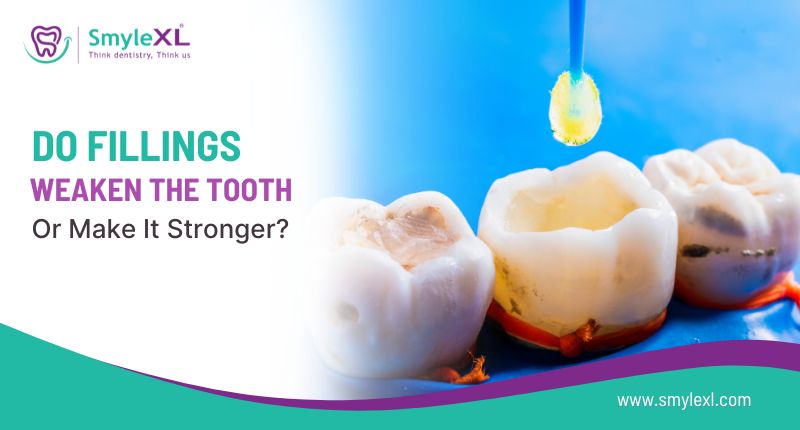

If you’ve ever had a cavity, you’re likely familiar with dental fillings. But have you ever wondered: Do fillings weaken the tooth or make it stronger?
This is a common question, and understandably so, after all, dental fillings are designed to repair teeth that have been damaged by decay. While fillings help restore the function of a tooth, the long-term effects on tooth strength can be a bit more complex than they seem. Whether you’re considering dental fillings in Davanagere or just curious about how they affect your oral health, understanding the ins and outs of fillings is important.
At SmyleXL Dental Clinic, we believe that knowledge is key to making informed decisions about your dental health. In this blog, we’ll explore whether dental fillings can weaken a tooth or make it stronger, dive into the types of fillings available, and discuss how modern fillings have evolved to offer better protection for your teeth.
Why Do You Need a Filling?
When you have a cavity or some form of tooth decay, the enamel (the hard outer layer of the tooth) becomes weakened. If left untreated, this decay can spread, causing more damage and potentially leading to an infected tooth or tooth loss. Dental fillings are designed to:
Table of Contents
Toggle- Fill the hole left by the decay
- Restore the structure and function of the tooth
- Prevent further decay from spreading
In short, fillings are an important solution that can stop a small problem from turning into something much bigger.
Types of Dental Fillings: How They Affect Tooth Strength?
1. Amalgam Fillings (Silver Fillings)
Amalgam fillings are a traditional and widely used filling material. They are made from a mixture of metals, including silver, tin, copper, and mercury. These fillings are durable and resistant to wear and tear, making them an ideal choice for back teeth, which bear the brunt of chewing pressure.
Strengths of Amalgam Fillings:
- Durable: Amalgam fillings are incredibly strong and can last 10-15 years or more.
- Resistant to Fractures: They can withstand high pressure and are less likely to crack or break under chewing forces.
- Cost-effective: Amalgam is one of the more affordable options for fillings.
How Do They Affect Tooth Strength?
Amalgam fillings actually reinforce the tooth. The metal is sturdy enough to support the structure of the tooth, particularly in areas of the mouth that endure heavy pressure, such as the molars.
However, because the filling is not bonded to the tooth, it can eventually expand and contract due to temperature changes, potentially causing the tooth to crack over time.
2. Composite Fillings (Tooth-Colored Fillings)
Composite fillings are made from a mixture of resins and glass particles that are designed to match the color of your natural teeth. These fillings are often used for front teeth or teeth that are visible when you smile, as they blend in seamlessly with your natural tooth color.
Strengths of Composite Fillings:
- Aesthetic Appeal: They provide a natural look, especially for visible teeth.
- Bonding: Composite fillings bond directly to the tooth structure, which can actually make the tooth stronger and reduce the risk of fracture.
- Less Drilling: Dentists often remove less of the natural tooth structure when placing composite fillings.
How Do They Affect Tooth Strength?
Since composite fillings bond to the tooth, they add structural integrity. This bonding helps distribute the forces applied to the tooth more evenly, making it less likely to fracture. In addition, composite fillings can help maintain the tooth’s natural structure.
Longevity: While composite fillings offer strength and durability, they typically don’t last as long as amalgam fillings. They can wear down more quickly, especially in areas with a lot of pressure. However, with proper care, composite fillings can last for 5-10 years.
3. Ceramic Fillings (Porcelain Fillings)
Ceramic fillings are made from porcelain, which is a strong and durable material that closely resembles the natural color of your teeth.
Strengths of Ceramic Fillings:
- Natural Look: They provide the best aesthetic match for natural teeth.
- Stain Resistance: Ceramic fillings are highly resistant to stains and discoloration over time.
- Durability: Porcelain is durable and can last 15-20 years, depending on how well you care for your teeth.
How Do They Affect Tooth Strength?
Ceramic fillings are known for being very strong. They are more resistant to wear than composite fillings and can withstand normal biting and chewing forces. However, they may be more prone to chipping or cracking under extreme pressure, though they still offer a solid solution for restoring tooth strength.
4. Gold Fillings
Gold fillings are made from a mixture of gold, copper, and other metals. Though they are less commonly used today, they remain one of the most durable filling materials.
Strengths of Gold Fillings:
- Durability: Gold fillings are incredibly durable and can last for 20+ years.
- Strength: They are among the strongest materials for fillings and can withstand heavy pressure from chewing and biting.
- Biocompatible: Gold is highly biocompatible, meaning it’s unlikely to cause any allergic reactions.
How Do They Affect Tooth Strength?
Gold fillings are excellent for reinforcing the tooth. They provide long-term durability and are especially useful for back teeth that experience a lot of wear.
Do Fillings Weaken or Strengthen the Tooth?
Generally, fillings are designed to strengthen the tooth, not weaken it. Here’s how:
- Preservation: By removing the decayed part of the tooth and filling it with a strong material, fillings help preserve the remaining tooth structure, preventing further damage or decay.
- Preventing Breakage: Fillings reinforce the tooth and prevent cracks or fractures, especially in teeth that have been weakened by cavities.
- Restoring Function: Fillings restore the tooth’s ability to chew, bite, and grind without pain, allowing the tooth to return to full function.
However, it’s important to note that over time, in certain cases, fillings can wear down or fail (e.g., due to wear, fractures, or leakage around the filling). Regular dental visits help ensure that fillings remain in good condition and continue to provide the strength your teeth need.
How to Care for Your Fillings?
While dental fillings strengthen your teeth, good oral hygiene is essential to maintaining their longevity. Here are some tips to keep your fillings and your teeth strong for years to come:
- Brush and Floss Regularly
Brushing twice a day with fluoride toothpaste and flossing once a day will keep plaque from building up around your fillings and prevent further decay.
- Avoid Hard Foods
Even though fillings are strong, biting down on extremely hard foods, like ice or nuts, can damage the filling or cause your tooth to fracture.
- Visit Your Dentist Regularly
Routine dental check-ups will help your dentist spot any issues with your fillings before they become serious problems. Regular cleanings can also help keep your teeth and gums healthy.
What’s the Best Dental Filling for You?
Choosing the best type of filling depends on several factors, including:
- The location of the cavity (front or back tooth)
- The aesthetic preferences (especially for visible teeth)
- Your budget (gold and ceramic fillings tend to be more expensive)
- The size and depth of the cavity
At SmyleXL Dental Clinic, we provide personalized dental care and will help you choose the best filling material for your needs. Whether you need dental fillings or have concerns about existing fillings, we’re here to guide you toward the right choice for your oral health and smile.
Call us today to schedule your consultation or to learn more about your options for dental filling in Davanagere. Your smile deserves the best care!