
When a tooth is removed and not replaced, the jawbone underneath begins to shrink. Not dramatically, not overnight, but steadily and quietly. By six months there is measurable bone loss. By one year it becomes significant. By five years, the bone may be substantially reduced from what existed when the tooth was present.
Most people do not feel this happening. There is no pain, no visible change, no warning. Life continues, the gap gets used to, and the bone quietly does what bone does when it is no longer needed.
For many people in Chitradurga who have been living with a missing tooth for years, this process has been happening beneath the gumline without any obvious sign. Some have been told they are no longer candidates for implants. Others have simply avoided asking.
The question most of them bring to us, can I still get an implant, is exactly the right one to ask. For dental implant treatment in Chitradurga at SmyleXL Dental Clinic, the answer is almost always yes, with the right plan.
Table of Contents
ToggleWhat Happens to the Jawbone After a Tooth Is Removed?
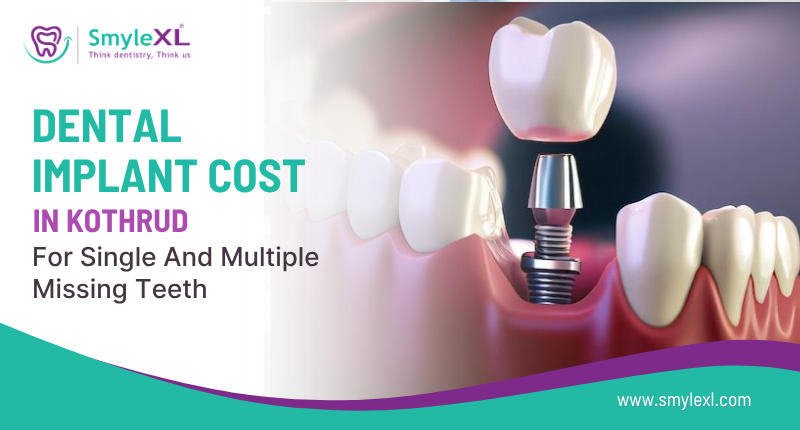
A tooth root does two jobs. It acts as an artificial tooth anchor that holds the crown in place, and it stimulates the jawbone below it. Every time you bite or chew, that root transmits pressure into the bone, which responds by maintaining its density and volume. Remove the tooth and that stimulation stops. The bone, receiving no signal that it is still needed, begins to resorb. The body starts reabsorbing it.
The timeline of jaw bone resorption:
| Time After Extraction | What Typically Happens |
| 3 to 6 months | Initial bone loss implant changes visible on X-ray |
| 6 to 12 months | Up to 25% of bone width can be lost |
| 1 to 3 years | Bone continues to shrink in height and width |
| 3 to 5 years | Significant loss that may affect adjacent teeth |
Socket preservation, where bone graft material is placed into the empty socket right after extraction, slows this process significantly. Tooth extraction timing and the decision to preserve the socket can be the difference between a straightforward implant later and a more involved procedure.
How Much Bone Is Needed for a Dental Implant?
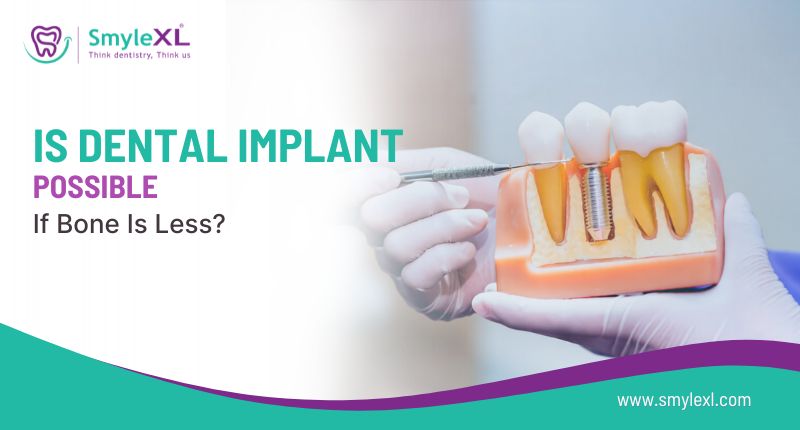
A standard implant, the kind used in most procedures, needs roughly 1 to 2 millimeters of bone surrounding it on all sides, plus adequate height and width to anchor the titanium fixture securely. That titanium fixture is essentially an artificial tooth anchor that replaces the biological root.
In practical terms, the minimum is around 6 to 7 millimeters of bone height and 5 to 6 millimeters of width. This is one of the first measurements we establish when planning dental implant treatment in Chitradurga.
What we assess before recommending any plan:
- Bone height at the proposed implant site
- Bone density of the available jaw structure
- Ridge width
- Proximity to nerves and sinuses
- Whether immediate stability can be achieved at placement
Primary stability is the immediate mechanical grip of the implant in bone at the time of surgery. Without adequate primary stability, the biological fusion process cannot happen reliably. This is the foundation everything else builds on.
When patients come for dental implant treatment in Chitradurga, believing they have too little bone, many still have enough for standard treatment. A CBCT scan gives us the full picture on bone density and volume before any decision is made.
When the Bone Is Not Enough: What Happens Next
Insufficient bone is a starting condition, not a final answer.
Bone Grafting and Guided Bone Regeneration
Bone augmentation adds bone or bone-substitute material to the deficient area before or at the time of implant placement. Guided bone regeneration uses a protective membrane to direct new bone growth into the treated area. These procedures add months to the timeline but allow standard implants to be placed into a properly rebuilt ridge.
For many patients beginning dental implant treatment in Chitradurga with a history of bone loss, bone augmentation is the most common first step. We use late implant placement in most staged cases for the best long-term implant stability. This staged approach is standard practice when grafting is involved.
Basal Implants
For patients with significant bone loss who want to avoid extensive grafting, basal implant treatment is a strong option. It anchors into the cortical bone, the harder deeper layer that is far less affected by jaw bone resorption. These can often be loaded with an implant crown within days, making them ideal for patients needing permanent missing tooth replacement without a prolonged wait.
This accounts for a significant portion of the dental implant treatment in Chitradurga cases we handle each month.
Zygomatic Implants
When upper jaw bone loss is severe, a zygomatic implant bypasses the upper jaw and anchors into the dense cheekbone. This is handled by an experienced Implantologist and reserved for the most complex bone loss cases. We assess every severe upper jaw case for this option.
Mini Implants
Mini implants are narrower than standard implants and require less bone width. It suits situations where ridge width is the limiting factor and can support a single tooth replacement or stabilise a denture at a lower overall dental implant cost.
Comparing Your Options at a Glance
| Approach | Best For | Bone Required | Timeline |
| Standard implant | Adequate bone | Full volume | 3 to 6 months |
| Bone graft + implant | Moderate bone loss | Limited | 9 to 15 months |
| Basal implant | Significant loss | Minimal cortical | Days to weeks |
| Zygomatic implant | Severe upper jaw loss | None in jaw | Weeks |
| Mini implant | Narrow ridge | Minimal width | Weeks |
Why the Implantologist Matters as Much as the Implant
The outcome depends heavily on the skill of the Implantologist placing it. An experienced clinician assesses which type, at what angulation, and whether additional procedures are needed first.
The cost varies depending on the extent of bone loss, the implant type, and whether grafting is needed. A dental implant cost estimate given before a proper bone scan is essentially a guess. When patients come to us for dental implant treatment in Chitradurga, every consultation includes a CBCT scan and a clear cost breakdown before anything is agreed.
Frequently Asked Questions
Can I get an implant after years of bone loss?
In most cases, yes, though the route depends on how much bone loss implant assessment reveals. Patients with significant bone resorption may be candidates for implant types that bypass the resorbed area entirely. A CBCT scan and clinical consultation is always the essential first step.
What is the difference between a basal and a regular implant?
A regular implant anchors in the surface bone most affected by resorption after tooth loss. A basal implant anchors in the deeper cortical bone, which is denser and more stable. This approach allows faster loading with an implant crown, often within days, making it well suited to patients with significant bone loss.
Does bone grafting always have to happen before implant placement?
Not always. In some cases grafting can be done simultaneously with placement, particularly when the defect is small and immediate stability can still be achieved. A membrane can be used at the same time to protect the graft. Your clinician will decide based on bone quality and available height whether staged or simultaneous treatment is more appropriate.
How long does osseointegration take?
Osseointegration, the process where the implant fixture fuses with bone, typically takes 3 to 6 months for a standard implant in adequate bone. In cases involving bone augmentation and late implant placement, the timeline extends. Implant stability achieved through cortical anchorage follows a different timeline, with functional loading possible much sooner.
Is dental implant treatment painful?
The implant placement procedure is done under local anesthesia, and most patients report that it is considerably more comfortable than expected. Post-procedure discomfort typically lasts two to three days and is manageable with standard pain relief. Dental implant cost at SmyleXL includes post-operative care and follow-up appointments throughout recovery.
The Right Plan Changes Everything
Bone loss is not a door closing, and dental implant treatment at SmyleXL starts from that position. We have placed implants in patients with five or more years of jawbone resorption, patients missing multiple teeth, and patients with ridges so thin that standard options were off the table. In nearly all cases, the right approach exists. Sometimes it is straightforward. Sometimes it takes planning. But single tooth replacement or full-arch permanent missing tooth replacement is achievable for almost everyone.
What we ask of patients is simple: come in, let us scan the bone, and let us show you what is actually there. Not what someone told you once without a proper assessment, but what your bone looks like today and what that means.
That conversation is what dental implant treatment in Chitradurga at SmyleXL is built around. And it costs nothing.