
“Doctor, why do I have so many different teeth? And why are the new ones so big?”
Seven-year-old Rohit sat on the dental chair, legs swinging like a restless pendulum. His mother had brought him for a routine check-up at SmyleXL Dental Clinic, a trusted dental clinic in Vizag. But Rohit had bigger concerns than just cleaning.
One of his baby teeth fell out last week. A new tooth was slowly coming in. It looked larger. Stronger. Almost… important.
The dentist smiled. “That’s a very smart question. Do you want to know a secret?”
Rohit nodded seriously.
“You don’t just have teeth,” the dentist said. “You have a whole team working inside your mouth.”
And just like that, a simple dental visit turned into a mini adventure.
Table of Contents
ToggleThe Mouth Has a Team of Four
“Think of your mouth like a kitchen,” the dentist began. “Every tool has a different job. You wouldn’t cut vegetables with a spoon, right?”
Rohit giggled. “Nooo.”
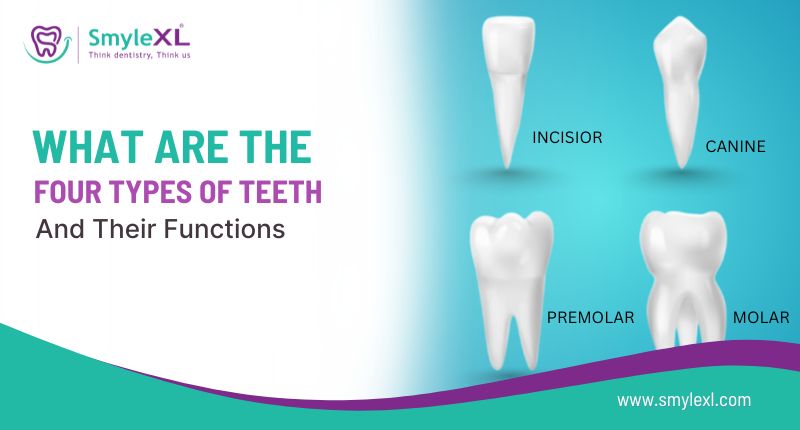
“Exactly. In the same way, your teeth are designed for different jobs. There are four types.”
The dentist wrote them down on a small piece of paper:
- Incisors
- Canines
- Premolars
- Molars
“Each one has a special role,” the dentist said. “Let’s meet them one by one.”
1. Incisors – The Cutters
“Open wide,” the dentist said.
“These front teeth right here,” he pointed gently, “are called incisors.”
Rohit touched his front teeth with his tongue.
“What do they do?” he asked.
“They are the cutters,” the dentist replied. “When you bite into an apple or take a bite of a sandwich, these are the teeth that do the first job.”
Here’s what incisors are responsible for:
- Cutting food into smaller pieces
- Helping you pronounce certain words clearly
- Supporting your smile’s appearance
“You have four incisors on top and four at the bottom,” the dentist added. “That makes eight.”
“Like soldiers in the front?” Rohit asked.
“Exactly! They stand on the front line.”
2. Canines – The Tearers
“Now look at the slightly pointed teeth next to your incisors,” the dentist continued.
“These are called canines.”
“Like a dog?” Rohit asked immediately.
The dentist laughed. “Yes! That’s why they’re called canines. They look a bit sharp, right?”
These teeth are designed to:
- Tear food
- Hold and grip food firmly
- Guide your bite
“You have one on each side of your incisors. Two on top, two at the bottom,” the dentist explained.
“So when I eat chicken, these teeth help me tear it?” Rohit asked.
“Yes. They’re the strong grippers of your mouth.”
At a good dental clinic in Vizag like SmyleXL Dental Clinic, dentists often explain these basics to children because understanding how teeth work helps kids take better care of them.
3. Premolars – The Crushers
Rohit’s eyes widened as the dentist moved further back.
“These teeth here are premolars,” he said.
“They don’t look pointy like the canines. And they’re not flat like the back teeth either. They’re somewhere in between.”
Premolars help with:
- Crushing food
- Breaking food into smaller chunks
- Preparing food for grinding
“You only get premolars in your permanent teeth,” the dentist explained. “Baby teeth don’t have them.”
“So the new big teeth coming in are premolars?” Rohit asked.
“Some of them, yes. That’s why they look bigger.”
You have:
- Two premolars on each side, top and bottom
- That makes eight premolars in total
“They are like the middle workers in a factory,” the dentist said. “They take what the front teeth started and continue the job.”
4. Molars – The Grinders
Now the dentist gently asked Rohit to open wider.
“All the way back,” he said.
“These big, flat teeth are molars.”
“They look like tiny tables,” Rohit said.
“That’s actually a good way to describe them,” the dentist smiled. “Molars are strong and flat because their job is to grind food.”
Molars:
- Grind food into tiny pieces
- Make swallowing easier
- Help digestion begin properly
“You have three molars on each side in adults,” the dentist said. “That includes wisdom teeth.”
“Wisdom teeth?” Rohit looked confused.
“You’ll meet them much later,” the dentist chuckled.
Molars are the power machines of your mouth. Without them, chewing properly becomes difficult.
At any experienced dental clinic in Vizag, dentists check molars carefully because they handle so much pressure every day.
Why Are Permanent Teeth Bigger?
Rohit had one more question.
“Why are my new teeth bigger than my baby teeth?”
“Because they’re meant to last your whole life,” the dentist explained.
Baby teeth are placeholders. They:
- Help you chew as a child
- Help you speak properly
- Save space for permanent teeth
Permanent teeth are:
- Stronger
- Larger
- Designed for adult chewing
“That’s why taking care of them is very important,” the dentist added gently.
How Many Teeth Do We Have?
The dentist decided to turn it into a fun quiz.
“How many teeth do children have?”
Rohit guessed, “Twenty?”
“Correct! Children usually have 20 baby teeth.”
“And adults?”
“Thirty-two,” the dentist answered. “If wisdom teeth come in properly.”
Here’s the adult breakdown:
- 8 Incisors
- 4 Canines
- 8 Premolars
- 12 Molars
“That’s a full team,” Rohit said proudly.
Why Is It Important to Know This?
Rohit’s mother listened closely as the dentist continued.
“When children understand their teeth, they care about them more,” he said.
Knowing the types of teeth helps you:
- Brush properly
- Notice changes early
- Understand why some teeth hurt differently
- Maintain better oral hygiene
For example:
- Front teeth may chip easily if you bite hard objects.
- Molars may get cavities because food gets stuck in their grooves.
At SmyleXL Dental Clinic, a reliable dental clinic in Vizag, education is part of every visit. When patients understand what’s happening inside their mouth, they feel more confident and less scared.
How to Take Care of All Four Types
“Now that you know your team,” the dentist said to Rohit, “you must protect them.”
Here’s what he recommended:
Brush Twice a Day
Reach the front, sides, and back teeth.
Use Gentle Circular Motions
Don’t scrub too hard.
Floss Daily
Especially around molars, where food hides.
Avoid Biting Hard Objects
No opening bottle caps with teeth.
Regular Check-Ups
Visit your dentist every six months.
Rohit nodded seriously. “I’ll protect my team.”
What Happens If One Type Is Missing?
The dentist explained something important.
“If one type of tooth is missing, chewing becomes difficult.”
For example:
- Without incisors, biting becomes hard.
- Without canines, tearing food is difficult.
- Without molars, grinding food becomes a challenge.
Every tooth type plays a role in balanced chewing.
That’s why dentists try to save natural teeth whenever possible.
The Visit Ends with a Smile
After the cleaning, Rohit sat up.
“So I have cutters, tearers, crushers, and grinders,” he summarized.
“Perfect,” the dentist said.
“And I have to brush them all.”
“Exactly.”
As they left SmyleXL Dental Clinic, his mother noticed something different. Rohit wasn’t scared of dental visits anymore. He felt curious. Proud. Responsible.
That’s what good conversations can do.
A Team Behind Your Smile
Your mouth isn’t just filled with teeth. It’s a well-organized team of specialists, each designed for a specific job.
- Incisors cut.
- Canines tear.
- Premolars crush.
- Molars grind.
Understanding these four types of teeth and their functions helps both children and adults take better care of their smiles.
If you ever find yourself wondering about your own teeth or your child’s growing smile, visiting a trusted dental clinic in Vizag like SmyleXL Dental Clinic can make all the difference. The right guidance, simple explanations, and regular check-ups ensure that every tooth in your “team” stays strong and healthy for years to come.
And who knows? Your next dental visit might turn into a fun little lesson too.