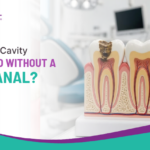


You’re sitting in the dentist’s chair, trying to stay calm, and then the dentist says something that makes your heart skip a beat, “This one’s a deep cavity which needs filling.”
Wait, what? Deep cavity filling? Is that the same as a regular filling but… deeper? Is it going to hurt more? Are they going to dig a tunnel in your tooth? And why does everything suddenly sound scarier the moment the word “deep” gets added?
Let’s break it down; slowly, simply, and in a way that doesn’t feel like a biology lecture from school.
Table of Contents
ToggleNot Just Any Filling – This One’s Serious
A dental filling is what dentists use to patch up the damage caused by cavities. That’s basic.
But when your cavity isn’t just skin-deep, or should we say “enamel-deep,” and has gone closer to the inner layers of your tooth, that’s when we start talking about a deep cavity.
In simple words:
- Regular cavity = small hole = quick patch-up job.
- Deep cavity = big trouble = closer to nerve = serious repair job.
Now, this doesn’t mean your tooth is falling apart. It just means the decay has reached a deeper level, very close to the pulp (the soft center with nerves and blood vessels).
How Does a Deep Cavity Happen?
Let’s say you’ve ignored a toothache for weeks. You thought it was nothing, maybe a tiny crack or just “too much ice cream.” But over time, bacteria kept eating into your tooth. And now it’s not just the top part (enamel), but the lower layers (dentin or even pulp) that are affected.
That’s when your dentist says:
“You don’t need a root canal treatment… yet. But you do need a deep cavity filling.”
It’s like fixing a pothole before the whole road caves in.
But… Is It Going to Hurt?
Okay, this is the big question.
The idea of “deep” anything near your nerves sounds painful, right? But here’s the reality:
- Your dentist will numb the area completely. So, while you might feel some pressure or movement, you won’t feel pain during the procedure.
- If the cavity is really close to the nerve, the dentist might place a protective layer inside the tooth before filling it, just to make sure your nerve stays safe.
- Some mild sensitivity is normal for a few days after the filling, especially when you eat or drink something cold or hot.
So no, it’s not like those torture scenes in old Bollywood films. It’s more like a silent movie, a bit uncomfortable, but not painful.
Signs You Might Have a Deep Cavity
Even before the dentist confirms it, your tooth will probably send some signals. Don’t ignore them like that one cousin who keeps sending birthday wishes one month late.
Here’s what to watch for:
- A toothache that comes and goes
- Pain when chewing
- Sensitivity to hot or cold
- A visible hole or dark spot on the tooth
- A feeling like something is “off” with your bite
If you’re ticking two or more of these boxes, your tooth might be begging for help. A deep cavity filling could be the rescue mission it needs.
How Is It Done? (Step-by-Step, Without The Jargon)
No fancy words, just a clear idea of what will happen:
- Examination: The dentist checks the tooth, maybe takes an X-ray.
- Numbing: Local anesthesia is given to make sure you don’t feel anything.
- Cleaning: All the decay is carefully removed.
- Liner/Base: If the decay is too close to the nerve, a special liner is applied.
- Filling: The hole is filled with dental material, usually composite (white filling).
- Polishing: The tooth is shaped and polished to match your bite.
That’s it. You’re done. You walk out with your tooth saved and pain-free.
What’s the Difference Between a Normal and Deep Cavity?
Here’s a quick comparison for clarity:
| Aspect | Normal Cavity | Deep Cavity |
| Depth | Surface-level | Near the nerve |
| Sensitivity after | 1-2 days | Can last a week or more |
| Risk of root canal treatment | Low | Slightly higher |
| Material used | Same (usually composite) | Same, but with protective layers |
So, a deep cavity filling is more like a warning. You’re close to needing more serious treatment, but you’re still in the safe zone, for now.
Is It Better Than a Root Canal Treatment?
Yes. If the dentist says a deep cavity filling can fix it, that’s a win. You still get to save your natural tooth without going full-on root canal mode.
But if you delay, ignore, or cancel the appointment five times in a row (don’t act like you’ve never done it), the decay might reach the nerve completely. And then, there’s no shortcut left, only a root canal or extraction.
Aftercare: What to Expect and What to Avoid
Once the filling is done, the real test begins: how well you take care of it.
For the first 24–48 hours:
- Avoid chewing on the treated side
- Skip very hot or very cold drinks
- Don’t bite on hard things like pens or ice (even if you love doing it)
For long-term care:
- Brush twice a day (properly, not lazily)
- Floss; yes, even if it feels extra
- Visit your dentist every 6 months
If you do this, your dental cavity fillings, deep or not, will last longer, and you’ll avoid major dental drama.
Pain After a Deep Cavity Filling? What’s Normal?
A little soreness? Okay.
A tiny bit of sensitivity? Expected.
Shooting pain or swelling? Not normal.
Sometimes, even after a perfect filling, the nerve inside might stay irritated. It’s like a guest who refuses to calm down even after the party’s over.
If pain lasts more than a week or gets worse, go back to your dentist. You might need an adjustment, or in rare cases, further treatment.
What If It’s Too Late for a Deep Cavity Filling?
Let’s say your decay has already reached the nerve, and the pain is constant, throbbing, or you can’t even sleep. In that case, the dentist might skip the filling and suggest a root canal or extraction.
But don’t panic, it just means the cavity has gone too far, and now your tooth needs more than just a patch-up.
That’s why deep cavity filling are like the middle-ground heroes. They save the day before the big fight begins.
A Smile Saved Is A Rupee Earned
Your teeth won’t send you WhatsApp messages when they’re in trouble. They’ll quietly show signs of sensitivity, pain, and discomfort. And if you act on time, a deep cavity filling might be all you need to rescue them.
So if your dentist says you need one, don’t overthink. Don’t Google scary things. Don’t skip the appointment. Just go get it done.
It’s safe. It’s smart. And honestly, it’s the best way to protect your teeth from bigger problems.
If you’re curious to learn more about the dental filling treatment cost near you or want to understand how long a deep cavity filling lasts, schedule a consultation with our expert at SmyleXL Dental Clinic and ask. Most clinics are happy to help, even over the phone.
Let’s not wait for the pain to scream before we listen.
Let’s not delay till the tooth demands a root canal.
Let’s give a deep cavity filling the credit they deserve, they’re the calm before the storm.