
Tooth pain rarely starts suddenly. Sometimes it begins with mild sensitivity while drinking something cold. Sometimes you feel pain while chewing, or notice swelling near the gums that slowly becomes worse. In children, it may show up as crying during meals or avoiding one side while eating. In adults, it may feel like a deep throbbing pain that refuses to go away.
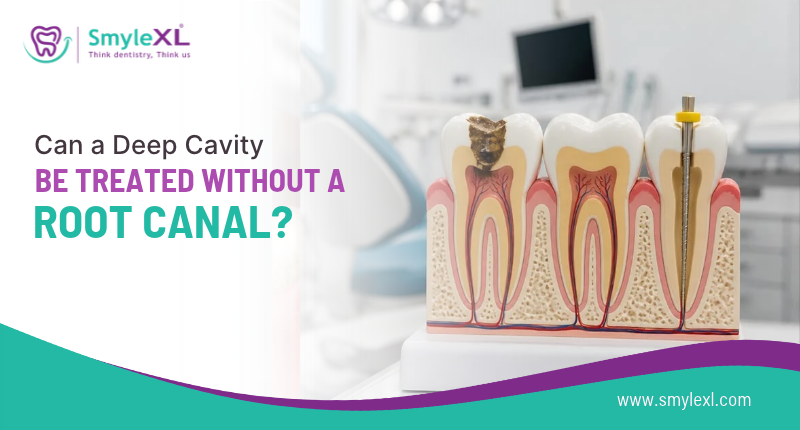
What many people don’t realize is that inside every tooth is a soft tissue called dental pulp, which contains nerves and blood vessels. When deep decay, infection, or injury reaches this inner area, the tooth may need professional treatment to prevent further damage.
At SmyleXL Dental Clinic in Ashiyana, Lucknow, both adults and children are often diagnosed with pulp infections caused by untreated cavities or trauma. In some cases, pediatric pulp therapy helps save baby teeth, while permanent teeth may require root canal treatment to remove infection and preserve the tooth.
That’s where your dentist helps you understand root canal treatment and pediatric pulp therapy, and which one to choose.
Table of Contents
ToggleEndodontist
Before jumping to the blog, let us learn who actually performs dental pulp therapy. An endodontist is a dentist who specializes in treating tooth pulp and root canal problems.
Complex infections, severe pain, or difficult root anatomy may require advanced endodontic care from a trained specialist.
What Is Dental Pulp?
Inside every tooth, beneath the enamel and dentin, there is a soft inner area called dental pulp.
This pulp contains:
- Nerves
- Blood vessels
- Connective tissue
The pulp keeps the tooth alive and healthy during development.
When deep decay or injury reaches this area, infection and inflammation may begin. This can eventually cause:
- Severe tooth pain
- Sensitivity
- Swelling
- Infection spread
Many children and adults require pulp treatment when the pulp becomes badly infected.
What Causes Pulp Infection?
Pulp infection usually develops because bacteria enter the inner part of the tooth.
Common causes include:
- Deep cavities
- Tooth fractures
- Untreated decay
- Dental trauma
- Repeated dental procedures
Children are especially vulnerable because cavities in baby teeth can spread quickly into the pulp.
That’s why deep cavity treatment should never be delayed, especially in young children.
Signs You Should Not Ignore
You should not ignore symptoms like:
- Pain while chewing
- Deep tooth cavities
- Swelling near the gums
- Tooth sensitivity
- Facial swelling
- Persistent toothache
These may indicate infection inside the pulp.
Why Is Dental Pulp-Therapy Needed?
The therapy helps save a tooth when the inner pulp becomes damaged or infected.
Without treatment, the infection may worsen and eventually affect:
- The surrounding gums
- Nearby teeth
- Jawbone
- Permanent developing teeth in children
You may need pulp treatment if you notice:
- Pain while chewing
- Sensitivity to hot or cold foods
- Swelling near the gums
- Deep tooth cavities
- Tooth discoloration (Black or Grey)
In some cases, swelling due to tooth infection may even spread into nearby facial tissues.
Early treatment helps prevent more severe dental complications later.
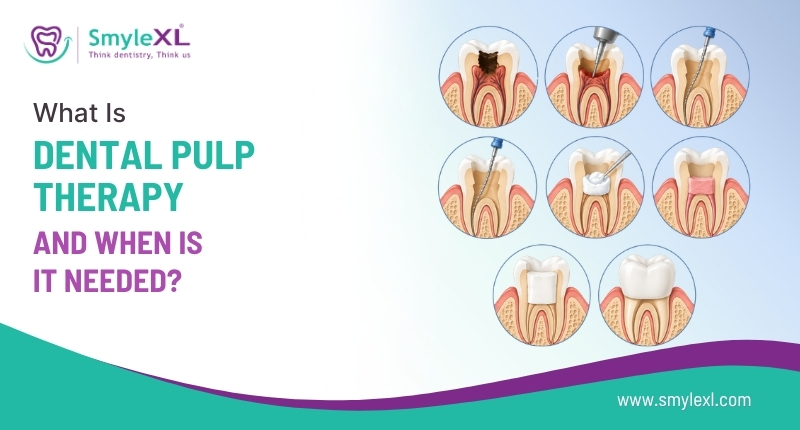
Common Types of Pulp-Therapy
The type of therapy depends on:
- Age of the patient
- Severity of infection
- Condition of the tooth
- Amount of healthy pulp remaining
1. Indirect Pulp Treatment
This is usually done when decay is very close to the pulp but has not fully infected it yet.
The dentist removes most of the decay while protecting the healthy pulp underneath.
This approach is commonly used in pediatric pulp treatment to preserve baby teeth naturally.
2. Pulpotomy
A pulpotomy removes only the infected upper portion of the pulp while keeping the healthy lower pulp alive.
This is often called a “baby tooth root canal.”
Pulp treatment procedures like pulpotomy help preserve the tooth until the permanent tooth erupts naturally.
Introducing Biodentine
Biodentine is a modern dental material used in pulpotomy and restorative procedures.
It is commonly used because it:
- Protects the pulp
- Encourages healing
- Seals the tooth effectively
- Supports tissue repair
Biodentine is often recommended during pulp treatment in children because it is biocompatible and supports natural healing.
It is used in selected pediatric and restorative cases depending on the tooth condition.
Which Is Better: Biodentine or MTA?
Both Biodentine and MTA (Mineral Trioxide Aggregate) are advanced materials used in pulp therapy.
Both materials help:
- Protect the dental pulp
- Reduce bacterial leakage
- Encourage healing
However, Biodentine is often preferred in some cases because:
- It sets faster
- It handles more easily
- It may offer improved aesthetics
Meanwhile, MTA has a long history of successful clinical use.
The choice depends on:
- The condition of the tooth
- The treatment type
- Age of the patient
- Dentist preference
At SmyleXL Dental Clinic in Ashiyana, Lucknow, the dentist selects the material based on the individual treatment needs.
3. Pulpectomy
When the entire pulp becomes infected, the infected tissue may need complete removal.
This procedure is more similar to root canal treatment because the canals inside the tooth are cleaned and filled.
Pulpectomy is commonly performed when infection spreads deeper inside baby teeth.
How to Reduce the Risk of Pulp Infection?
Good oral hygiene can significantly reduce the risk of pulp damage.
Simple habits include:
- Brushing twice daily
- Limiting sugary foods
- Treating cavities early
- Regular dental checkups
- Avoiding delay in deep cavity treatment
Children especially benefit from early cavity care because decay spreads faster in baby teeth.
How Is Pediatric Dental Pulp-Therapy Different From Root Canal Treatment?
This is one area many parents find confusing.
Pediatric pulp therapy primarily focuses on temporarily preserving baby teeth until permanent teeth erupt naturally.
The goal is to:
- Reduce pain
- Control infection
- Maintain proper spacing
- Protect jaw development
Root canal treatment, on the other hand, is generally performed on permanent teeth to save them long-term.
In children, preserving baby teeth is important because early tooth loss can lead to:
- Bite problems
- Crowding
- Difficulty chewing
- Speech issues
Root Canal Treatment for Permanent Teeth
In adults or older children with permanent teeth, RCT is usually recommended when the pulp becomes severely infected.
During root canal treatment:
- The infected pulp is removed
- The canals are cleaned carefully
- The tooth is disinfected
- The space is sealed properly
This helps save the natural tooth instead of removing it.
At SmyleXL Dental Clinic in Ashiyana, Lucknow, modern RCT procedures are designed to improve comfort and reduce anxiety for both children and adults.
What Happens After Root Canal Therapy?
After root canal treatment, the tooth usually becomes more stable and comfortable.
In many cases, a dental crown after a root canal is recommended to protect the treated tooth from fracture.
This is especially important for back teeth that handle strong chewing pressure. Tooth restoration after RCT helps improve:
- Tooth strength
- Function
- Appearance
- Long-term durability
Is Root Canal Treatment Painful?
This is one of the biggest fears patients have.
Modern painless root canal procedures are much more comfortable than older traditional techniques.
Most patients feel relief after treatment because the infected pulp causing the pain is removed.
Modern anesthesia and advanced endodontic care have significantly improved patient comfort during RCT.
Painless techniques are used to help reduce fear and anxiety during treatment.
The Sooner The Better!
Dental pulp problems can affect both children and adults more seriously than many people realize.
When infection reaches the inner pulp of the tooth, timely root canal or pulp therapy becomes important to reduce pain, stop infection, and preserve the natural tooth whenever possible.
From painless root canal and deep cavity treatment to advanced endodontic care and modern restorative materials like Biodentine, today’s dentistry offers safer and more comfortable solutions than before.
At SmyleXL Dental Clinic, we plan every root canal treatment in Ashiyana carefully to protect oral health, preserve natural teeth, and improve long-term comfort for both children and adults.
FAQs
1. Why do children sometimes need pulp therapy?
Children may need pulp-therapy when deep cavities or tooth injuries infect the pulp inside baby teeth and threaten future dental development.
2. Why is a dental crown needed after root canal treatment?
A dental crown after a root canal helps strengthen and protect the treated tooth from fracture, especially in back teeth used for chewing.
3. Why is Biodentine NOT used in Pulpectomy?
Biodentine is mainly used to protect and repair healthy pulp tissue, while pulpectomy involves removing the entire infected pulp from the tooth. In pulpectomy cases, other filling materials are generally used inside the cleaned root canals.
4. Is Biodentine a permanent solution?
Biodentine is a strong and long-lasting dental material, but whether it becomes a permanent solution depends on the tooth condition, treatment type, and overall oral health.
5. Do root canals remove pulp?
Yes, root canal treatment involves removing the infected or damaged pulp from inside the tooth, cleaning the canals, and sealing them to stop further infection.