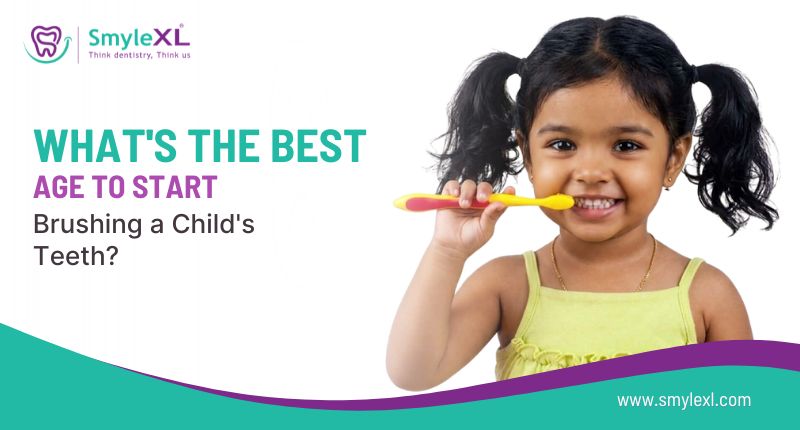

Tiny teeth bring big questions. And one of the first ones you’ll ask as a parent is: “When do I start brushing?” The answer matters more than you might think. At SmyleXL Dental Clinic, we believe that proper kids dental treatment begins long before a child can hold a brush on their own. It starts with that very first tooth and the gentle habit you build around it.
If you’re looking for kind, unhurried kids dental treatment at Davanagere, you’re already in the right place. Let’s walk through the best age to begin, how to brush at every stage, and how the right care now can mean fewer problems later.
Table of Contents
ToggleWhy the Right Brushing Age Matters?
Many parents assume that baby teeth are just temporary placeholders and don’t need much attention. That idea can lead to trouble. Baby teeth hold space for permanent teeth, help with chewing and speech, and are just as prone to cavities as adult teeth. The moment the first tooth appears, the clock for kids dental treatment starts ticking.
Starting early does more than just clean a tooth.
- It helps the child get comfortable with the sensation of a brush in the mouth
- It prevents cavities from forming even before the first birthday
- It builds a daily routine around oral health that will stick for life
- It allows parents to spot early signs of dental plaque or discoloration.
- It sets the stage for a positive first dental visit rather than a fearful one
Good dental treatment is never just about the teeth you see. It’s about shaping a healthy relationship with care that lasts into adulthood.
When Should You Actually Start Brushing?
The short answer is that you start before you even see a tooth. From the earliest days, a clean mouth helps everything else grow right. Let’s break it down by stage.
The Gum Stage (0 to 6 Months)
Even without teeth, a baby’s mouth needs attention. Milk residue can build up on the gums, and keeping the area clean can soothe teething discomfort.
- Use a soft, damp washcloth to gently wipe the gums twice a day
- Do this after the first morning feed and before bedtime
- This simple step lays the groundwork for later kids dental treatment
- It also gives you a clear view of any teething signs or early bumps
The First Tooth (Around 6 Months)
The day that tiny white cap pops through changes everything. This is when true kids dental treatment begins. A tooth in the mouth means a tooth that can decay.
- Switch to a tiny, soft bristle brush made for infants
- Use a smear of fluoride toothpaste no bigger than a grain of rice
- Brush gently on the tooth and around the gumline twice a day
- Never put a baby to bed with a bottle of milk or juice
- Schedule a first dental visit by the age of one
Starting now makes the child comfortable with the brush and allows a pediatric dentist to check that everything is developing as it should.
Toddler and Preschool Years
As more teeth come in, the routine expands. But the parent still does the brushing. A toddler simply lacks the coordination to clean every surface.
- Use a pea-sized amount of fluoride toothpaste from age three
- Brush for two full minutes, covering front, back, and chewing surfaces
- Stand behind the child and tilt their head back slightly for a better view
- Make it a game or sing a song to keep it positive
- Continue supervising until the child can tie their shoelaces independently
This steady kids dental treatment routine at home pairs perfectly with regular child dental care visits. Together, they catch small issues before they grow.
How to Brush a Child’s Teeth Without Fuss?
Every parent knows that wrestling a toothbrush into a small mouth is a skill. These simple tips turn a struggle into something almost peaceful.
- Start early so the child never remembers a time without brushing
- Let the child hold a brush while you use another one
- Use a mirror so they can see what’s happening inside their mouth
- Give praise and celebrate after every brush, no matter how short
- Keep the routine consistent, same place, same time, same song
The goal isn’t perfection. The goal is that daily baby teeth brushing becomes as normal as putting on shoes. And when a child sees you brushing your teeth, they want to copy you. This is how kids oral hygiene takes root without force.
Common Kids Dental Treatments That Support Healthy Teeth
Even with the best brushing, children sometimes need a little extra help. That’s where professional kids’ dental treatment steps in. Here is a look at some of the most common options available today.
| Treatment | What It Does | Approx. Age | Purpose |
| Fluoride varnish | Strengthens enamel and repairs early decay | From 1 year | Cavity prevention in primary teeth |
| Dental sealant | A thin coating on the back molars to block food and bacteria | 5 to 7 years | Protects baby teeth and newly erupted permanent molars |
| Gentle filling | Removes small cavities and restores the tooth | Any age as needed | Stops decay from spreading further |
| Pulp therapy | Treats deep decay near the nerve, saving the tooth | 3 years and up | Preserves a deciduous tooth instead of pulling it |
| Space maintainer | Holds space open after a baby tooth is lost too early | 4 to 10 years | Prevents shifting of permanent teeth |
| Habit-breaking appliance | Corrects thumb sucking or tongue thrusting | 4 to 8 years | Guides proper jaw and bite development |
Every one of these kids dental treatment options is designed to be gentle. The instruments are smaller, the approach is slower, and the language used with your child is soft and reassuring.
The Role of Professional Dental Treatment
A toothbrush and fluoride toothpaste do a lot, but they cannot reach everywhere. Professional dental treatment for kids fills those gaps.
A pediatric dentist or a general dentist trained in child dental care will check for things a parent might miss. Early signs of enamel weakness, tiny pits that could turn into cavities, or bite issues that may need attention later.
Regular in‑clinic dental treatment for kids includes more than just cleaning.
- A full oral health check every six months, even if everything looks fine
- Fluoride varnish applications to strengthen young enamel
- Dental sealant placement on molars as soon as they erupt
- Monitoring of baby teeth shedding and permanent teeth alignment
- Gentle conversations with the child to remove any fear of the dental chair
When you combine a solid home routine with consistent professional dental treatment for kids, the chances of serious decay drop dramatically. And the child grows up seeing the dentist as a friendly face, not something to dread.
If you’re raising a young family in this part of Karnataka, SmyleXL Dental Clinic offers kids dental treatment at Davanagere in a calm, child‑friendly space. No hurry, no scary tools, just patience and plenty of tiny toothbrushes.
Simple Habits That Protect Your Child’s Smile Long Term
The best dental treatment for kids is the daily kind that never feels like a chore. Small shifts at home make a lifetime of difference.
- Limit sugary snacks and sticky foods that cling to baby teeth
- Offer water instead of juice between meals to wash away dental plaque
- Switch to a new, soft bristle brush every three months or after an illness
- Use a fluoride toothpaste appropriate for the child’s age
- Schedule a first dental visit by age one, then stick to six‑month check‑ups
These habits build a fortress of oral health around your child’s smile. And if you ever wonder whether you’re doing enough, a quick dental checkup will put your mind at ease.
Frequently Asked Questions
How often should my child visit a pediatric dentist?
Every six months from the first dental visit at age one. Regular visits are a core part of dental treatment for kids and catch problems before they become painful.
Can baby teeth decay really cause problems?
Yes. Decay in primary teeth can spread, cause pain, affect eating and speech, and damage the developing permanent tooth underneath. Dental treatment for kids protects more than just the visible tooth.
What is a dental sealant, and does my child need it?
A dental sealant is a thin protective coating painted on the chewing surfaces of back teeth. It blocks food and bacteria and is a simple part of preventive dental treatment for school‑age children.
When should we start flossing?
As soon as two teeth touch. Flossing is a vital part of kids oral hygiene and helps remove dental plaque that a brush cannot reach between tight baby teeth.
A Healthy Start Lasts a Lifetime
The answer to “when to start brushing” is wonderfully simple: before the first tooth even arrives, and with full commitment the moment it appears. That tiny rice-grain-sized smear of fluoride toothpaste on a soft bristle brush is the beginning of a journey. It’s the first step of dental treatment that will shape your child’s comfort, confidence, and health for decades.
At SmyleXL Dental Clinic, we take that first step with you, never rushing, never overwhelming. Just clear guidance and gentle hands.
When you’re ready to give your child the best start, our kids dental treatment at Davanagere team is here with open doors and a warm welcome. A lifetime of healthy smiles begins with a single brush and the right people beside you.
| Keyword | Type | Count |
| kids dental treatment at Davanagere | CTA | 3 |
| kids dental treatment | Primary | 11 |
| child dental care | Secondary | 2 |
| pediatric dentist | Secondary | 3 |
| baby teeth brushing | Secondary | 1 |
| kids oral hygiene | Secondary | 2 |
| first dental visit | Secondary | 4 |
| fluoride toothpaste | Secondary | 5 |
| dental sealant | Secondary | 4 |
| cavity prevention | Secondary | 1 |
| cavities | LSI | 4 |
| primary teeth | LSI | 2 |
| deciduous tooth | LSI | 1 |
| oral health | LSI | 3 |
| dental plaque | LSI | 3 |
| teething | LSI | 2 |
| infant | LSI | 1 |
| soft bristle brush | LSI | 3 |