
Getting a tooth extracted feels like the end of the story. The problem tooth is gone, the immediate discomfort will pass, and life moves on. But there’s a follow-up chapter that doesn’t always get enough attention: what happens to the space it leaves behind, and when to do something about it.
The timing of dental implant treatment after extraction matters more than most people realize. Not in a “you had one chance and missed it” way, but in a “the sooner you plan, the simpler and more successful the outcome” kind of way. Here’s what the options actually look like, what drives the decision, and when the right time is for your specific situation.
Table of Contents
ToggleWhy Timing Actually Matters
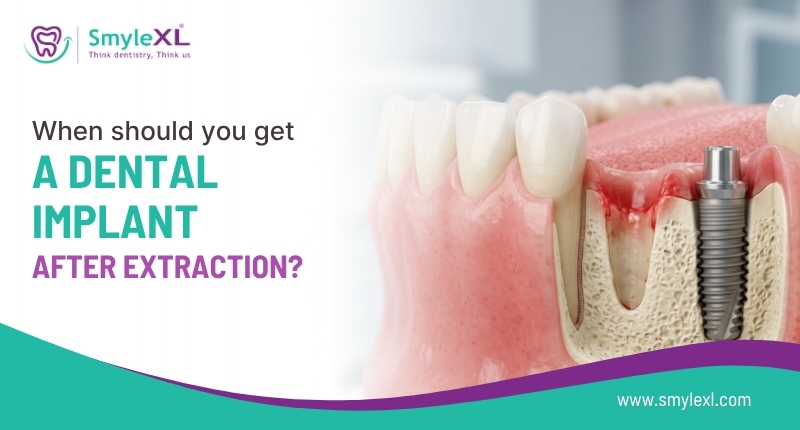
When a tooth is extracted, the jawbone underneath immediately begins to change. Without a root stimulating it, the bone starts to resorb, shrinking in both height and width. Post-extraction bone loss begins within weeks and continues progressively over months and years.
This matters for dental implant treatment because implants need adequate bone to anchor into. A titanium post placed into dense, well-preserved bone has a significantly better implant success rate than one placed into a jaw that’s been resorbing for two years.
The longer the gap between extraction and implant placement surgery, the more likely a bone graft requirement becomes, adding time, cost, and complexity to what could have been a more straightforward tooth implant procedure.
The Three Timing Options
Dental implant treatment after extraction broadly falls into three categories:
Immediate Implant Placement
The titanium post is placed at the same appointment as the extraction, or within days of it. The socket is still fresh, bone volume is at its maximum, and post-extraction bone loss hasn’t begun.
Not every case qualifies. Immediate placement requires:
- No active infection at the extraction site
- Sufficient bone density around the socket
- A socket shape that supports stable implant positioning
When the conditions are right, immediate placement reduces overall treatment time significantly and preserves the maximum bone volume for osseointegration.
Early Implant Placement (4–8 Weeks Post-Extraction)
The socket has partially healed, soft tissue has closed over the site, but significant post-extraction bone loss hasn’t yet occurred. This window offers a balance between healing and bone preservation, and is often preferred when a mild infection is present at extraction.
Delayed Implant Placement (3–6 Months or Later)
The extraction site is fully healed before implant placement surgery begins. This is the most common approach for patients who weren’t planning ahead at the time of extraction.
Candidacy for dental implant at this stage depends on how much bone remains. If significant post-extraction bone loss has occurred, a bone graft requirement may be necessary before the artificial tooth root can be placed, extending the timeline by several months.
What About Waiting Years?
Long-term tooth replacement is still entirely possible even if the extraction happened years ago. The question is simply whether the bone has resorbed enough to require grafting before dental implant treatment can proceed.
Many patients who had extractions years or even decades ago proceed successfully with implants after bone grafting. The implant success rate for grafted sites is comparable to that of non-grafted sites when done properly. It’s a longer process, but not a closed door.
The honest answer: the best time to plan an implant was the day of extraction. The second-best time is now.
The Implant Process: What to Expect
Understanding the healing timeline helps set realistic expectations:
| Stage | What Happens | Timeframe |
| Extraction & assessment | Bone evaluation, implant planning | Day of extraction |
| Bone graft requirement (if needed) | Grafting and healing | 3–6 months |
| Implant placement surgery | Titanium post placed into the jawbone | 1 appointment |
| Osseointegration | Bone fuses with the implant | 3–6 months |
| Dental crown attachment | Permanent crown placed | 1–2 appointments |
| Functional bite restoration | Full chewing function restored | Upon crown placement |
The total healing timeline from extraction to final crown ranges from 4 months (immediate placement, no grafting) to 12–18 months (delayed placement with grafting). Functional bite restoration at the end of that timeline is complete and permanent.
Implant vs. Doing Nothing: Why the Gap Matters
Post-extraction bone loss isn’t just a technical concern for implant planning; it has visible consequences. The jawbone that once supported the tooth shrinks, adjacent teeth begin drifting toward the gap, the opposing tooth over-erupts, and bite alignment changes.
Single tooth replacement through dental implant treatment stops all of this. The artificial tooth root stimulates the bone the way a natural root does, halting resorption, maintaining facial structure, and keeping adjacent teeth in position.
Restorative dental procedure options like bridges also fill the gap, but don’t address the bone loss underneath. Only dental implant treatment replaces the root as well as the crown, making it the only true long-term tooth replacement solution.
Are You a Good Candidate?
Candidacy for dental implant depends on:
- Bone density and volume: sufficient bone must exist or be grafted
- Gum health: active gum disease is treated before implant placement surgery
- General health: uncontrolled diabetes and certain medications affect osseointegration
- Smoking: significantly reduces the success rate for implants and slows healing
- Age: jaw growth must be complete; no upper age limit for otherwise healthy patients
A CT scan and clinical assessment at SmyleXL Dental Clinic give a definitive picture of bone availability and overall candidacy for dental implant before any treatment is planned.
What Does Dental Implant Treatment Cost in Vadodara?
At SmyleXL Dental Clinic on Sun Pharma Road, Vadodara, here’s what dental implant treatment typically costs:
| Treatment | Approximate Cost |
| Single tooth replacement (implant + crown) | ₹20,000 – ₹50,000 |
| All-on-4 / All-on-6 (per arch) | ₹2,50,000 – ₹4,50,000 |
| Full mouth restoration (both arches) | ₹6,00,000 – ₹8,00,000+ |
Cost varies based on bone grafting needs, implant brand, and the type of dental crown attachment chosen. A detailed assessment provides an exact, itemized figure before any decisions are made. Permanent tooth restoration can also be phased across time, worth discussing at the initial consultation.
Don’t Let the Gap Become the Default
Every month, a gap is left untreated, post-extraction bone loss continues, and the path to dental implant treatment becomes slightly more involved. Planning early, even if treatment doesn’t begin immediately, keeps the simplest, most cost-effective options available.
At SmyleXL Dental Clinic in Vadodara, dental implant treatment starts with an honest assessment of where things stand and what the most appropriate timing looks like for your specific case.
Book your consultation at SmyleXL Dental Clinic today, because the right time to plan was yesterday, and the next best time is now.
Frequently Asked Questions
How long after extraction can I get an implant?
It depends on the approach chosen. Immediate implant placement surgery happens the same day as extraction. Early placement occurs 4–8 weeks after. Delayed placement, the most common approach, happens 3–6 months post-extraction once the site is fully healed. Each has clinical indications. An assessment at SmyleXL Dental Clinic determines which timing is appropriate based on bone density, infection history, and overall candidacy for dental implant.
Can I get an implant years after extraction?
Yes, dental implant treatment is possible years or decades after extraction. The main consideration is how much post-extraction bone loss has occurred. Significant bone loss may require a bone graft before the post can be placed, adding to the overall healing timeline but not preventing treatment. The success rate for implants for grafted sites remains high when the procedure is performed properly.
What happens if you don’t get an implant after extraction?
Without single tooth replacement, the jawbone beneath the gap begins resorbing, changing the facial structure over time. Adjacent teeth drift toward the space, the opposing tooth over-erupts, and bite alignment shifts. Post-extraction bone loss compounds progressively. None of this is irreversible, but addressing it becomes more complex the longer it’s left. Long-term tooth replacement through dental implant treatment is the only option that addresses bone loss directly.
How painful is dental implant surgery?
Implant placement surgery is performed under local anesthesia, with no pain during the procedure, just pressure and movement. Mild soreness and swelling for 3–5 days afterward is normal and managed with prescribed medication. Most patients find the experience more comfortable than anticipated, comparable to a tooth extraction. Osseointegration during the healing phase is largely painless.
How long do dental implants last?
The post used in dental implant treatment can last a lifetime with proper care. The dental crown attachment on top typically lasts 10–15 years before normal wear may require replacement. Success rate for implants consistently exceeds 95% over 10 years in published research, making permanent tooth restoration through implants the most durable long-term tooth replacement option available. Good oral hygiene and regular check-ups are the main factors in longevity.