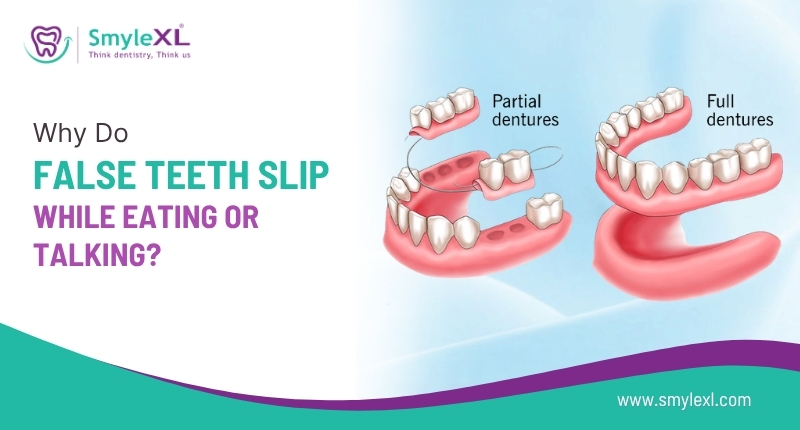

You’re eating comfortably… and suddenly your dentures move.
Or worse, you’re talking to someone, laughing normally, and you feel your false teeth slightly shift in the middle of the conversation.
That small moment is enough to make many people self-conscious instantly.
A lot of patients using dentures quietly adjust their lives around this problem. They avoid certain foods, chew carefully from one side, or stop laughing openly because they fear the dentures might slip.
The truth is, slipping dentures are extremely common, but they are not something you simply “have to live with.”
At SmyleXL Dental Clinic in Sanpada Navi Mumbai, many patients come in thinking loose dentures are normal with age. In reality, several factors affect how stable your dentures feel while eating and speaking.
Understanding why dentures move helps you understand what can actually improve the situation.
Table of Contents
ToggleWhy Does Speaking Feel Different Initially?
New dentures change the way your tongue and lips move temporarily.
Patients may initially notice:
- Slight speech changes
- Lisping
- Increased saliva
- Mild looseness feeling
Most people gradually adjust within a few weeks.
Practice reading aloud often helps speech adaptation happen faster.
Why Do Dentures Slip in the First Place?
Unlike natural teeth, dentures are not directly attached to the jawbone. Traditional removable dentures sit on top of the gums and rely mainly on:
- Suction
- Gum shape
- Saliva balance
- Proper fit
Over time, even small changes inside the mouth may affect denture stability.
This is why many people eventually seek updated denture treatment after years of wearing the same dentures.
Your Jawbone Changes After Tooth Loss
One major reason dentures loosen gradually is bone shrinkage.
After tooth loss, the jawbone no longer receives stimulation from natural tooth roots.
As months and years pass, the bone slowly shrinks.
This changes:
- Gum shape
- Jaw contours
- Denture support
- Bite balance
Even well-made dentures may start feeling loose when the jaw changes underneath them.
At SmyleXL Dental Clinic, many patients are surprised to learn that their dentures didn’t suddenly “fail”, their mouth simply changed over time.
Poor Denture Fit Is One of the Biggest Causes
It is probably the most common reason dentures slip while talking or chewing.
If dentures no longer match your gums properly, they may:
- Shift during eating
- Lift while speaking
- Move while laughing
- Create pressure spots
Poor denture fit may also increase soreness and chewing difficulty over time.
Dentures Need Periodic Adjustments
Many people wear the same dentures for years without follow-up visits.
But dentures often require:
- Relining
- Reshaping
- Adjustment sessions
- Bite correction
Regular denture adjustment sessions help improve comfort and reduce movement.
Follow-up care is considered an important part of the long-term success of denture treatment.
Eating Certain Foods Can Make Dentures Move More
Some foods naturally place extra pressure on dentures.
Sticky or hard foods may cause:
- Lifting
- Sliding
- Uneven chewing pressure
Patients commonly struggle with:
- Chewing gum
- Nuts
- Sticky sweets
- Hard rotis
- Tough meat
Learning how to chew evenly on both sides often improves stability significantly.
Gum Irritation Makes Dentures Harder to Wear
Loose dentures may repeatedly rub against the gums.
Over time, this may cause:
- Soreness
- Red spots
- Ulcers
- Gum irritation from dentures
When the gums become inflamed, the stability of the denture often worsens further.
At SmyleXL Dental Clinic in Sanpada Navi Mumbai, we treat the case of gum irritation from dentures carefully before adjusting or replacing the dentures.
How to Stop Dentures from Slipping?
Many people think denture adhesives alone are responsible for keeping dentures secure. But..
Saliva Actually Helps Dentures Stay in Place
Many patients don’t realize saliva plays a major role in denture suction.
Dry mouth reduces the thin saliva layer that helps dentures stay stable.
This may happen because of:
- Medications
- Aging
- Dehydration
- Medical conditions
Patients with dry mouth often experience increased slipping while eating or talking.
The Denture Fitting Process Matters More Than People Think
A good denture fitting process requires precision.
Proper dentures are not simply “generic false teeth.”
The dentist carefully evaluates:
- Jaw shape
- Bite alignment
- Gum support
- Facial proportions
- Speech function
Even small errors during the denture fitting process may affect long-term comfort and stability.
Impressions for Dentures Must Be Accurate
One of the most important steps in denture treatment is taking impressions.
Impressions for dentures are used to create the model used to design the final prosthesis.
Accurate impressions help improve:
- Suction
- Fit
- Stability
- Bite balance
Poor impressions may eventually contribute to loose-fitting dentures.
Full Mouth Restoration May Improve Stability
Some patients struggle with severe denture looseness because of extensive tooth loss and bone shrinkage.
In these situations, full mouth restoration options may provide better long-term function.
This may include:
- Implant-supported dentures
- Bridges
- Implant restorations
- Bite rehabilitation
At SmyleXL Dental Clinic, we plan full mouth restoration in Sanpada Navi Mumbai, according to jaw condition and oral health needs.
Implants vs Dentures: What’s the Difference?
One major reason implants feel more stable is that they connect directly with the jawbone.
Traditional dentures rest on the gums, while implants provide stronger anchorage.
This is why many patients compare:
- Implants vs dentures
- Fixed vs removable teeth
- Long-term comfort differences
At SmyleXL Dental Clinic in Sanpada Navi Mumbai, implant-supported options are often discussed with patients struggling with constantly loose dentures.
Fixed vs Removable Teeth
Removable dentures can be taken out for cleaning.
Fixed prosthetic options stay attached more securely inside the mouth.
Patients comparing fixed vs removable teeth often prioritize:
- Stability
- Chewing comfort
- Confidence while speaking
However, the right choice depends on:
- Budget
- Bone support
- Oral health
- Personal preference
Dental Bridge vs Dentures
Some patients missing only a few teeth may compare dental bridge vs dentures options.
Dental bridges remain fixed in place and usually feel more stable than removable dentures for smaller tooth loss areas.
Dentures are more commonly used when many teeth are missing at the same time.
Introducing Temporary Dentures….
Some patients receive a temporary denture option immediately after tooth removal.
These temporary dentures help:
- Restore appearance quickly
- Support healing
- Maintain chewing function
However, temporary denture appliances may loosen more quickly because the gums and bone continue to change during healing.
Final dentures are usually adjusted later once healing stabilizes.
Can Loose Dentures Be Tightened?
Yes, in many cases.
Dentists may improve loose dentures through:
- Relining
- Rebasing
- Bite adjustments
- Replacement
The correct solution depends on the reason behind the looseness.
How Maintenance Can Help Dentures Last Longer?
Dentures are built to last, but they still need regular care. Just like natural teeth, they can develop problems if they are not looked after properly.
A few simple habits can help keep dentures comfortable and functional for longer:
- Clean them daily
- Store them properly when not in use
- Attend regular dental check-ups
- Get them adjusted when necessary
Ignoring maintenance can lead to issues such as:
- Poor denture fit
- Stains and discoloration
- Unpleasant odours
- Gum irritation and sore spots
Regular care also helps dentists spot small problems before they become bigger ones. This can reduce the need for major repairs and help dentures continue to support comfortable speaking and everyday use.
At SmyleXL Dental Clinic, we guide patients on proper denture care so they can get the most out of their dentures for years to come.
Why Early Denture Adjustment Helps?
Many patients wait too long before seeking help for slipping dentures.
But ignoring looseness may worsen:
- Gum soreness
- Bite imbalance
- Difficulty chewing
- Speech problems
Early denture treatment adjustments usually improve comfort much faster.
Don’t Fake it Until You Make it!
Slipping dentures are extremely common, but they are not something you simply need to tolerate forever.
From poorly fit dentures and jawbone shrinkage to gum irritation from dentures and bite imbalance, many factors can affect denture stability while eating or talking.
At SmyleXL, every denture treatment plan is carefully designed to improve fit, chewing comfort, speech confidence, and long-term smile stability so you can stop worrying about your teeth moving during daily life. If you are looking for a longer lasting denture treatment in Sanpada Navi Mumbai, visit us at SmyleXL Dental Clinic.
FAQs
1. Why do my dentures move while eating?
Dentures may move because of poor denture fit, jawbone shrinkage, uneven chewing pressure, or worn-out denture surfaces.
2. Can loose dentures be fixed without replacing them?
Yes, dentists can sometimes improve loose dentures through relining, rebasing, or denture adjustment sessions depending on the condition.
3. Are implant-supported dentures more stable?
Yes, they usually feel more secure because they attach to implants placed inside the jawbone.
4. How long does it take to adjust to new dentures?
Most patients adapt to new dentures within a few weeks as the mouth, tongue, and facial muscles gradually adjust.
5. Can dentures cause gum irritation?
Yes, poorly fitting dentures may create sore spots, redness, ulcers, and gum irritation if not adjusted properly.