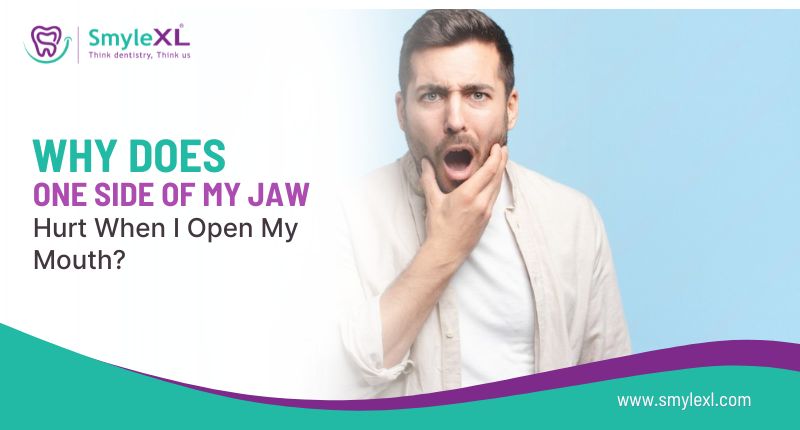

You wake up one morning and try to yawn. A sharp pain shoots through the side of your jaw. You stop mid-yawn and wonder what happened. A few days later, you bite into a sandwich and feel it again. The pain comes and goes, but it is always there when you open wide. It is frustrating, confusing, and a little scary. You wonder if something is seriously wrong. The truth is that one-sided jaw pain is common and has many causes. Some are simple habits you can change. Others need professional attention. Understanding why it happens helps you know what to do next.
If you are looking for jaw treatment in Kolhapur, knowing what might be causing your pain puts you on the path to relief. At SmyleXL Dental Clinic, we help patients figure out why their jaw hurts and how to make it stop.
Table of Contents
ToggleThe Joint Behind the Pain
Your jaw joint is different from any other joint in your body.
- Called the temporomandibular joint or TMJ
- Works like a hinge but also slides forward
- Has a small disc that cushions movement
- Surrounded by muscles that control chewing
- Used thousands of times every day
When something goes wrong here, pain follows. The joint itself may be inflamed. The disc may slip out of place. The muscles may go into spasm. Often, it is a combination of these.
What Causes Pain on One Side
Several things can trigger discomfort in just one side of your jaw.
Teeth Grinding on One Side
- Many people grind more on one side
- That side takes more pressure at night
- Muscles become sore and tight
- Joint gets overworked
- Morning pain is common
Chewing Mostly on One Side
- Missing teeth make you favor one side
- Old habits from dental work
- Uneven pressure stresses that joint
- Muscles get fatigued
- Pain builds over time
Injury or Trauma
- A fall or a hit to the face
- Whiplash from an accident
- Sleeping in an awkward position
- Chewing something too hard
- The side that took the impact hurts
Arthritis
- Osteoarthritis wears down joint cartilage
- Rheumatoid arthritis causes inflammation
- One joint may be more affected
- Pain with movement and stiffness
- More common in older adults
Disc Displacement
- The cushion inside the joint slips
- You may hear clicking or popping
- Pain when opening or closing
- Sometimes the jaw locks
- Usually affects one side at a time
When You Need Professional Help
Some signs indicate you should not delay getting jaw treatment.
- Pain lasting more than a week
- Difficulty opening your mouth fully
- Your jaw locks open or closed
- Clicking that turns into pain
- Swelling near your ear or jaw
- Headaches that come with jaw pain
Early treatment prevents the problem from getting worse.
What Happens at a Dental Clinic
A jaw evaluation is simple and painless.
- Your dentist asks about your symptoms
- They feel your jaw muscles for tight spots
- They listen for clicks or pops
- They check how wide you can open
- X-rays or scans may be taken
This tells them what is happening inside your joint. At SmyleXL Dental Clinic, through this process, we can identify the problem and recommend the right jaw treatment in Kolhapur for your situation.
Treatment Options for Jaw Pain
Most jaw problems improve with simple care.
Rest and Soft Foods
- Give your jaw a break
- Eat softer foods for a few days
- Cut food into small pieces
- Avoid chewy or hard items
- Let inflamed tissues calm down
Heat and Cold Therapy
- Warm compresses relax tight muscles
- Cold packs reduce inflammation
- Alternate if needed
- Apply for 10 to 15 minutes
- Do this several times a day
Gentle Exercises
- Slow opening and closing
- Moving your jaw side to side
- Stretching tight muscles
- Your dentist shows you how
- Stop if anything hurts
Night Guard
- Custom-made appliance worn while sleeping
- Prevents grinding and clenching
- Takes pressure off the joint
- Muscles relax during sleep
- Often resolves pain within weeks
At SmyleXL Dental Clinic, we create night guards that fit perfectly and provide real relief.
Simple Changes at Home
Small adjustments make a big difference.
- Stop chewing gum completely
- Avoid biting your nails or pens
- Keep your teeth apart when not eating
- Rest your tongue on the roof of your mouth
- Sleep on your back, not your stomach
- Notice when you clench and stop
Your jaw works hard all day. Giving it breaks helps it heal.
Why Ignoring Jaw Pain Is a Mistake
Many people hope the pain will just go away. Sometimes it does. But often it gets worse.
- Muscles learn to stay tight
- Joint damage can progress
- What started as mild clicking becomes locking
- Headaches become more frequent
- You may develop chronic pain
Early evaluation for jaw treatment in Kolhapur at SmyleXL Dental Clinic is simpler, faster, and more effective than waiting until the problem is severe.
When to See a Specialist
Some cases need more than basic care.
- Pain continues despite home care
- Your jaw locks regularly
- X-rays show joint damage
- You have arthritis in other joints
- Basic treatments do not help
A dentist trained in jaw disorders can offer advanced options like physical therapy, splint therapy, or minimally invasive procedures.
The Link Between Stress and Jaw Pain
Stress shows up in your jaw before anywhere else.
- You clench without realizing
- Grinding increases at night
- Muscles stay tight all day
- Pain becomes chronic
- Breaking the cycle requires stress management
Finding ways to relax helps your jaw relax too. Deep breathing, gentle exercise, and noticing when you clench all help.
Preventing Future Pain
Once your jaw feels better, keep it that way.
- Wear your night guard every night
- Chew evenly on both sides
- Take breaks from hard foods
- Manage stress daily
- Keep regular dental checkups
Your jaw works hard for you. A little care keeps it pain-free.
FAQs
How long does jaw pain usually last?
Mild jaw pain from clenching or overuse often improves within a few days with rest and soft foods. Chronic issues like grinding may need a night guard and can take several weeks to fully resolve.
Can stress really cause jaw pain?
Yes, stress is one of the biggest causes. It makes you clench during the day and grind at night without realizing. Managing stress through exercise, breathing, or simply noticing when you clench makes a real difference.
Is clicking in my jaw normal?
Occasional clicking without pain is usually harmless. But if clicking is accompanied by pain, locking, or difficulty opening, it should be evaluated. This can indicate the disc in your joint is out of place.
Listening to Your Body’s Signals
One-sided jaw pain is your body telling you something is out of balance. Maybe you grind more on that side. Maybe you favor it when chewing. Maybe stress has your muscles locked tight. Whatever the cause, ignoring it allows the problem to grow. The good news is that most jaw pain improves with simple care. Rest, soft foods, heat, and a custom night guard often resolve symptoms within weeks. If the pain persists, a professional evaluation will find the root cause.
At SmyleXL Dental Clinic, we help patients in Kolhapur understand their jaw pain and find relief. If opening your mouth has become a painful experience, do not wait. Come see us. Let us figure out what is happening and get you back to yawning, eating, and laughing without discomfort. At our clinic, jaw treatment in Kolhapur is available, and relief is closer than you think.