
Losing a tooth changes more than just your smile. It changes how you eat, how you speak, and how you feel about yourself. You chew on the other side without thinking. You hesitate before laughing in photos.
You wonder if anything can truly feel like your own tooth again. The answer is yes, and dental implants are proof.
But here is where it gets confusing. You start researching, and suddenly, there are multiple types, different materials, and conflicting advice. Endosteal, subperiosteal, zygomatic. The words alone sound overwhelming.
The good news is that understanding the basics is simpler than it seems. Each type exists for a reason, and the right one depends entirely on your unique situation.
If you are exploring dental implant in Surat, knowing these three main types helps you walk into your consultation informed and confident. At SmyleXL Dental Clinic, we believe the best choice is the one that fits your body, your health, and your goals.
Table of Contents
Toggle1. Endosteal Implants: The Most Common Choice
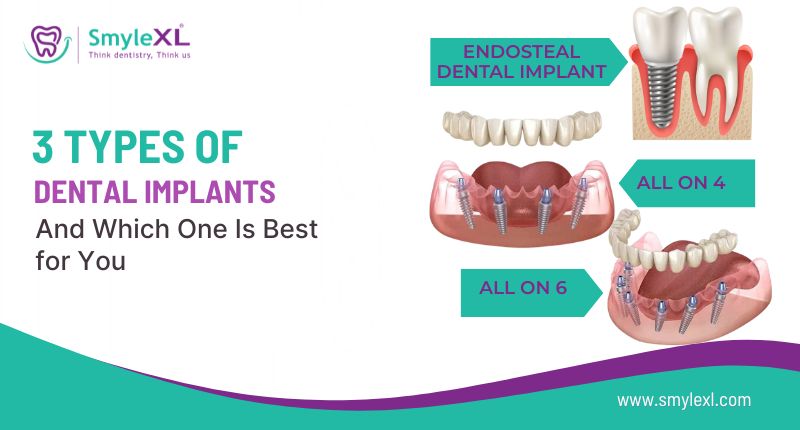
This is the implant you have probably seen in pictures or heard about from friends.
- A small screw made of titanium is placed directly into your jawbone
- Shaped like small cylinders or screws
- Acts as an artificial root for your replacement tooth
- Requires enough healthy jawbone to support it
- The most widely used implant type worldwide
Endosteal means “in the bone,” which tells you exactly where it goes. Once placed, the bone grows around it and locks it in place. This process is called osseointegration and is what makes implants so strong.
Who Is a Good Candidate for Endosteal Implants?
This type works for most people, but not everyone.
- Adults with enough jawbone height and density
- People with healthy gums free from active disease
- Non-smokers or those willing to quit during healing
- Individuals with well-managed health conditions
- Anyone missing one tooth, several teeth, or all teeth
If you have a good bone, this is usually the recommended choice. When you visit a dental implant in Surat specialist, they will check your bone with scans to see if you qualify.
2. Subperiosteal Implants: The Alternative for Thin Bone
Some people do not have enough jawbone for endosteal implants. In the past, that meant no implants at all.
- A metal frame is placed under the gum, but on top of the jawbone
- Posts attached to the frame stick through the gum to hold teeth
- Designed for patients with insufficient bone height
- Avoids the need for bone grafting surgery
- Less common today, but still useful in certain cases
Instead of going into the bone, this implant rests on it. The frame eventually becomes held in place by the gum tissue as it heals. It was more popular before bone grafting became reliable.
Who Might Need a Subperiosteal Implant?
This option is for people with specific challenges.
- Significant bone loss in the lower or upper jaw
- Unable or unwilling to undergo bone grafting
- Looking for a less invasive alternative to grafting
- Need a stable solution without months of healing
Modern implant dentistry has made subperiosteal implants less common because grafting allows most people to get endosteal implants. But for some patients, it remains a good option. We will determine which path fits your bone situation after the consultation for a dental implant in Surat.
3. Zygomatic Implants: The Solution for Severe Bone Loss
The upper jaw can be tricky. Years of missing teeth or wearing dentures can cause the bone to shrink dramatically.
- The longest type of implant is usually 30 to 55 millimeters
- Anchored into the cheekbone called the zygoma
- Bypasses the upper jaw completely
- Eliminates the need for sinus lifts or bone grafting
- Used when the upper jaw is too thin for anything else
The cheekbone is one of the densest bones in your face. It stays strong even when the upper jaw has wasted away. This makes it a perfect anchor for implants when the jawbone itself cannot support them.
Who Benefits from Zygomatic Implants?
This is not a first choice, but for the right person, it is life-changing.
- Severe bone loss in the upper jaw from years of tooth loss
- Failed bone grafts that did not take properly
- Congenital conditions affecting jaw development
- Long term denture wearers whose upper jaw has shrunk
- People who have been told they have no bone for implants
Zygomatic implants offer hope when other options have failed. A specialist providing dental implants in Surat can evaluate whether your bone loss qualifies you for this advanced treatment.
How to Choose Which Type Is Best for You?
With three options, how do you know which path to take?
- Start with a thorough examination and 3D scans
- Let your dentist measure your bone height and density
- Discuss your medical history and any previous surgeries
- Be honest about your willingness for grafting procedures
- Consider your timeline and healing preferences
The best type is not the newest or the most expensive. It is the one that works with your body’s specific anatomy.
Success Rates of Different Implant Types
Numbers help you feel confident in whatever path you take.
- Endosteal implants have success rates over 95 percent
- Subperiosteal implants have lower long-term success, but still help specific cases
- Zygomatic implants show 96 percent survival over many years
- Grafted bone supporting endosteal implants matches natural bone success
- All three types have decades of research behind them
When you choose a dental implant in Surat at a reputable clinic, you are choosing a solution with excellent odds regardless of which type you need.
The Cost Difference Between Types
Money matters in any medical decision.
- Endosteal implants are the most affordable option
- Subperiosteal implants cost more due to custom design
- Zygomatic implants are the most expensive ones because of their complexity
- Bone grafting adds cost but may be a one-time investment
- Payment plans make all options more accessible
Think of cost as part of the bigger picture. The cheapest option that fails is more expensive than the pricier option that lasts decades. Value matters more than the price tag.
FAQs
Which type of dental implant is most commonly used?
Endosteal implants are used in the vast majority of cases. They go directly into the jawbone and work for most patients with adequate bone height and density. Over 95 percent of implants placed today are endosteal.
How long do different implant types last?
Endosteal implants often last a lifetime with good care. Zygomatic implants show 96 percent survival over many years. Subperiosteal implants have shorter track records but still help specific patients. All require good oral hygiene and regular checkups.
Is the implant procedure painful?
The procedure itself is done under anesthesia, so you feel nothing. Afterward, mild soreness is normal and manageable with simple pain relievers. Most patients return to normal activities within a day or two.
How do I know which type is right for me?
Only a thorough examination with 3D imaging can determine that. Your dentist will measure your bone, review your health history, and discuss your goals. From there, a clear recommendation emerges based on your unique anatomy.
Finding Your Perfect Match in Dental Implants
Three types. One goal. A smile that looks, feels, and functions like your own. Endosteal implants provide most people with exactly that, with direct bone fusion and a proven track record. Subperiosteal implants offer a path when bone is too thin for grafting.
Zygomatic implants provide hope when the upper jaw has failed every other option. None is better than the others in absolute terms. The best one is simply the one that fits your unique anatomy, your health, and your life.
At SmyleXL Dental Clinic, we take the time to figure out which type is for you. We scan, we measure, we listen, and we guide. When you choose a dental implant in Surat with us, you are not picking from a menu. You are getting a custom solution designed for your mouth alone.