
Imagine smiling at an important event, say, a wedding or a job interview, and realizing your teeth aren’t as straight as you’d like. You’ve probably thought about braces, but the idea of wires, brackets, and endless adjustments makes you hesitate. That’s when clear aligners start to sound appealing: transparent, removable, and far more discreet.
But one question remains: Are clear aligners really faster than traditional braces?
If you’re exploring invisible braces treatment, this guide will help you understand how aligners compare to conventional braces—so by the end, you’ll know which option fits your smile goals, your timeline, and your lifestyle best.
Table of Contents
ToggleUnderstanding the Basics: Braces vs. Clear Aligners
Before comparing speed, let’s quickly break down how each option works:
- Traditional braces use brackets and wires that gradually move teeth into place. Your dentist or orthodontist adjusts them every few weeks.
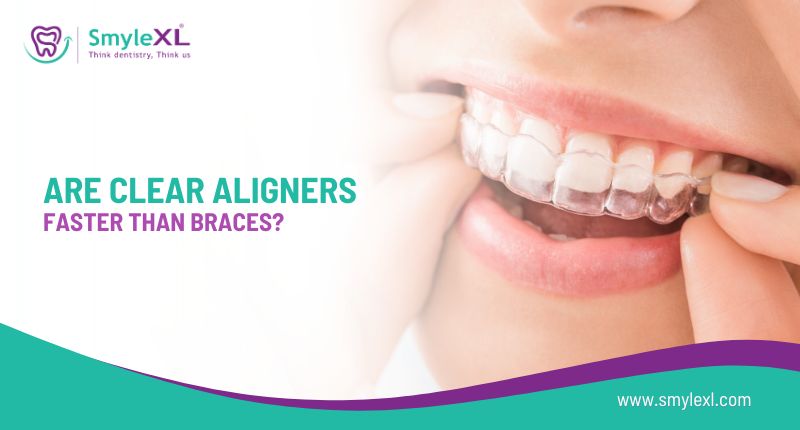
- Clear aligners (like Invisalign) use custom-made trays you wear for about 20–22 hours daily. You swap trays every 1–2 weeks as your teeth shift.
Both systems work with the same goal: a straighter, healthier smile. But the experience of getting there feels very different.
Are Clear Aligners Really Faster?
The million-dollar question patients often ask is: “Are clear aligners actually faster than braces?” The honest answer: sometimes yes, but not always. The treatment speed depends on your specific dental condition, how disciplined you are, and the complexity of the correction needed.
Clear aligners often work faster for mild to moderate misalignments. That’s because they focus on moving specific teeth in a controlled way. Braces, on the other hand, shine when it comes to more complex corrections such as severe crowding, rotated teeth, or major bite issues.
Why Clear Aligners Can Be Faster:
- Targeted movement: Aligners apply gentle, customized pressure to specific teeth, often moving them more efficiently than braces.
- Shorter treatment duration: Many patients complete aligner treatment within 6–18 months, depending on their case.
- Fewer in-clinic visits: Since you switch trays at home every 1–2 weeks, you don’t need as many dental adjustments compared to braces.
- Lifestyle flexibility: Because aligners fit into your routine so easily, motivated patients often stick to the plan better—leading to faster results.
Why Braces May Be Faster in Some Cases:
- Severe misalignments: Braces are more effective at correcting rotations, large gaps, or bite issues that aligners struggle with.
- Constant wear: Braces stay on 24/7, meaning they’re always working. Aligners deliver results if worn 20–22 hours a day.
- Complex control: Dentists can make precise wire and bracket adjustments with braces, allowing them to tackle tougher movements more efficiently.
- Less dependency on compliance: Unlike aligners, you can’t “forget” to wear braces—so the treatment stays on track regardless of habits.
Think of it like exercise programs:
- Clear aligners are like personal training sessions—focused, customized, and often faster if you follow instructions closely.
- Braces are like marathon training—slower and steadier, but highly effective for bigger, tougher goals that need endurance.
In short, aligners can be the quicker option for straightforward cases, while braces win when it comes to handling the heavy lifting of complex orthodontic needs.
Invisible Braces Treatment: What Makes It Appealing?
Many patients at SmyleXL Dental Clinic lean toward invisible braces because of the lifestyle advantages. Beyond speed, aligners come with perks that braces don’t often offer, such as:
- Discreet look: Almost invisible—most people won’t even notice them.
- Comfort: No poking wires or sharp brackets.
- Flexibility: You can remove them while eating, brushing, or flossing.
- Fewer emergencies: No broken brackets or wire mishaps.
That said, aligners require discipline. If you don’t wear them as recommended, treatment slows down. With braces, compliance isn’t a choice—they’re always working.
How to Decide Which Is Right for You
Choosing between braces and clear aligners depends on your dental condition, lifestyle, and personal goals.
Here are a few factors to think about:
- Complexity of your case: Severe crowding or bite issues may need braces.
- Your routine: If you snack often or forget things easily, aligners may be tricky.
- Budget: Braces sometimes cost less, while aligners can be pricier but offer convenience.
- Aesthetic preference: If visibility matters to you, aligners take the win.
At SmyleXL Dental Clinic, dentists assess your teeth and recommend a plan that balances results with comfort. The goal isn’t just straight teeth but also a treatment journey that works for your lifestyle.
Tips to Maintain Your Progress
Whether you choose braces or aligners, you can make sure you see consistent results with these easy-to-follow tips:
- Follow your dentist’s instructions closely.
- Keep excellent oral hygiene to prevent delays caused by cavities or gum issues.
- Avoid hard or sticky foods if you have braces, as they can damage wires and brackets.
- Wear aligners for 20–22 hours daily if you choose clear trays.
- Attend all scheduled appointments to stay on track.
Remember, compliance plays a huge role in treatment time. The more disciplined you are, the more effective the treatment will be.
Choosing the Right Path to a Straighter Smile
So, are clear aligners faster than braces? The answer depends on your unique case, lifestyle, and how disciplined you are with treatment. Aligners often work faster for simpler corrections, while braces remain the gold standard for complex orthodontic needs. Both methods, however, deliver the same goal: a confident, healthy, straight smile.
At SmyleXL Dental Clinic, we believe the right treatment isn’t just about speed—it’s about what fits you best. Whether you go for braces or invisible braces treatment, the important part is that you’re taking the step toward a better smile. Book your consultation today at our clinic and start your journey toward the smile you’ve always wanted.
FAQs
- Are clear aligners always faster than braces?
Not always. Clear aligners can be faster for mild to moderate alignment issues, often finishing in 6–18 months. However, traditional braces sometimes work quickly for complex cases like severe crowding or bite correction. The best option depends on your dental needs.
- What is the average time required for invisible braces treatment?
On average, invisible braces treatment takes 12–18 months. Some patients finish in as little as 6 months if their case is simple, while others may take longer. Consistency in wearing the aligners plays a huge role in how fast you see results.
- Do clear aligners hurt less than braces?
Yes, most patients find aligners more comfortable. While you may feel pressure when switching to a new tray, aligners don’t cause the same mouth irritation as metal brackets and wires. Pain is usually mild and temporary.
- Can I switch from braces to clear aligners midway?
In some cases, yes. Dentists may start treatment with braces for difficult movements and then transition to aligners for finishing touches. Your dentist will decide if switching is practical and safe for your case.
- Which option gives better long-term results?
Both braces and clear aligners provide excellent long-term results when you follow instructions. The key is wearing your retainer afterward, regardless of which treatment you choose. Without retainers, teeth can shift back over time.