
Ever had a moment of realization when you’re brushing, when you notice your teeth have slowly turned yellow over time? That’s when it hits you. You remember all your “daily dose of caffeine,” those countless cups of coffee or chai, that probably had a role to play. Even the idea of getting teeth whitening feels uncomfortable because your teeth are sensitive. And then the worry sets in, what if whitening makes them hurt even more?
If you’ve had the same dilemma, we get it. Many people want brighter smiles but hesitate because of sensitivity. However, you can safely get a whiter smile if it’s done the right way.
Let’s talk about how to make teeth whitening treatment in Kondhwa gentle, effective, and perfect for sensitive teeth, just like a dentist at SmyleXL Dental Clinic would explain it to you.
Table of Contents
ToggleWhy Teeth Become Sensitive in the First Place
Before we talk whitening, let’s understand what’s really causing that tooth “zing.” Sensitivity usually happens when the protective enamel layer thins out or the gums recede, exposing the inner layer of the tooth, known as dentin. Think of enamel like a warm blanket — when it’s worn out, even a breeze (or a sip of cold water) feels sharp.
Here are a few everyday reasons your teeth might be sensitive:
- Brushing too hard: Aggressive brushing can wear down enamel over time.
- Acidic foods & drinks: Citrus fruits, cola, and spicy pickles can erode enamel.
- Teeth grinding: A common habit during stress that weakens enamel.
- Gum recession: Often caused by improper brushing or gum disease.
- Frequent bleaching or whitening strips: Overuse can make teeth temporarily sensitive.
So, if your morning chai or evening kulfi has started feeling like a dare, it’s your teeth telling you they need some attention.
Can Sensitive Teeth Be Whitened Safely?
Absolutely! Sensitive teeth don’t mean you have to live with stains forever. You just need the right kind of treatment. And at SmyleXL Dental Clinic, we offer teeth whitening treatment in Kondhwa that balances results with care. The key is choosing gentle methods and professional supervision.
When done correctly, whitening can brighten your smile without triggering that uncomfortable sensation. The trick lies in customizing the treatment for your tooth type and sensitivity level.
Best Whitening Options for Sensitive Teeth
- In-Clinic Whitening
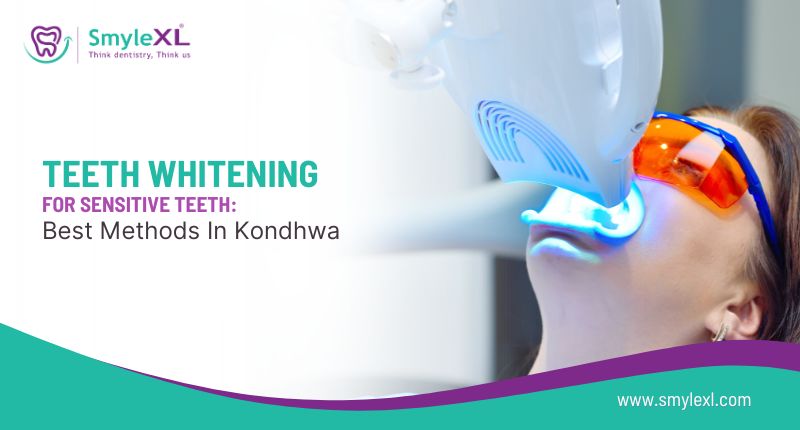
If you want fast, noticeable results with minimal sensitivity, professional whitening at a trusted clinic like SmyleXL Dental Clinic in Kondhwa is your best bet.
Here’s why:
- Dentists use desensitizing gels before whitening.
- They monitor the strength of the whitening agent to avoid irritation.
- Treatment time is controlled, ensuring enamel stays protected.
- Results are instant and evenly brightened.
This is perfect for people who’ve tried at-home kits and ended up saying, “Never again.”
- Desensitizing Whitening Toothpaste
If your sensitivity is mild, toothpaste with added fluoride and whitening agents can help remove surface stains slowly while calming nerves inside your teeth.
This method takes patience; results appear over weeks, not days, but it’s a gentle and budget-friendly option for temporary results.
- Laser Whitening
Modern clinics like SmyleXL Dental Clinic in Kondhwa also offer laser-assisted whitening. It’s quick, highly effective, and less likely to irritate sensitive teeth because the laser helps activate the whitening agent faster, reducing contact time with your enamel.
It’s the best of both worlds — speed and comfort.
Everyday Habits That Make Sensitivity Worse
Whitening is only half the story. The other half lies in your daily habits — some of which quietly worsen sensitivity.
Let’s talk about a few everyday culprits:
- Hot-cold back-to-back: Eating a hot samosa followed by chilled soda — classic sensitivity trigger.
- Skipping dental check-ups: Hidden cavities or gum issues can worsen sensitivity if ignored.
- Using too much whitening toothpaste: More isn’t better; it can wear enamel faster.
- Neglecting hydration: A dry mouth increases acid buildup, eroding enamel faster.
Small changes like rinsing after meals, drinking more water, and using a soft-bristled brush go a long way in keeping sensitivity under control.
At-Home Care Tips for Sensitive Smiles
If your teeth feel fragile after whitening or even during everyday life, here are some dentist-approved ways to care for them gently:
- Use a soft toothbrush: Gentle brushing prevents enamel wear.
- Switch to a sensitivity toothpaste: Ingredients like fluoride and potassium nitrate calm nerve endings.
- Avoid excessive cold or hot foods: Room temperature is your friend for a few days.
- Rinse with fluoride mouthwash: Strengthens enamel and keeps acids in check.
- Avoid acidic drinks: Limit lemon water, cola, and vinegar-based foods.
And remember: no aggressive scrubbing! Think of your teeth like polished glass; they need care, not force.
What Makes Teeth Whitening at SmyleXL in Kondhwa Different
When it comes to whitening for sensitive teeth, the experience matters as much as the result. At SmyleXL Dental Clinic in Kondhwa, patients often mention how the process feels surprisingly comfortable.
Here’s what sets it apart:
- Treatments are customized for your sensitivity level.
- Advanced, enamel-safe whitening systems are used.
- Every session is monitored by experienced dentists.
- Patients receive aftercare guidance to prevent post-whitening discomfort.
It’s not just about achieving a brighter smile, it’s about keeping that smile strong and pain-free.
Frequently Asked Questions
- How long do whitening results last?
Typically, the results of a professional whitening treatment last anywhere between 8 to 12 months. How long it stays bright depends on your eating and oral hygiene habits — things like regular brushing, rinsing after meals, and avoiding stain-causing foods help a lot. Scheduling regular dental cleanings at your clinic can also help maintain that sparkle for longer. - Will the sensitivity get worse after whitening?
You might feel a little sensitivity for a day or two after the whitening procedure, but it usually goes away quickly. Dentists often apply special desensitizing gels or fluoride to make the process more comfortable. If your teeth are already sensitive, the whitening method can be adjusted to keep it gentle and safe for you. - Can I drink tea or coffee after whitening?
Try to avoid tea, coffee, cola, or other dark-coloured drinks for about 48 hours after whitening. During this period, your teeth are more likely to absorb stains. After that, you can go back to your usual favorites — just rinse with water or use a straw to help keep your smile bright. - Are at-home whitening kits safe for sensitive teeth?
At-home whitening products can be harsh on sensitive teeth and gums if not used properly. Some have very strong bleaching agents that can wear down enamel or cause irritation. It’s always better to have whitening done under dental supervision, where the products and techniques are chosen to suit your teeth safely. - What’s the best option for someone with very high sensitivity?
For people with sensitive teeth, getting teeth whitened professionally is the safest option, which will be under the dentist’s supervision. Dentists use controlled techniques and desensitizing agents before, during, and after treatment to protect your enamel. This way, you still get effective results without unnecessary pain or discomfort.
To Sum It Up
Tooth sensitivity doesn’t mean you have to give up on a radiant smile. With the right care, whitening can be both safe and satisfying. It’s all about choosing methods that suit your enamel and working with professionals who understand your comfort.
If you’re planning a teeth whitening treatment in Kondhwa, SmyleXL Dental Clinic offers the perfect blend of gentle whitening techniques and personalized care. The result? A confident, glowing smile, without the “ouch.”
Because a bright smile should feel as good as it looks, and in the hands of the right dentist, it truly does.