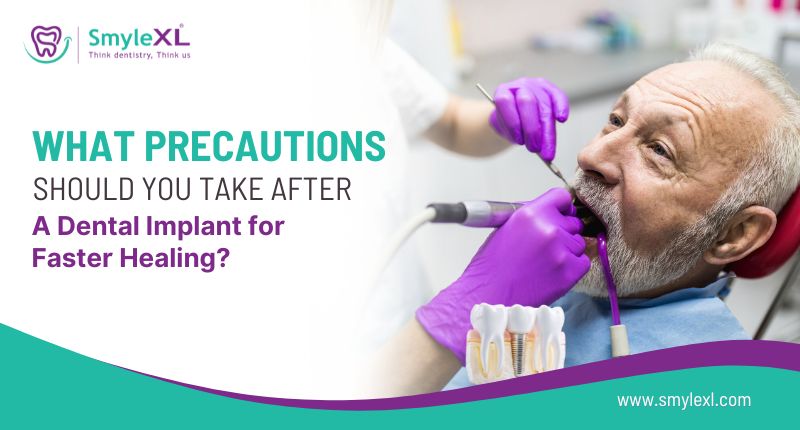

Choosing to undergo a dental implant procedure is a big step, one that often brings a mix of excitement and nervousness. On one hand, dental implants can restore your smile, confidence, and ability to eat comfortably. On the other hand, many patients worry about the healing process and wonder what they should or shouldn’t do after surgery.
At SmyleXL Dental Clinic, we believe that successful dental implant treatment doesn’t end when the implant is placed. Healing plays an equally important role. The precautions you take after your implant surgery directly affect how quickly you recover and how well your implant integrates with the bone.
This guide explains, in simple and practical terms, what you should expect after dental implant surgery and the most important precautions you can take to support faster, smoother healing.
Table of Contents
ToggleUnderstanding Healing After Dental Implant Treatment
Dental implants work by integrating with your jawbone in a process called osseointegration. During this phase, the implant gradually bonds with the surrounding bone, creating a stable foundation for the final crown.
This process takes time. While the surface healing may occur within days or weeks, complete integration can take three to six months, depending on your bone quality, overall health, and how well post-surgical instructions are followed.
Healing is not painful for most patients, but it does require patience, care, and consistency.
What to Expect After Dental Implant Surgery
After your dental implant treatment, it’s normal to experience some temporary symptoms, including:
- Mild to moderate swelling of the gums or face
- Slight bruising around the jaw or cheeks
- Tenderness at the implant site
- Minor bleeding during the first 24 hours
These symptoms usually peak within the first two to three days and gradually improve. At SmyleXL Dental Clinic, we carefully plan each implant procedure to minimize trauma and promote quicker recovery.
If a bone graft is required during your dental implant treatment, healing may take a little longer, but this is completely normal.
Why Post-Implant Precautions Matter
Many implant complications don’t occur because of the surgery itself, but because post-surgical instructions weren’t followed carefully. Simple actions like eating the wrong foods, smoking, or returning to strenuous activity too soon can interfere with healing.
Taking the right precautions helps:
- Reduce swelling and discomfort
- Prevent infection
- Support strong bone integration
- Increase long-term implant success
Essential Precautions to Take After Dental Implant Treatment
1. Prioritize Rest in the First Few Days
Rest is one of the most overlooked yet powerful healing tools. After dental implant surgery, your body needs energy to repair tissue and begin bone integration.
For the first 48–72 hours:
- Avoid physical exertion
- Do not lift heavy objects
- Stay away from intense workouts
Even if you start feeling better, avoid pushing yourself too quickly. Patients who rest properly tend to heal faster and experience fewer complications.
2. Manage Swelling the Right Way
Swelling is a normal response after dental implant treatment. To control it:
- Apply an ice pack to the outside of your face
- Use it for 20 minutes on, 20 minutes off
- Always wrap the ice pack in a cloth to protect your skin
Ice therapy is most effective within the first 24 hours after surgery.
3. Follow Medication Instructions Carefully
Your dentist may prescribe pain relievers, antibiotics, or anti-inflammatory medication. These medications are meant to:
- Control discomfort
- Prevent infection
- Reduce swelling
Always take them exactly as prescribed. Skipping doses or stopping early—even if you feel fine- can slow healing or increase infection risk.
4. Eat Soft, Healing-Friendly Foods
One of the most common questions patients ask after dental implant treatment is what they can eat. For the first few days, stick to soft, cool, and non-spicy foods, such as:
- Yogurt
- Mashed potatoes
- Scrambled eggs
- Smooth soups (not hot)
- Soft fruits like bananas
Avoid:
- Crunchy or hard foods
- Sticky foods
- Spicy dishes
- Very hot beverages
Chewing too much or too soon can disturb the implant site and delay healing.
5. Stay Hydrated (But Skip the Straw)
Drinking enough water helps your body heal and flush out toxins. However, avoid using a straw. The suction can dislodge the blood clot at the surgical site, increasing the risk of complications.
Also avoid:
- Alcohol (for at least 1–2 weeks)
- Excessive caffeine
Alcohol, in particular, can interfere with healing and interact with medications.
6. Maintain Gentle Oral Hygiene
Keeping your mouth clean after dental implant treatment is crucial—but it must be done gently.
- Brush your other teeth as usual
- Avoid brushing directly over the implant site for a few days
- Use a soft-bristled toothbrush
- Rinse gently, never aggressively
Your dentist may recommend a mild mouth rinse or saltwater rinse to keep bacteria under control.
7. Rinse With Salt Water to Promote Healing
Saltwater rinses are simple yet effective. They help reduce bacteria and soothe irritated tissues.
To prepare:
- Mix 1 teaspoon of salt in a glass of warm water
- Gently swish for 30 seconds
- Spit it out, do not gargle forcefully
This can be done 2–3 times a day, or as advised by your dentist at SmyleXL Dental Clinic.
8. Avoid Smoking and Tobacco Products
Smoking is one of the biggest risk factors for implant failure. Nicotine restricts blood flow, which reduces oxygen supply to healing tissues and bone.
Patients who smoke have a significantly higher risk of:
- Delayed healing
- Infection
- Poor osseointegration
- Implant failure
If you are serious about the success of your dental implant treatment, avoiding smoking during recovery is essential.
9. Limit Talking and Jaw Movement Initially
Excessive talking, chewing, or jaw movement can irritate the surgical site during the early healing phase. Give your mouth time to rest, especially during the first 24–48 hours.
This small precaution can make a big difference in comfort and recovery speed.
- Attend All Follow-Up Appointments
Follow-up visits allow your dentist to:
- Monitor healing progress
- Check implant stability
- Identify any early signs of complications
At SmyleXL Dental Clinic, follow-ups are a critical part of every dental implant treatment plan. Skipping appointments can delay the detection of issues that are easier to treat early.
Common Mistakes That Slow Down Healing
Even well-meaning patients sometimes make mistakes after dental implant surgery. Avoid:
- Touching the implant area with your tongue or fingers
- Eating hard foods
- Ignoring swelling or pain that worsens
- Skipping prescribed medications
Healing is not a race. Patience leads to better long-term results.
How Long Does Dental Implant Healing Take?
While surface healing occurs within a couple of weeks, full osseointegration usually takes three to six months. This timeframe varies depending on:
- Bone density
- Overall health
- Oral hygiene habits
- Whether bone grafting was required
Your dentist will let you know when your implant is ready for the final crown placement.
When to Contact Your Dentist Immediately
Although complications are rare, contact SmyleXL Dental Clinic if you notice:
- Increasing pain after several days
- Excessive swelling or pus
- Fever
- Persistent bleeding
- Implant movement
Early intervention can prevent serious problems.
Healing Well Is Part of the Treatment
Dental implants are one of the most reliable and life-changing dental solutions available today. But their success depends just as much on what happens after surgery as during it.
By following the right precautions, listening to your dentist, and giving your body time to heal, you significantly improve the outcome of your dental implant treatment.
If you’re considering dental implants or have recently undergone treatment and need guidance, the team at SmyleXL Dental Clinic is here to support you at every stage, because a healthy, confident smile deserves expert care and patience.