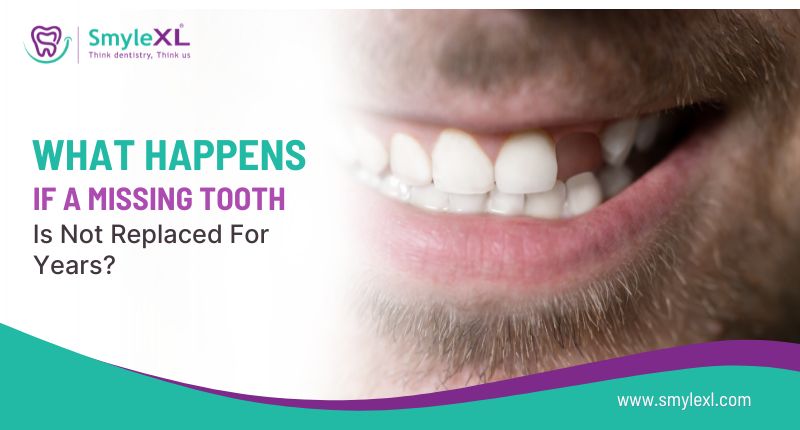

You lose a tooth, and life goes on. You chew on the other side. You smile, and no one notices the gap. You think maybe it is not such a big deal. Years pass, and you forget about it entirely. But your mouth does not forget. Beneath the surface, changes are happening slowly. Teeth are shifting. Bone is shrinking. Your bite is changing in ways you cannot see. What starts as a single missing tooth becomes a cascade of problems affecting your whole mouth. The body craves balance, and a gap disrupts that balance in ways that only become obvious years later.
If you have been living with a missing tooth and wondering whether replacing it now is worth it, understanding the long-term consequences helps you make an informed choice. For those considering a dental implant in Phaltan, acting sooner rather than later protects your smile from decades of silent damage. At SmyleXL Dental Clinic, we help patients see why addressing gaps promptly is one of the best decisions for their long-term oral health.
Table of Contents
ToggleThe Domino Effect of Missing Teeth
One gap sets off a chain reaction throughout your mouth.
- Neighbouring teeth tilt into the empty space
- Teeth above or below drift out of position
- Your bite changes gradually over time
- Chewing shifts to one side constantly
- The whole balance of your mouth shifts
This domino effect happens slowly, which is why many people do not notice until significant damage is done.
Adjacent Teeth Tilt and Shift
The teeth next to the gap have nowhere to go but into it.
- They lean toward the empty space over months and years
- This creates new gaps between other teeth
- Food traps form in these new spaces
- Decay starts in areas that were once clean
- Cleaning becomes harder with tilted teeth
When you finally consider a dental implant, the adjacent teeth may have shifted so much that more work is needed to create space.
Teeth in the Opposite Jaw Move
Your upper and lower teeth are meant to touch.
- The tooth opposite the gap has nothing to bite against
- It slowly moves downward or upward out of its socket
- This is called super eruption
- It can become loose over time
- Eventually, it may need removal too
What started as one missing tooth can lead to losing the opposing tooth years later.
Bone Loss in the Gap Area
This is the most serious consequence of waiting.
- Your jawbone needs stimulation from tooth roots
- When a tooth is missing, that stimulation stops
- The body breaks down bone in that area
- Bone loss continues year after year
- The space shrinks and becomes harder to fill
After one year, significant bone loss has already occurred. If you visit our dental clinic after five years, we may tell you that the ridge may be too thin for our standard dental implant in Phaltan without grafting first.
Changes to Your Bite
Your bite is a complex system designed for balance.
- Teeth shift and tilt, changing how they meet
- Uneven pressure wears down some teeth faster
- Jaw muscles work harder to compensate
- You may develop jaw pain or headaches
- Chewing becomes less efficient over time
These changes happen so gradually that you adapt without realizing. Only when you look back do you see how much has changed.
Increased Risk of Gum Disease
Gaps and shifted teeth create new hiding places for bacteria.
- Food traps form between tilted teeth
- Plaque builds up in hard-to-reach areas
- Gums become inflamed and bleed easily
- Infection spreads to the surrounding teeth
- More teeth are at risk of being lost
Gum disease is often painless until advanced. By the time you notice, significant damage may already be done.
Facial Changes Over Time
Your teeth support your lips and cheeks.
- Bone loss changes the shape of your jaw
- Your face may appear sunken in that area
- Wrinkles form around the mouth
- Your smile looks asymmetrical
- You can appear older than you are
This is one of the most distressing long-term effects of missing teeth. The dental implant in Phaltan provided by SmyleXL Dental Clinic preserves not just your smile but also your facial structure.
Difficulty Chewing and Digestion
You adapt without thinking, but your body pays the price.
- You chew mostly on one side
- Food is not broken down properly
- Larger food particles reach your stomach
- Digestion becomes harder over time
- You may avoid certain foods altogether
Eating should be enjoyable. A missing tooth changes that slowly, meal by meal.
What Happens When You Finally Seek Treatment
Years of delay make replacement more complex.
- Bone grafting may be needed to rebuild lost tissue
- Sinus lifts if the upper teeth are involved
- Orthodontics to upright tilted teeth
- Multiple teeth may now need replacement
- Treatment takes longer and costs more
What could have been a simple implant becomes a major reconstruction. The cost and time increase significantly.
Can It Ever Be Too Late for an Implant
Rarely, but severe bone loss can limit options.
- Extreme cases may need zygomatic implants
- These anchor in the cheekbone instead of the jaw
- More complex but still possible
- Some patients need multiple grafts first
- Advanced technology helps in most cases
Even with years of delay, modern dentistry can almost always find a solution. The key is starting the conversation.
What You Can Do Now
If you have a missing tooth, the best time to act is now.
- Schedule a consultation with imaging
- Let your dentist assess bone levels
- Discuss options for replacement
- Understand what grafting may be needed
- Make a plan before more damage occurs
Every year you wait, the situation becomes slightly more complicated. Do not let another year pass.
FAQs
What happens if you never replace a missing tooth?
Over years, adjacent teeth tilt, opposing teeth move, bone shrinks, and your bite collapses. This leads to more tooth loss, gum disease, jaw pain, and facial changes. The entire mouth degrades from that single gap.
Can you get an implant years after tooth loss?
Yes, you can. However, bone grafting is often needed first to rebuild what has been lost. The process takes longer and costs more, but implants are still possible for most patients even after many years.
Is bone grafting painful?
The procedure is done under local anesthesia, so you feel nothing. Afterward, mild discomfort is normal for a few days and manageable with pain relievers. It adds time to treatment but makes implants possible.
How do I know if I have enough bone for an implant?
A 3D scan or CT scan shows your bone levels precisely. Your dentist can measure height and width and determine if grafting is needed. This is the first step in evaluating any long missing tooth.
The Price of Waiting
A missing tooth left unreplaced for years sets off a slow-motion disaster in your mouth. Teeth shift. Bone dissolves. Your bite collapses. What started as a single gap becomes multiple problems requiring complex solutions. The cost in money, time, and discomfort multiplies with every year of delay. The emotional toll of hiding your smile adds another layer. But here is the good news: it is never too late to start. Modern dentistry has solutions for even the most neglected cases.
At SmyleXL Dental Clinic, we help patients in Phaltan understand what is happening in their mouths and what can be done. If you have a missing tooth you have ignored for years, come see us. Let us assess the damage, discuss your options, and create a plan to restore your smile. Our dental implant in Phaltan can change your story, no matter how long you have waited.