
Losing multiple teeth or an entire set of teeth can affect much more than appearance. Many people begin to avoid social gatherings, feel uncomfortable eating in public, and slowly lose confidence in their smile. Even simple conversations can become stressful when speech changes or chewing becomes difficult. At SmyleXL Dental Clinic, we understand how emotional and frustrating tooth loss can feel. Modern denture solutions are designed to help patients regain comfort, confidence, and daily function.
Today’s advanced denture treatment is more natural-looking, better fitting, and easier to manage than older versions. Whether someone needs complete tooth replacement or support for a few missing teeth, professionally designed removable solutions can help restore normal life. However, many patients still wonder whether wearing a denture every day is truly comfortable in the long run.
The answer depends on several factors, including proper fitting, oral health, adjustment time, and ongoing maintenance. With expert guidance and personalized treatment, most patients adapt successfully and enjoy improved quality of life.
Table of Contents
ToggleWhy Do Tooth Loss Affect Daily Life So Deeply?
Tooth loss changes routine activities in ways many people never expect. Eating favorite foods becomes difficult, smiling feels uncomfortable, and speaking clearly may suddenly require extra effort. Some patients also notice emotional changes because they feel older or less confident after losing teeth.
Many individuals who visit SmyleXL Dental Clinic explain that they avoid certain foods because chewing causes discomfort. Others mention feeling embarrassed while talking because missing teeth affect pronunciation. These emotional and physical struggles are common, which is why replacing missing teeth becomes important not only for oral function but also for mental well-being.
When teeth are not replaced for a long time, the jawbone may slowly shrink, causing facial shape changes that make a person appear older. The cheeks can begin to sag, and the lips may lose support. Restoring the smile with a properly fitted denture can help improve facial balance and overall confidence.
What Is a Denture?
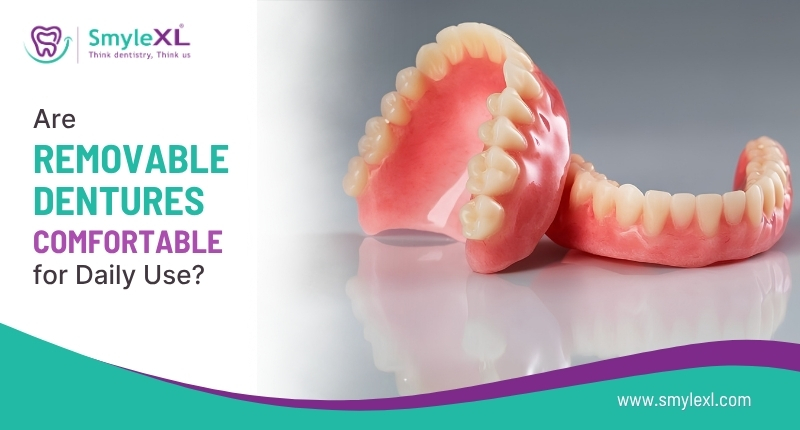
A denture is a removable prosthetic appliance designed to replace missing teeth and surrounding tissues. It helps restore chewing ability, speech clarity, and facial support. Modern denture treatment is customized according to the patient’s oral structure, making them far more natural and comfortable than older traditional designs.
At SmyleXL Dental Clinic, treatment planning focuses on creating solutions that look natural and fit comfortably. Dentures are carefully designed to improve everyday comfort while helping patients regain confidence in their smile.
Types of Dentures
Partial Dentures
These are recommended when a patient still has some healthy natural teeth remaining. These restorations fill the gaps between existing teeth and help maintain proper bite alignment. Well-designed partial dentures can improve chewing function while preventing nearby teeth from shifting.
Full Dentures
These are used when all teeth in the upper arch, lower arch, or both arches are missing. These appliances rest over the gums and are carefully designed to restore appearance and oral function. Many patients choose full dentures because they provide a practical and affordable tooth replacement option.
Immediate Dentures
It is placed shortly after tooth extraction so patients do not remain without teeth during healing. These temporary restorations help maintain appearance and function while the mouth adjusts.
Are Dentures Comfortable for Daily Use?
Modern denture treatment has improved significantly over the years. With advanced materials and customized fitting techniques, many patients are able to wear their dentures comfortably throughout the day. However, comfort usually improves gradually as the mouth adapts.
During the first few weeks, some patients may notice mild soreness, excess saliva production, or speech difficulties with dentures. This adjustment phase is completely normal because the oral tissues and muscles need time to adapt to the new appliance.
At SmyleXL Dental Clinic, patients receive personalized instructions to make this transition easier and more comfortable. Small adjustments can significantly improve fit and reduce irritation.
Common Problems Denture Wearers Experience
Ill-Fitting Dentures
One common complaint is ill-fitting dentures, which can loosen as the jawbone changes shape over time. This movement can cause irritation, instability, and chewing difficulties.
Gum Irritation and Oral Discomfort
Some patients develop swollen gums because of excessive pressure or poor hygiene. Others experience sore gums from dentures if food particles become trapped beneath the appliance.
Improper cleaning may also lead to bad breath from dentures and bacterial buildup. This is why regular cleaning routines are essential for oral health and long-term comfort.
Speech Difficulties
Many first-time denture wearers experience speech difficulties with dentures, especially while pronouncing certain words. This issue usually improves with regular speaking practice.
Benefits of Wearing Dentures Every Day
Although adapting to a denture may require patience, the long-term benefits can be life-changing for many patients.
Better Chewing Ability
Replacing missing teeth helps restore chewing efficiency and allows patients to enjoy a wider variety of foods again. Properly fitted removable dental appliances improve bite balance and reduce unnecessary strain on the jaw.
People who struggle with jaw pain while chewing often notice improvement once missing teeth are replaced and bite pressure becomes more evenly distributed.
Improved Appearance and Facial Support
Tooth loss often causes facial shape changes that affect self-confidence. Dentures provide support for the cheeks and lips, helping restore a fuller and healthier appearance.
Many patients say they feel younger and more confident after replacing missing teeth.
Clearer Speech and Social Confidence
Missing teeth can interfere with pronunciation and speech clarity. By restoring proper tooth structure, dentures help improve communication and reduce self-consciousness.
Patients who once avoided conversations or public gatherings often regain confidence after successful treatment.
Affordable Tooth Replacement Solution
Compared to some surgical options, removable dental appliances are often more budget-friendly while still providing functional and aesthetic benefits. This makes them a practical choice for many individuals seeking long-term tooth replacement.
Tips to Make Dentures More Comfortable
Comfort depends not only on the quality of the denture but also on proper maintenance habits.
Practice Good Denture Care
Consistent denture care helps prevent irritation, bacterial buildup, and unpleasant odor. Dentures should be cleaned daily using appropriate cleaning products recommended by a dental professional.
Good cleaning habits also reduce the risk of bad breath from dentures and gum infections.
Remove Dentures While Sleeping
Wearing dentures continuously without giving the gums time to rest may increase irritation and inflammation. Removing them at night allows the oral tissues to recover.
Attend Regular Dental Checkups
Routine appointments help identify fit problems early before they become severe. Minor adjustments can prevent sore gums from dentures and improve stability.
At SmyleXL Dental Clinic, follow-up visits are an important part of denture treatment because they help ensure long-term comfort and function.
Start with Softer Foods
Patients adjusting to new dentures should begin with softer foods and chew slowly on both sides of the mouth. This helps the muscles adapt evenly.
Is Denture Treatment the Right Choice for You?
Tooth loss does not have to mean a permanent change in quality of life. Modern denture treatment offers practical, comfortable, and aesthetically pleasing options for patients who want to restore their smile and regain daily confidence.
At SmyleXL Dental Clinic, we are committed to helping every patient feel comfortable and confident throughout their treatment journey. From the initial consultation to follow-up care, our team provides personalized support designed to make the experience as smooth and positive as possible.
If you have questions about denture treatment or would like to explore your tooth replacement options, we invite you to schedule a consultation with our dental team today. A healthier, more confident smile is closer than you might think.
FAQs
How Long Do Dentures Last?
Well-made dentures can last five to ten years with proper care, but jawbone and gum changes may require periodic relining or replacement for a good fit. Regular dental checkups allow dentists to monitor fit changes and recommend adjustments, which helps extend the lifespan of the dentures and maintain comfort.
How does it feel during the first week of adjustment?
Wearing dentures for the first time can feel unfamiliar, and chewing or speaking may require practice. Some may experience sore gums, but this discomfort is typically temporary as the mouth adapts. Initially, soft foods are recommended to ease pressure on healing gums, allowing a gradual return to a balanced diet.
Why Do Modern Dentures Feel More Natural?
Today’s comfortable dentures are made using advanced materials that improve stability and appearance. Customized impressions allow the appliance to match the patient’s gum shape more accurately, reducing movement and irritation. Professionally designed customized dentures also support the cheeks and lips more naturally, helping patients regain confidence in their appearance.
When Is Denture Repair Necessary?
Over time, dentures may develop cracks, looseness, or worn areas. Delaying denture repair can increase discomfort and affect chewing efficiency.
What are common signs for denture repair?
Common signs that repair may be needed include:
- Cracks or visible damage
- Difficulty chewing comfortably
- Increased looseness
- Frequent mouth sores and blisters caused by friction
- Noticeable changes in bite alignment
- Broken clasps on partial dentures