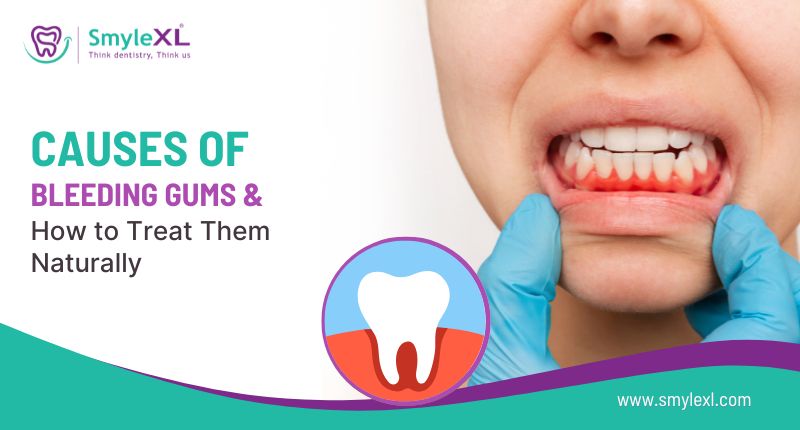
Causes of Bleeding Gums & How to Treat Them Naturally
You’re brushing your teeth like any regular morning, already planning breakfast (maybe a quick bite near Lal Darwaja before the crowds kick in). Then suddenly…
You see it.

You’re brushing your teeth like any regular morning, already planning breakfast (maybe a quick bite near Lal Darwaja before the crowds kick in). Then suddenly…
You see it.
So… you survived your tooth extraction.
Whether it was a stubborn wisdom tooth or a cranky molar that finally gave up, the hard part is officially behind you. Now comes the recovery, and thankfully, it can be smooth, simple, and surprisingly easy if you follow the right steps.
There’s a certain kind of jaw discomfort that many people brush off, the stiffness when you wake up, the clicking sound while chewing, the mild ache near your ears after talking for too long, or that sudden tightness when you yawn. Most of us simply assume it’s “just fatigue,” “just stress,” or “just one of those days.”
There’s something oddly satisfying about running your tongue over freshly cleaned teeth, they feel smooth, light, and surprisingly fresh. But right after that, another thought creeps in:
“What should I eat now? Can I have chai? Is something off-limits?”
If you’ve ever lost a tooth, you already know the sinking feeling that comes with it, that awkward gap, the hesitant smile, the sudden realization that even biting an apple isn’t as simple as it used to be.
It’s always at the worst possible time: a sharp pain hits your tooth right when you’re about to sleep. You try to shrug it off, hoping it’ll eventually subside, but instead, it continues towards your jaw, making even a sip of water unbearable.