
You have heard that dental implants are the best way to replace missing teeth. But you wonder how they actually work. If you are missing several teeth, do you need an implant for each one? The thought of multiple surgeries and the cost can feel overwhelming. The good news is that one implant can sometimes support more than one tooth. It depends on where the teeth are missing and how many need replacement. Understanding how implants work helps you see what is possible for your smile.
If you are exploring dental implants, knowing your options takes the fear out of the process. At SmyleXL Dental Clinic, we help patients understand how technology for dental implant in Vijay Nagar can restore their smiles with fewer implants than they might expect.
Table of Contents
ToggleOne Implant, One Tooth
The most common and straightforward use of implants.
- One implant is placed for each missing tooth
- Each implant gets its own separate crown
- Ideal when teeth are missing with gaps between them
- Provides the most natural feel and function
- Cleans like individual teeth with floss between them
This approach is best when missing teeth are not next to each other. Each implant works independently, just like natural teeth.
One Implant, Multiple Missing Teeth
When multiple teeth are missing in a row, one implant can support several.
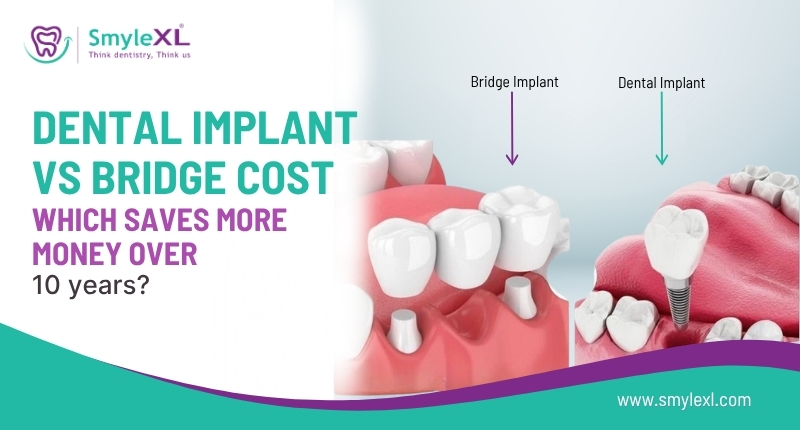
- An implant bridge uses one implant at each end
- False teeth in the middle are attached to the implants
- For three missing teeth, two implants support a three-unit bridge
- Sometimes one implant can support a cantilever bridge for two teeth
- The implant acts as an anchor for the entire restoration
This approach reduces the number of implants needed while still providing excellent support. Patients considering a dental implant often qualify for this option when several adjacent teeth are missing.
Fixed Teeth in One Day: The All-on-4 Concept
For patients missing all teeth in one arch, implants can support a full set.
- Four to six implants are placed strategically in the jaw
- A full arch of teeth attaches to these implants
- The back implants are angled for maximum bone contact
- Patients leave with fixed teeth in one day
- Far fewer implants than replacing each tooth individually
This revolutionary approach means you do not need an implant for every missing tooth. Four well-placed implants can support an entire arch of ten to twelve teeth. It has changed the lives of countless patients seeking dental implant in Vijay Nagar at SmyleXL Dental Clinic.
Why One Implant Cannot Support an Entire Arch?
There are limits to what one implant can do.
- Chewing forces are too high for one implant to support a full arch
- The bone would be overloaded and could fail
- Multiple implants distribute force evenly
- Strategic placement ensures long-term success
- Your dentist determines the minimum number needed
One implant is incredibly strong, but it cannot do the work of an entire row of teeth alone. The key is finding the right balance.
Benefits of Multiple Teeth on One Implant
Using fewer implants offers several advantages.
- Less surgery means faster recovery.
- Lower overall cost than individual implants
- Fewer appointments and less treatment time
- Preserves bone in strategic areas
- Still feels stable and natural
Patients love that they can restore multiple missing teeth without undergoing surgery for each one. Modern implant dentistry makes this possible.
What Determines How Many Teeth Per Implant
Several factors guide your dentist’s recommendation.
Bone Quality and Quantity
- Dense bone supports more load than soft bone
- Enough bone height and width are essential
- Grafting may be needed in some areas
- 3D scans show exactly what is available
Location in the Mouth
- Front teeth have less chewing force
- Back teeth need more support
- Anterior implants can sometimes support more
- Strategic placement matters
Number of Missing Teeth
- One to three teeth in a row can share implants
- Longer spans need more support
- Full arches need four to six implants
- Every case is unique
Bite Forces
- People who grind their teeth need more support
- Night guards protect implant work
- Your bite pattern affects implant numbers
At SmyleXL Dental Clinic, we evaluate all these factors before recommending your specific dental implant in Vijay Nagar.
Implant-Supported Bridge vs Individual Crowns
Understanding the difference helps you choose.
Implant-Supported Bridge
- Two implants support multiple false teeth
- Fewer implants needed overall
- Lower cost than individual crowns
- Cleans differently, needs special floss underneath
- Good for multiple missing teeth in a row
Individual Implant Crowns
- One implant per missing tooth
- Highest cost but most natural
- Easiest to clean like regular teeth
- Best when teeth have gaps between them
- Ideal for non-adjacent missing teeth
Your dentist will explain which makes more sense for your specific situation.
Cost Considerations
Fewer implants generally means lower cost.
- Each implant adds surgical and component fees
- Bridge work costs more than single crowns
- But fewer implants balance the total
- A full arch with four implants costs less than ten singles
- Payment plans make treatment accessible
When discussing dental implant in Vijay Nagar, ask for a breakdown of implant numbers and restoration costs.
Success Rates for Multi-Tooth Implant Restorations
Research shows excellent outcomes.
- Implant bridges have success rates above 95%
- A full arch fixed teeth approach, similar to numbers
- Proper planning is the key to success
- Good home care extends lifespan
- Regular checkups catch small issues early
Patients who follow their dentist’s advice enjoy their implant work for decades.
FAQs
Can one implant replace two teeth?
Yes, in certain situations. A cantilever bridge can use one implant to support two teeth if the forces are favorable. However, two implants are usually recommended for two or three missing teeth to distribute chewing pressure properly.
How many implants are needed for a full mouth?
For a full arch of missing teeth, four to six implants are typically used. The All-on-4 technique uses four implants strategically placed to support twelve to fourteen teeth. This provides excellent stability with fewer implants.
Is it cheaper to get fewer implants?
Generally, yes, because each implant adds surgical and component costs. However, the restoration itself may cost more. Your dentist will provide a complete breakdown so you can compare options and choose what fits your budget.
How long do implant bridges last?
With proper care, implant bridges can last 15 to 20 years or longer. Good oral hygiene, regular dental checkups, and avoiding damaging habits like grinding all extend their lifespan significantly.
One Implant, Many Possibilities
How many teeth can be fixed on one implant? The answer ranges from one tooth to an entire arch, depending on your situation. Single missing teeth need individual implants. Multiple teeth in a row can share implants with a bridge. A full arch of missing teeth can be restored with just four to six strategically placed implants. Modern implant dentistry offers solutions for every scenario. The key is proper planning by an experienced team.
At SmyleXL Dental Clinic, we take the time to evaluate your bone, understand your goals, and design a treatment plan that gives you the best results with the right number of implants. If you have been wondering whether implants can solve your missing teeth problem without breaking the bank or requiring endless surgery, come talk to us. Let us show you what is possible with a dental implant in Vijay Nagar. Your smile might need fewer implants than you think.