
Losing a tooth leaves a gap, and same-day teeth fixed permanently is exactly what it sounds like: a solution that closes that gap the same day you walk into the clinic. But to understand why that matters, it helps to understand what the alternative looks like.
The standard implant process goes like this: the implant goes in today, but the permanent crown comes 3 to 6 months later, after osseointegration is complete. Which means the gap that brought you to the clinic stays exactly where it is, for the better part of a year, while the bone quietly does its work.
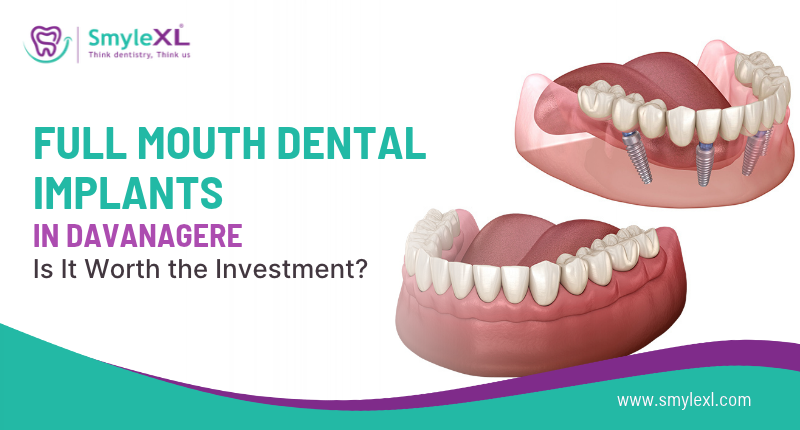
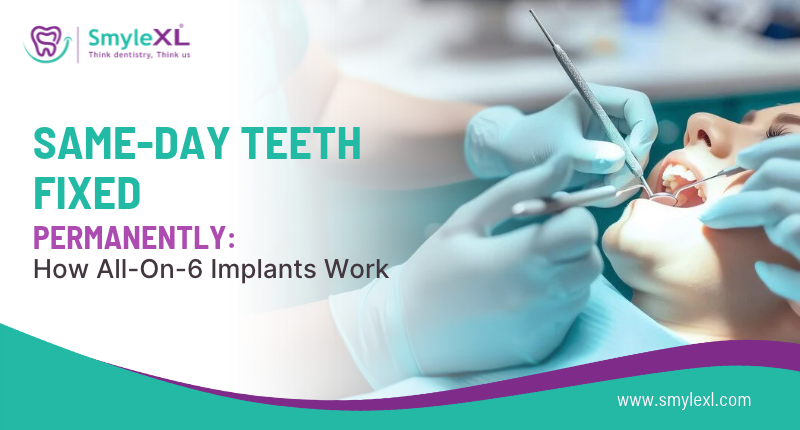
For patients replacing a full arch, that wait is even harder to sit with. All-on-6 dental implants solve this: six implants are placed, and a full set of functional, natural-looking temporary teeth is attached in a single appointment. You walk out of SmyleXL Dental Clinic the same day with a complete smile, not a gap and a timeline.
Here’s how it works.
Table of Contents
ToggleWhat Is All-on-6?
Six titanium implant posts placed across the jaw. One implant-supported full arch bridge attached on top. A complete set of fixed teeth replacement, including upper arch, lower arch, or both, in a single surgical appointment.
The six-implant design isn’t arbitrary. More implants mean better load distribution across the jaw, which matters especially in the upper jaw where bone density tends to be lower. Full arch dental implants with six points of support suit a wider range of patients than four-implant systems, and the stability is consistently better long-term.
The teeth attached on surgery day are temporary, but they’re strong, functional, and good-looking, and designed to be replaced once osseointegration is complete. The permanent zirconia prosthesis comes at the 4–6 month mark, once the implants have fully bonded with the bone. What you leave with on day one isn’t the finished product, but it is a complete smile restoration, and that’s the part that matters most in the interim.
How the Procedure Actually Works
Before Anything Happens: The Planning
A dental CT scan maps the jaw in three dimensions before surgery is even scheduled. Bone density, nerve positions, sinus location, and the optimal placement points for each implant- all of it is mapped and planned using computer-guided implant placement before anyone picks up an instrument.
This planning is what makes immediate load implants possible. The temporary prosthesis is fabricated based on the surgical plan, so the moment the implants are placed and stability is confirmed, it can be attached immediately. None of this is improvised on the day.
The Surgery
Six titanium implant posts are placed into the jawbone under sedation or general anesthesia. Once implant stability is confirmed, the temporary prosthesis is attached, and permanent teeth in one day go from concept to reality.
Same-day teeth fixed permanently or provisionally fixed, with the permanent version following. Either way, you leave with teeth.
The Months After
Osseointegration, the process where the jawbone grows around and fuses with the titanium implant posts, takes 4–6 months. During this time, the temporary prosthesis stays in place, and you live your life normally, with one adjustment: a soft diet while the implants integrate.
Post-surgical care instructions from SmyleXL Dental Clinic cover exactly what to eat, what to avoid, and what to watch for during this period. Following them properly is what protects the implants while osseointegration does its work.
The Final Result
Once integration is confirmed, the temporary teeth are replaced with the permanent zirconia prosthesis, more aesthetic, stronger, and built for decades of normal use. Chewing function restored at this point is as close to natural teeth as implant technology currently allows. The result is a complete smile restoration that’s permanent, stable, and yours.
All-on-6 vs Traditional Dentures
This is the comparison most patients are making when they first look into this.
| All-on-6 Implants | Traditional Dentures | |
| Fixed or removable | Fixed teeth replacement | Removable |
| Jawbone preservation | Yes, implants stimulate bone | No, bone loss continues |
| Stability | Completely stable | Shifts, requires adhesive |
| Chewing function restored | Near-natural | Significantly reduced |
| Long-term implant success rate | Above 95% at 10 years | Requires relining and replacement |
| Natural-looking smile | Yes | Variable |
Implants vs Traditional Dentures
Dentures sit on top of the gum. They don’t stimulate the bone underneath, which means jawbone preservation doesn’t happen and the jaw continues to shrink over time. The fit gets worse. The adhesive becomes a permanent fixture. Meals become something to manage rather than enjoy.
All-on-6 dental implants are the removable denture alternative that actually works, anchored like natural teeth, functioning like natural teeth, and looking like natural teeth. Fixed vs. removable prosthetics isn’t just a preference question; it’s a quality-of-life question. Same-day teeth fixed permanently means no removal at night, no adhesive, no shifting mid-conversation.
All-on-6 vs All-on-4
Two extra implants make a meaningful difference. Better load distribution, greater stability, and a stronger foundation for the prosthesis, particularly in the upper jaw. Full arch dental implants with six points of support suit patients with moderate bone loss who might not be ideal candidates for four implants.
All-on-4 costs less. Immediate load implants with six points of contact also give the temporary prosthesis more stability during the osseointegration period, reducing the risk of complications while the bone integrates. A dental CT scan assessment determines which system suits your jaw, not a blanket preference.
Who Can Get All-on-6?
Candidacy for dental implants at this level comes down to a few things:
- Sufficient bone density across the jaw, confirmed by a dental CT scan
- No active gum disease; this needs treating before implants go in
- General health that supports surgery and a smooth osseointegration period
- Patients currently in dentures, facing full arch tooth loss, or needing teeth replacement surgery
- Anyone looking for a permanent removable denture alternative that functions like natural teeth
Patients with severe bone loss may need grafting first, or may be better suited to zygomatic implants. The assessment is what tells you which situation you’re in.
What Does It Cost?
At SmyleXL Dental Clinic, the cost of All-on-6 implants is between ₹1,70,000 and ₹4,50,000.
The range reflects implant brand, prosthesis material, and case complexity. A zirconia prosthesis costs more than acrylic and lasts significantly longer. Zirconia complete smile restoration is the premium option.
What Life Looks Like After
The day after surgery, most patients are managing normal activities with mild soreness. Within a week, the temporary prosthesis starts feeling increasingly natural. By the time the permanent zirconia prosthesis is placed, most patients have largely forgotten they ever wore dentures or spent months staring at a gap.
Jawbone preservation, stable bite, natural-looking smile, chewing function restored aren’t aspirational outcomes. Jawbone preservation, stable bite, natural-looking smile, chewing function restored aren’t aspirational outcomes. For patients who were tired of waiting, tired of dentures, and tired of the gap, All-on-6 dental implants deliver exactly what the name promises: same-day teeth fixed permanently.
At SmyleXL Dental Clinic, every full arch dental implants case starts with a proper assessment: dental CT scan, bone evaluation, and a complete treatment plan with transparent pricing before anything begins.
Book your consultation at SmyleXL Dental Clinic today, and find out if same-day teeth fixed permanently is the right solution for you.
Frequently Asked Questions
Who is a good candidate for All-on-6 implants?
Patients with full arch tooth loss, failing teeth, or those in dentures looking for a removable denture alternative are the primary candidates. Adequate bone density, confirmed through a dental CT scan, is the main clinical requirement. Candidacy for dental implants also depends on general health and the absence of active gum disease. Severe bone loss may require grafting or an alternative approach; the assessment determines which.
How long do All-on-6 implants last?
The titanium implant posts are designed to last a lifetime; long-term implant success rate data consistently show above 95% survival at 10 years. The zirconia prosthesis typically lasts 15–20 years with proper care. Same-day teeth fixed permanently are genuinely permanent with the right maintenance and regular check-ups, keeping complete smile restoration results intact long-term.
Is All-on-6 better than All-on-4?
For most patients, yes. Six implants distribute load more evenly, provide greater stability as immediate-load implants, and deliver a better long-term implant success rate, particularly in the upper jaw. All-on-4 suits patients with good bone density and costs less. Which is right depends on the individual case, determined by a dental CT scan and clinical assessment.
How painful is All-on-6 implant surgery?
The teeth replacement surgery is performed under sedation or general anesthesia, with no pain during the procedure. Post-operative soreness and swelling for 1–2 weeks are expected and managed with prescribed medication. Most patients find recovery more manageable than anticipated. Following post-surgical care instructions from SmyleXL Dental Clinic is what keeps recovery smooth and osseointegration on track.
What is the difference between All-on-6 and traditional dentures?
Implants vs traditional dentures: the core difference is fixed teeth replacement versus removable. All-on-6 dental implants are permanently attached, stimulate jawbone preservation, restore near-natural chewing function, and deliver a natural-looking smile that dentures can’t match. Dentures shift, require adhesive, and accelerate bone loss. Fixed vs removable prosthetics isn’t a close comparison; All-on-6 is the permanent teeth in one day solution that functions like natural teeth for decades. Same-day teeth fixed permanently means exactly that.