
You finally complete your root canal treatment, and the tooth feels much better. The pain is gone, the infection has been treated, and you can get back to eating normally.
Then your dentist says something that surprises many patients:
“You’ll need a crown for this tooth.”
Your first reaction might be:
“If the root canal is already done, why do I need another dental treatment for infection?”
It’s a fair question.
Many people assume that once the infection is removed, the tooth is completely fixed. As a result, they delay getting the crown or skip it altogether. Unfortunately, this is where problems often begin.
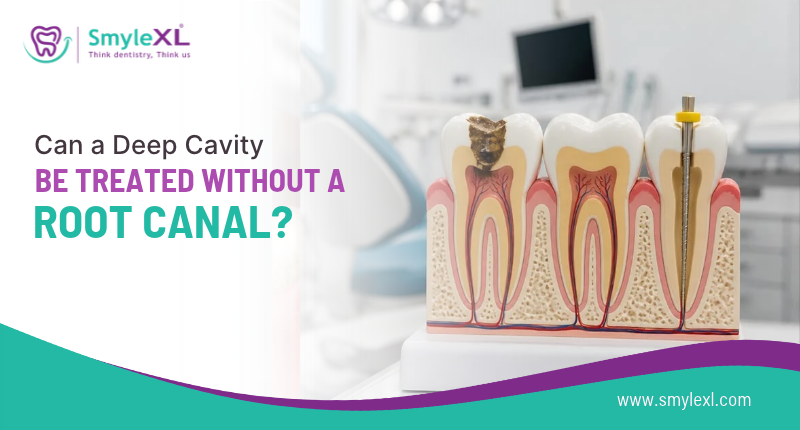
A RCT removes infection from inside the tooth and helps save it from extraction. However, the remaining tooth is often weaker than before, especially if a large cavity, fracture, or infection has already damaged a significant portion of its structure.
Think of it this way: the infection may be gone, but the tooth still needs protection.
Understanding what happens after a root canal, and why dentists strongly recommend a crown after RCT, can help you avoid complications that may eventually lead to cracking, reinfection, or even losing the tooth altogether.
Table of Contents
ToggleThe “Hollow Tree” Effect (Why the Tooth is Vulnerable)
During the procedure, the dentist removes the infected tissue from inside the tooth and performs cleaning and sealing canals to eliminate bacteria. While this saves the tooth from infection, it also means the tooth no longer contains its living pulp tissue. In many cases, a significant amount of tooth structure has already been lost due to decay or damage before treatment even begins.
As a result, the tooth becomes:
- More brittle
- Less flexible under pressure
- More prone to cracks and fractures
- Less able to withstand heavy chewing forces
This is why dentists often recommend a crown after root canal to strengthen and protect the remaining tooth structure.
What Happens If You Skip the Crown? (The Risks)
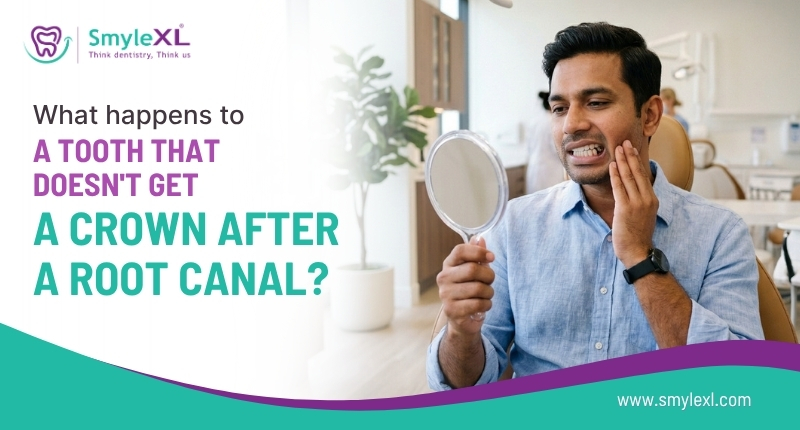
Many patients delay the crown because the pain is gone and the tooth feels normal again. However, the absence of pain does not mean the tooth is fully protected.
Without a crown, the treated tooth remains exposed to daily chewing forces. Over time, this can lead to:
Cracks in the Tooth
Small tooth cracks may develop when biting into hard foods or grinding your teeth. These cracks often start silently and may not cause symptoms initially.
Tooth Fracture During Chewing
A weakened tooth may suddenly fracture while eating. Something as simple as chewing nuts, ice, or hard snacks can create enough pressure to damage the tooth.
Recurrent Infection
If the tooth cracks develop or the filling begins leaking, bacteria may re-enter the tooth. This can lead to new dental infection symptoms and may require additional infected tooth treatment.
Reduced Lifespan of the Tooth
The goal of root canal therapy is saving natural tooth structure. Without proper protection, the lifespan of the treated tooth may be significantly reduced.
The Worst-Case Scenario (Losing the Tooth)
The most serious consequence of skipping a crown is losing the tooth altogether.
If a crack extends deep below the gumline or into the root, the damage may become irreparable. In such situations, the tooth may no longer be suitable for restoration, and extraction may become the only option.
Ironically, a tooth that was successfully saved through root canal treatment can still be lost simply because it was never properly protected afterward.
This is why the discussion of root canal vs extraction doesn’t end after the procedure. The crown plays a major role in helping the tooth survive for many years after treatment.
Are There Any Exceptions?
Yes, not every tooth automatically requires a crown.
Some front teeth may retain enough healthy structure after endodontic treatment that a crown may not be necessary immediately. Since front teeth experience less chewing pressure than molars and premolars, your dentist may recommend a strong filling instead.
However, the decision depends on several factors:
- How much of the natural tooth remains
- The location of the tooth
- Existing cracks or fractures
- Bite forces
- Overall oral health
This is why every case should be evaluated individually. Your dentist will determine whether a filling is sufficient or whether a crown after root canal is the best way to protect the tooth long-term.
Different Types of Dental Crowns After Root Canal Treatment
Dental crowns are available in different materials, and the best choice depends on factors such as the tooth’s location, chewing forces, aesthetic requirements, and budget. Your dentist will recommend the most suitable option based on your individual needs.
1. Zirconia Crowns
Zirconia crowns are among the most popular choices today because they combine strength with aesthetics. They are highly durable, resistant to fractures, and closely resemble natural teeth. Zirconia crowns are often recommended for both front and back teeth due to their excellent balance of appearance and function.
2. Porcelain Crowns
Porcelain crowns are known for their natural appearance and ability to match the color of surrounding teeth. They are commonly used for front teeth where aesthetics are a priority. Porcelain crowns provide a lifelike look but may not be as strong as zirconia in high-pressure chewing areas.
3. Porcelain-Fused-to-Metal (PFM) Crowns
PFM crowns combine the strength of a metal base with the appearance of a porcelain outer layer. They have been used successfully for many years and offer a good balance between durability and aesthetics. However, over time, the metal edge may become visible near the gumline in some patients.
4. Metal Crowns
Metal crowns are made from alloys containing gold, nickel, chromium, or other metals. They are extremely strong and long-lasting, making them suitable for molars that experience heavy chewing forces. However, their metallic appearance makes them less commonly used in visible areas of the mouth.
5. E-Max Crowns
E-Max crowns are made from high-strength lithium disilicate ceramic. They are highly aesthetic, translucent, and closely mimic the appearance of natural teeth. E-Max crowns are often chosen for front teeth and cosmetic dental restorations where appearance is particularly important.
Which Crown Is Best After a Root Canal Procedure?
For most patients, zirconia and E-Max crowns are among the most commonly recommended options because they offer excellent aesthetics and durability. The ideal crown depends on:
- The position of the tooth
- Bite forces
- Cosmetic expectations
- Amount of remaining tooth structure
- Budget considerations
Your dentist can help you choose the crown material that provides the best combination of strength, appearance, and long-term protection after root canal treatment.
Don’t Stop at Half the Treatment
Many patients believe the infection is gone, so treatment is finished. In reality, a successful root canal treatment is often only the first step toward preserving your tooth long-term.
Without a proper crown after root canal, a treated tooth may remain vulnerable to cracks, fractures, and reinfection. The goal of root canal treatment is not only removing infection but also restoring strength and function.
At SmyleXL Dental Clinic, patients are guided through every stage of the process, from infected tooth treatment and endodontic treatment to final restoration, so the tooth can remain healthy, functional, and protected for years to come.
FAQs
Is it worth getting a crown after dental pulp therapy?
Yes, in many cases, getting a crown after a root canal is highly recommended. A root canal-treated tooth is often weaker because of the infection and the amount of tooth structure lost before treatment. A crown helps protect the tooth from cracking, restores its strength, and improves its long-term survival.
Can you put a crown on a tooth that has not had a root canal treatment?
Yes. Dental crowns are not only used after root canal therapy. A crown may be recommended for teeth that are severely worn, cracked, fractured, heavily filled, or weakened for other reasons. The purpose of the crown is to strengthen and protect the tooth, whether or not a root canal has been performed.
What is the hardest tooth to prep for a crown?
The preparation difficulty depends on the tooth’s position, shape, and condition. Generally, lower molars and wisdom teeth can be more challenging because they are located at the back of the mouth, making access and visibility more difficult. Teeth with extensive damage or unusual anatomy may also require more complex crown preparation.
Is the crown stronger than enamel?
Many modern dental crowns, especially zirconia crowns, are extremely strong and can withstand significant chewing forces. In fact, some crown materials may be stronger than natural enamel in terms of durability. However, natural tooth structure is still unique and irreplaceable. The goal of a crown is not to outperform a healthy tooth, but to protect and reinforce a weakened one.
Can a tooth rot under a crown?
Yes, a tooth can still develop decay underneath a crown if bacteria enter around the crown margins or if oral hygiene is not maintained properly. While the crown itself cannot decay, the natural tooth underneath remains vulnerable. Regular brushing, flossing, and dental checkups are important to keep the tooth healthy and help the crown last longer.