
Here’s a question most people don’t think to ask until they’re already sitting in the dentist’s chair: if I go through all of this, how long is the tooth actually going to last?
It’s a fair question. Root canal treatment has a reputation that precedes it; most of it unflattering, most of it outdated. But underneath the anxiety around the procedure itself is a genuinely practical concern: is saving this tooth worth it, and for how long?
The short answer is a long time, often decades, sometimes a lifetime. The longer answer depends on a few things that are worth understanding before you decide. Here’s the full picture.
Table of Contents
ToggleWhat Root Canal Treatment Actually Does
Before the longevity question, a quick recap of what the root canal procedure involves, because understanding what’s been done to the tooth explains why aftercare matters so much.
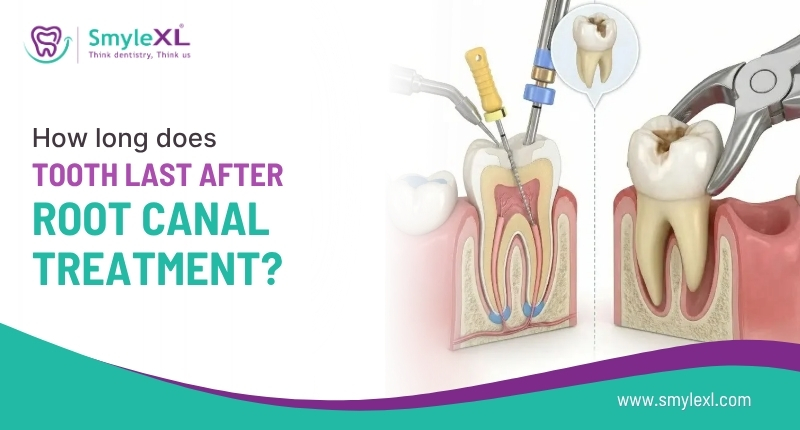
Dental pulp removal is the core of the procedure. The pulp, which is the soft tissue containing nerves and blood vessels inside the tooth, is removed when it becomes infected or inflamed beyond repair. The canals are cleaned, shaped, and filled with a material called gutta-percha filling to seal them. The tooth structure above the gumline remains intact.
Here’s the key thing: after dental pulp removal, the tooth is no longer “alive” in the biological sense. It has no nerve supply, no blood flow. It’s still fully functional, but it’s also more brittle than a living tooth, which has a direct effect on how long it lasts.
How Long Does a Root Canal-Treated Tooth Actually Last?
Studies on tooth survival rate after endodontic therapy consistently show that teeth with proper root canal treatment and adequate restoration last significantly longer than most patients expect.
- With a crown placed after treatment: 10–15 years on average, with many lasting 20–30 years or longer
- Without a crown: significantly shorter; the tooth is far more vulnerable to tooth fracture after root canal
- With excellent oral hygiene and regular check-ups, lifetime survival is entirely possible
The tooth survival rate drops considerably when the tooth isn’t properly restored after a root canal procedure, which brings us to the most important factor in longevity.
The Single Biggest Factor: The Crown
A dental crown placement after root canal treatment isn’t optional; it’s the step that determines whether the tooth survives long-term or fractures within a few years.
After dental pulp removal, the tooth loses moisture and becomes brittle. Back teeth, the molars and premolars, take the full force of chewing. Without a crown covering and protecting the tooth structure, tooth fracture after root canal is a common and frustrating outcome. The root canal was successful; the tooth broke because it wasn’t protected.
Dental crown placement within a reasonable timeframe after completing tooth nerve treatment is the single most impactful thing a patient can do to extend the tooth’s lifespan.
What Affects How Long the Tooth Lasts?
Several factors influence the tooth survival rate after endodontic therapy:
| Factor | Impact on Longevity |
| Dental crown placement | Most significant, uncrowned teeth fracture far sooner |
| Tooth location | Front teeth last longer than back teeth without crowns |
| Quality of root canal procedure | Complete sealing prevents reinfection |
| Oral hygiene | Gum disease around the tooth affects survival |
| Root canal aftercare | Following post-treatment instructions matters |
| Grinding (bruxism) | Significantly accelerates tooth fracture after root canal |
When Root Canal Treatment Needs to Be Redone
Retreatment of root canal, also called Re-RCT, becomes necessary when:
- The original infected tooth treatment didn’t fully clear the infection
- New decay reaches the treated tooth
- A canal was missed during the original root canal procedure
- The gutta-percha filling breaks down, or the seal is compromised over time
Retreatment of root canal is more involved than the original procedure, but it is often still preferable to extraction, particularly when the tooth root and surrounding bone are in good condition.
Root Canal vs Tooth Extraction: The Real Comparison
Tooth extraction vs root canal is a conversation worth having honestly. Extraction is cheaper upfront, but the costs that follow tell a different story.
A missing tooth requires replacement, like an implant, bridge, or denture, to prevent dental abscess treatment complications, bone loss, and shifting of adjacent teeth. The total cost of extraction plus replacement almost always exceeds the cost of saving a damaged tooth through endodontic therapy.
Root canal treatment preserves the natural tooth root, maintains bone density, and avoids the cascade of problems that follow tooth loss. For most patients with a restorable tooth, it’s the more sensible long-term decision.
What Does Root Canal Treatment Cost at SmyleXL Dental Clinic?
At SmyleXL Dental Clinic in Pimple Nilakh , Pune, here’s what root canal cost typically looks like:
| Treatment | Approximate Cost |
| Single-sitting root canal treatment | ₹5,000 per tooth |
| Multi-sitting root canal procedure | ₹2,500 – ₹3,500 per tooth |
| Retreatment of root canal (Re-RCT) | ₹5,000 – ₹7,000 per tooth |
Root canal cost varies based on the tooth’s location, complexity, and number of canals involved. Dental crown placement after treatment is a separate cost and one that’s worth budgeting for, given how significantly it affects tooth survival rate.
Root Canal Aftercare: What Actually Makes the Difference
Root canal aftercare is straightforward but important:
- Get the crown placed promptly; don’t delay this step
- Avoid chewing hard foods on the treated tooth until the crown is in place
- Maintain consistent brushing and flossing; the tooth may be treated, but the gum around it still needs care
- Attend regular check-ups; early detection of any issues around the treated tooth keeps options open
- Wear a nightguard if you grind your teeth; a tooth fracture after root canal is significantly more likely in grinders without protection
Pain after root canal for 2–4 days is normal and manageable with prescribed medication. Persistent or worsening pain beyond a week warrants a follow-up.
Worth Saving Most of the Time
Root canal treatment gets a worse reputation than it deserves, both for the procedure itself and for the longevity of the result. A properly treated and crowned tooth can last decades. The procedure is significantly more comfortable than most patients anticipate. And saving a damaged tooth almost always makes more long-term sense than extracting and replacing it.
At SmyleXL Dental Clinic in Pimple Nilakh, root canal treatment is handled with the clinical care and post-treatment guidance that determines whether the tooth actually goes the distance.
Book your consultation at SmyleXL Dental Clinic today and find out whether your tooth is worth saving. It probably is.
Frequently Asked Questions
How do I know if my root canal failed?
Signs of a failed root canal procedure include persistent or returning pain in the treated tooth, swelling or a pimple on the gum near the tooth, sensitivity that never fully resolved, or a dental abscess developing months or years after the original treatment. An X-ray will show whether the infection has returned around the root tip. Retreatment of root canal is often possible and preferable to extraction when caught early.
Is root canal treatment painful?
The procedure itself is performed under local anesthesia; most patients feel pressure and movement but no pain during endodontic therapy. Pain after root canal for 2–4 days afterward is normal as the surrounding tissue settles. Most patients find the experience significantly more manageable than the infected tooth treatment anxiety that preceded it. The toothache that prompted the procedure is almost always worse than the treatment itself.
How long does a root canal take?
A single sitting root canal treatment takes 60–90 minutes, depending on the tooth’s complexity and the number of canals. Multi-sitting root canal procedure spreads treatment across 2–3 appointments of similar length. Front teeth with single canals are faster; back molars with multiple canals take longer.
Can a tooth last forever after root canal?
Lifetime survival is possible, particularly with prompt dental crown placement, good oral hygiene, and regular check-ups. Tooth survival rate studies show many teeth lasting 20–30 years or more after endodontic therapy. The variables that most affect longevity are crown placement, tooth location, and whether root canal aftercare instructions are followed consistently. No restoration lasts forever, but a well-treated, well-restored tooth comes close.
What happens if you wait too long to get a root canal?
Delaying root canal treatment when it’s been recommended allows the infection to spread, potentially into surrounding bone, adjacent teeth, or beyond. A dental abscess can develop, causing significant pain and swelling. More critically, the tooth itself may deteriorate to the point where saving a damaged tooth is no longer possible, and tooth extraction vs root canal becomes a one-sided conversation. Early treatment consistently produces better outcomes and lower overall root canal cost.