
When you begin orthodontic treatment, braces slowly guide your teeth into better positions. Every few weeks, your orthodontist adjusts or tightens the braces so the teeth continue moving in the right direction.
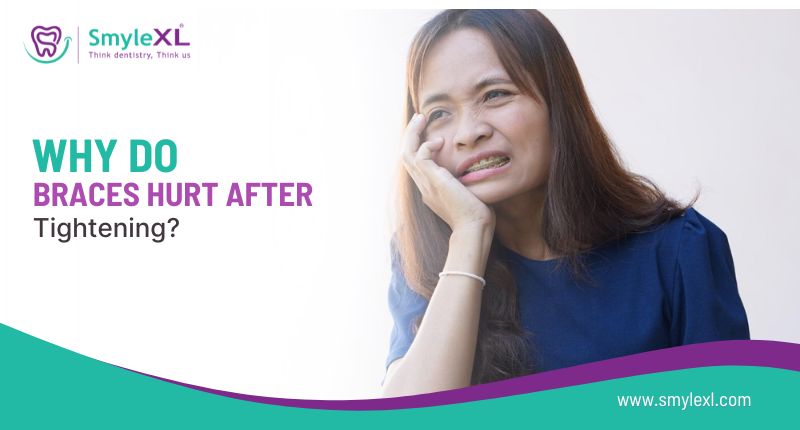
After this appointment, many people notice something very common, their teeth feel sore for a while.
If you have experienced this, you might wonder:
Why do braces hurt after tightening? Did something go wrong?
The short answer is no. A little discomfort after adjustments is normal and usually means the braces are doing their job.
At SmyleXL Dental Clinic, we often explain this to people undergoing braces treatment in Phaltan. Understanding why the soreness happens can make the process feel much less worrisome.
Let’s break it down in a simple way.
Table of Contents
ToggleWhat Happens When Braces Are Tightened?
Braces work by applying gentle pressure to your teeth over time. This pressure slowly moves teeth into better alignment.
Your braces have three main parts:
- Brackets attached to each tooth
- Archwire running across the teeth
- Elastic bands or ties that hold the wire in place
During a tightening appointment, the orthodontist may:
- Replace the wire
- Adjust the existing wire
- Change elastic bands
- Add small components that guide tooth movement
Each adjustment slightly increases the pressure on certain teeth.
Your teeth are not stuck directly inside the jawbone. They sit in small spaces surrounded by tissues called the periodontal ligament. When braces apply pressure, this ligament reacts and allows the tooth to move slowly.
This movement is exactly what straightens the teeth.
Because the tissues around the teeth are adjusting, it can lead to mild soreness for a short time.
Why Do Teeth Feel Sore After an Adjustment?
The soreness after tightening braces mainly comes from pressure and inflammation in the surrounding tissues.
When braces apply pressure:
- One side of the tooth compresses the ligament.
- The other side stretches slightly.
- The body begins remodeling the bone around the tooth.
This process allows the tooth to move.
During the first day or two after tightening, the tissues are adapting to the new pressure. This is why teeth can feel sensitive when:
- Biting food
- Chewing
- Touching the teeth together
The feeling is usually described as pressure rather than sharp pain.
For most of our patients undergoing braces treatment in Phaltan, this soreness lasts only 2–3 days after the appointment and then gradually fades.
Once the teeth settle into the new position, the discomfort disappears.
How Long Does the Pain Usually Last?
One of the most common questions we hear is:
“How many days will braces hurt after tightening?”
The timeline usually looks like this:
First few hours: You may not feel much immediately after leaving the clinic.
After 6–12 hours: Mild soreness begins as the teeth respond to pressure.
Day 1–2: This is when sensitivity is usually the highest.
Day 3–4: Discomfort slowly reduces.
After 4–5 days: Most people feel completely normal again.
Everyone’s body reacts differently, but in most cases, the discomfort is short-lived.
If pain continues for more than a week or becomes very intense, it is always a good idea to check with your orthodontist.
Why Tightening Is Necessary for Braces to Work?
Sometimes people feel tempted to delay their adjustment appointments because of the soreness.
But tightening is actually an important part of the treatment.
Teeth move only when a controlled amount of force is applied. Over time, the force from the braces reduces as the teeth shift into place. Adjustments restore the pressure needed for continued movement.
Without regular adjustments:
- Teeth may stop moving
- Treatment can take longer
- Results may not be as precise
During your braces treatment in Phaltan, we carefully plan each adjustment so that the teeth move gradually and safely.
The goal is always steady progress without excessive pressure.
Why Some People Feel More Pain Than Others?
Not everyone experiences the same level of discomfort after braces are tightened.
Several factors can affect how a person feels after an adjustment.
1. Individual Pain Sensitivity
Every person’s body responds differently to pressure. Some people notice very mild soreness, while others feel stronger sensitivity.
2. Stage of Treatment
In the early months of braces treatment, the teeth are beginning to shift for the first time. This phase may cause slightly more soreness compared to later stages.
3. Type of Adjustment
Sometimes the orthodontist changes the wire to a thicker or stronger one. These changes may apply slightly more pressure for a short period.
4. Tooth Movement
If certain teeth require more correction, those specific teeth may feel more sensitive.
At SmyleXL Dental Clinic, adjustments during braces treatment in Phaltan are always planned carefully so that tooth movement happens gradually rather than suddenly.
Why Is Temporary Discomfort Is Worth It?
Braces treatment is a gradual journey.
Every small adjustment moves the teeth closer to their ideal positions.
The short period of soreness after tightening is simply a sign that:
- Teeth are shifting
- The bone around the teeth is adapting
- The braces are guiding the alignment properly
Over time, these small steps lead to:
- Straighter teeth
- Improved bite
- Easier cleaning
- Better oral health
Most people undergoing braces treatment notice that the adjustments become easier to handle as the treatment progresses.
A Healthier Smile Starts With the Right Guidance
Your Smile Journey With SmyleXL Dental Clinic
If you are thinking about straightening your teeth or already wearing braces, the right guidance makes the process smoother.
At SmyleXL Dental Clinic, we focus on clear explanations, careful planning, and gentle orthodontic care. Our team takes the time to guide you through every stage of Braces Treatment in Phaltan, so you always understand what is happening and why.
Whether it is your first consultation or a routine adjustment, we are here to help you move steadily toward a confident, healthy smile.
FAQs
1. Why do braces hurt after tightening?
Braces tightening increases pressure on the teeth so they can move into better alignment. The tissues around the teeth respond to this pressure, which can cause mild soreness for a few days.
2. How long does braces pain last after tightening?
For most people, soreness lasts 2–4 days. The discomfort usually starts a few hours after the appointment and gradually reduces as the teeth adjust.
3. Is braces pain a sign that something is wrong?
No. Mild soreness after tightening is a normal part of orthodontic treatment and usually indicates that the teeth are moving as planned.
4. What foods should I eat after braces tightening?
Soft foods are best during the first couple of days. Options like rice, dal, yogurt, soups, smoothies, and mashed vegetables are easier to chew and reduce pressure on the teeth.
5. Can braces tightening damage teeth?
No. Orthodontists apply controlled pressure designed specifically to move teeth safely. When done properly, braces gradually guide teeth without harming them.