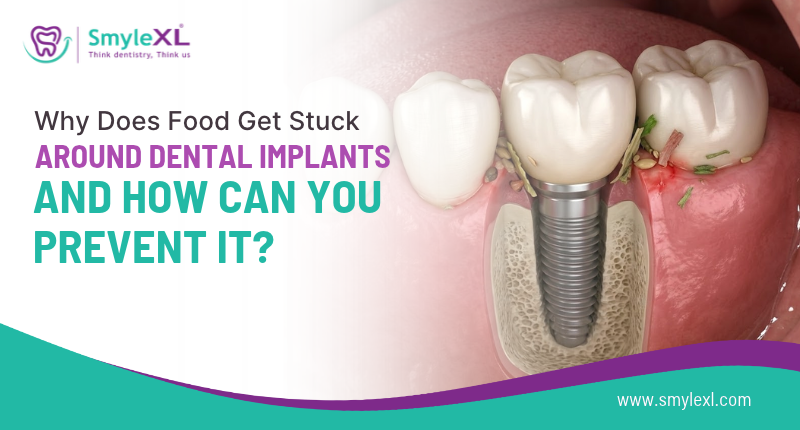

Yes, food can get stuck around dental implants, and occasional trapping does not necessarily mean there is a problem with the implant. The shape of the implant crown, the space between neighboring teeth, changes in the gumline, and even the type of food can influence how easily food particles collect around the restoration.
The bigger concern is when food repeatedly gets trapped in the same area or comes with bleeding gums, swelling, discomfort, or a persistent bad taste. Understanding the reason behind it can make everyday dental implant care easier and help you know when the area may need professional attention. At SmyleXL Dental Clinic, we provide dental implant treatment in Kothrud and also educate patients that knowing how to clean and maintain the implant is an important part of the treatment journey.
Here’s a quick look at what this page covers:
- Why food gets trapped around dental implants
- When occasional food trapping may be normal
- How the implant crown and gumline can influence food collection
- How to clean around dental implants properly
- Which foods are more likely to get stuck
- How daily oral hygiene supports implant maintenance
- When recurring food trapping should be checked
- What a dentist can assess if the problem continues
Table of Contents
ToggleWhy Does Food Get Stuck Around Dental Implants?
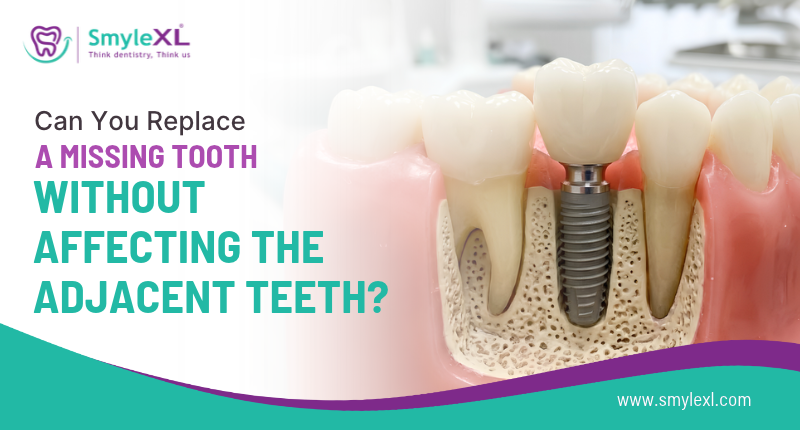
Food can get stuck around dental implants when small spaces exist between the implant crown, neighboring teeth, and gum tissue. The contour of the restoration and the way food moves through the area can also influence food trapping around implants.
Some common reasons include:
- A small space between neighboring teeth
- Changes in the gumline after healing
- The shape or contour of the implant crown
- The position of the implant
- Fibrous or sticky foods
- Difficulty cleaning around the restoration
Unlike a natural tooth, an implant does not have the same natural attachment between the tooth root and surrounding gum tissue. This makes proper gum care around implants particularly important.
Is Food Trapping Around Implants Normal?
Occasional food trapping can happen around an implant, but frequent or persistent food accumulation should be evaluated. A small amount of food collecting after a meal does not automatically indicate a problem.
However, pay attention if you repeatedly notice food getting stuck in exactly the same place, especially when it is accompanied by:
- Bleeding gums
- Swollen gums
- Gum inflammation
- Persistent discomfort
- Bad taste or odor
- Difficulty cleaning the area
The concern is not simply the food itself. Repeated accumulation can make plaque buildup more difficult to control around the implant.
What Are the Common Causes of Food Trapping?
| Possible Cause | What It Can Mean |
| Space between teeth | Food particles can collect in the gap |
| Crown contour | The shape may influence how food moves |
| Gum changes | Small spaces may develop around the area |
| Sticky or fibrous foods | These may remain around the restoration |
Understanding the cause makes it easier to decide whether better dental implant cleaning is enough or whether the restoration or surrounding tissue should be examined.
How Can You Clean Around Dental Implants?
Cleaning around dental implants involves brushing the implant crown and using an appropriate method to clean between the implant and neighboring teeth. The goal is to remove food particles and plaque without damaging the surrounding gum tissue.
Your routine may include:
- Brushing twice daily with a soft-bristled toothbrush
- Cleaning carefully along the gumline
- Using dental floss where appropriate
- Using an interdental cleaning tool
- Using a water flosser if recommended
- Paying attention to areas where food frequently collects
The right cleaning method can vary depending on the type of implant-supported crown, its position, and the space around it.
Which Foods Are More Likely to Get Stuck Around Implants?
Fibrous, sticky, and small foods are more likely to become trapped around an implant crown or between neighboring teeth. Their texture can make them harder to remove with ordinary brushing.
Examples include:
- Fibrous vegetables
- Meat fibers
- Nuts and seeds
- Sticky foods
- Small grains and food particles
This does not mean these foods necessarily need to be avoided. Instead, paying attention to the area after eating and cleaning it properly can help maintain implant hygiene.
Can Good Oral Hygiene Reduce Food Trapping?
Yes, good oral hygiene can reduce the amount of food and plaque that remains around dental implants, although it may not eliminate food trapping caused by the shape or position of the restoration.
Daily dental implant cleaning is important because plaque can accumulate around the implant crown and gumline even when the implant itself feels comfortable.
The goal is not simply to remove visible food. Consistent cleaning helps control plaque buildup and supports the health of the tissues around the implant.
When Should Persistent Food Trapping Be Checked?
Persistent food trapping should be checked when it repeatedly occurs in the same area or is accompanied by changes in the gums or discomfort.
Consider an evaluation if you notice:
- Repeated food trapping
- Bleeding gums
- Swollen gums
- Persistent gum inflammation
- Pain or discomfort
- Bad taste or odor
- Difficulty cleaning around the implant
Food trapping alone does not tell you what is causing the problem. An examination can help determine whether the issue relates to the implant crown fit, crown contour, gum tissue, implant position, or neighboring teeth.
What Can a Dentist Check If Food Keeps Getting Stuck?
A dentist can examine the implant crown, surrounding gum tissue, neighboring teeth, bite, and implant position to identify possible reasons for recurring food trapping.
The assessment may consider:
Implant Crown Fit
How the crown sits over the implant can affect the space available around the restoration.
Crown Contour
The shape of the crown can affect how food passes between the implant and neighboring teeth.
Gum Tissue
Changes in the gum tissue can create spaces where food particles collect more easily.
Implant Position
The position of the implant in relation to neighboring teeth can influence the final restoration and the spaces around it.
Bite and Neighboring Teeth
The way the upper and lower teeth meet can also affect how pressure and food move through the area.
These factors are considered during dental implant treatment in Kothrud at SmyleXL Dental Clinic and can also be assessed later if food trapping becomes a recurring concern.
How Can You Prevent Food From Getting Stuck Around Implants?
You can reduce food trapping by maintaining consistent cleaning around the implant, using suitable interdental tools, and addressing recurring problems early.
A practical routine includes:
- Use dental floss or an interdental tool as advised by your dental professional.
- Consider a water flosser if it is appropriate for your situation.
- Pay attention to areas where food repeatedly collects.
- Keep recommended follow-up appointments for implant maintenance.
Good dental implant care is not limited to the implant crown itself. The surrounding gums and neighboring teeth also need regular attention.
Can Cleaning Around Dental Implants Protect the Surrounding Gums?
Yes, regular cleaning can help control plaque buildup around the implant and support healthy surrounding gum tissue. Food particles that remain around an implant can make plaque control more difficult.
Consistent gum care around implants involves keeping the gumline clean and watching for changes such as redness, swelling, or bleeding.
It is also important not to use excessive force while cleaning. The aim is effective dental implant cleaning, not aggressive scrubbing.
Frequently Asked Questions
Can I Use Regular Floss Around a Dental Implant?
Regular dental floss may be suitable for some implant restorations, but the appropriate technique depends on the implant crown and surrounding space. A dentist can show you how to clean the area without putting unnecessary pressure on the gum tissue.
Can a Water Flosser Be Used Around Implants?
Yes, a water flosser may be used around dental implants when appropriate. It can help flush food particles and plaque from areas that may be difficult to reach with a toothbrush alone. Follow the device instructions and any guidance provided by your dentist.
Why Does Food Collect Between My Implant and Natural Tooth?
Food may collect between an implant and a natural tooth because of the space between them, the crown contour, gum changes, or how the teeth meet during chewing. If this happens frequently, the area can be examined to identify the cause.
Can an Implant Crown Be Adjusted If Food Keeps Getting Trapped?
In some situations, the crown or restoration may be assessed for its contour, contacts, or fit. Whether an adjustment is appropriate depends on what is causing the food trapping.
How Often Should Dental Implants Be Checked?
The recommended follow-up schedule varies according to your implant, restoration, gum health, and individual needs. Regular professional evaluation helps monitor the implant and surrounding tissues as part of ongoing implant maintenance.
What Should You Remember About Dental Implant Treatment?
At SmyleXL Dental Clinic, we always tell our patients that the dental Implant treatment in Kothrud that we provide can replace missing teeth, but caring for the completed restoration is an ongoing part of maintaining your oral health. Occasional food trapping can occur, particularly around spaces between an implant crown and neighboring teeth.
However, repeated food accumulation, bleeding gums, swelling, gum inflammation, or discomfort should not be ignored. Regular dental implant cleaning, appropriate gum care around implants, and professional follow-up can help you identify and manage issues before they become more difficult to address.
At SmyleXL Dental Clinic, during our dental implant treatment in Kothrud, we always emphasize that knowing how to care for the implant and surrounding gum tissue is just as important as understanding the treatment itself.

Dr Rohan Nakhole
Principal Dentist & Dental Care Expert
Dr. Rohan Nakhole is a BDS-qualified dentist with 14+ years of experience, serving patients at SmyleXL Dental Clinic in Kothrud, Pune. His areas of expertise include dental implants, cosmetic dentistry, restorative dentistry and comprehensive dental care. He is known for his patient-focused approach, ethical treatment planning and commitment to staying updated with modern dental advancements.
Professional Profile: Dr. Rohan Nakhole
Facebook: SmyleXL Facebook
Instagram: SmyleXL Instagram
YouTube: SmyleXL YouTube